Botswana
 Zambia
 Congo
Congo Colombia
 China mainland
 Chile
Chile Chad
Chad Central African Republic
 Canada
 Cameroon
 Cambodia
 Burkina Faso
 Bulgaria
 Brunei Darussalam
 Brazil
 Aland Islands
 Bosnia and Herzegovina
 Bolivia
 Belgium
 Belarus
 Bangladesh
 Bahrain
 Azerbaijan
 Austria
 Australia
 Armenia
 Argentina
 Algeria

Deciding between 4G and 5G isn’t just about picking the newer technology. 4G is the fourth generation of cellular network technology and 5G is the latest generation, representing a significant evolution in mobile connectivity.
With 5G phones flooding the market and carriers pushing upgrades, you’re probably wondering whether the jump from 4G to 5G actually matters for your daily life. The answer depends on where you live, how you use your phone, and what you value most in a mobile network.
This comprehensive comparison breaks down the real differences and major differences between 4G vs 5G in 2026, from measurable speed improvements to practical coverage realities. 4G LTE is the most common technology standard used to implement 4G networks.
Whether you’re considering a new device or evaluating your current plan, you’ll discover exactly what each network technology delivers and whether 5G is worth the upgrade for your specific needs.
5G represents a leap forward in mobile technology, but understanding 5G vs 4G is crucial for making informed decisions about your connectivity. The differences in network architecture and performance are key for both consumers and organizations.
Each generation of wireless networks and cellular networks has transformed mobile communication, impacting everything from basic calls to advanced applications like virtual and augmented reality.
Both 4G and 5G use radio waves to transmit data between devices and network infrastructure, but 5G leverages advanced technologies such as carrier aggregation to optimize performance. 5G networks are designed to be open and virtualized, allowing individual services with different performance requirements to share the same infrastructure.

With features like network slicing, 5G’s architecture enables the creation of multiple virtual networks on a single physical network, supporting a wide range of applications and industries. 5G is also more energy efficient than 4G, with energy consumption per bit estimated to be just 10 percent of what 4G requires.
The transition from 4G to 5G requires new physical infrastructure and time for developers and device makers to adjust to 5G’s new architectures.
Introduction to Cellular Technology
Cellular technology has fundamentally transformed how we stay connected, work, and access information wherever we are. Over the years, each new generation of mobile network technology has brought major improvements in speed, capacity, and overall network performance, shaping the way we use our mobile devices every day.
The leap from the fourth generation (4G) to the fifth generation (5G) of cellular technology marks one of the most significant advancements yet, delivering faster speeds, lower latency, and the ability to support far more connected devices than ever before.
4G Insight
With 4G LTE, mobile networks made high-quality video streaming, video calls, and mobile gaming possible on the go, thanks to improved speeds and more reliable mobile communication compared to previous generations. 4G LTE became the global standard, enabling users to achieve speeds up to 100 Mbps and making mobile internet a seamless part of daily life.
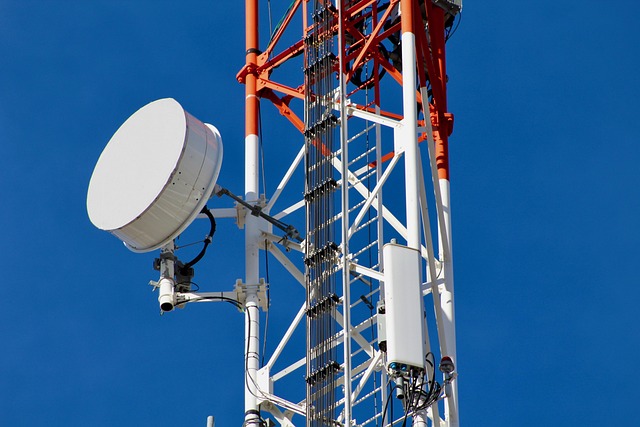
However, as the number of connected devices exploded—think smartphones, tablets, wearables, and smart home gadgets—4G networks began to reach their limits, especially in crowded areas or during peak usage.
5G Insight
Enter 5G, the fifth generation of mobile network technology, which represents a true leap forward. 5G is designed to deliver significantly faster speeds—potentially up to 20 Gbps in ideal conditions—and ultra low latency, reducing response times to as little as 1 millisecond.
This opens the door to real time communication capabilities that are essential for critical applications like autonomous vehicles, remote healthcare, and industrial automation. With its greater capacity, 5G can support a massive number of IoT devices, making it the backbone for smart cities, connected vehicles, and next-generation augmented reality and virtual reality experiences.
One of the key differences between 4G and 5G lies in how they use radio frequencies. While 4G LTE primarily operates on lower frequency bands, 5G expands into a much wider range, including high band frequencies and millimeter wave (mmWave) frequency bands.
Value-add of 5G
These high frequency bands enable 5G to deliver faster speeds and lower latency, but also require new infrastructure like small cells to ensure better coverage, especially in dense urban environments. 5G also introduces advanced technologies such as network slicing, which allows multiple virtual networks to run on the same infrastructure, each optimized for specific use cases—from high-speed mobile gaming to ultra-reliable connections for self driving cars.
Energy efficiency is another area where 5G stands out. By leveraging small cells, massive MIMO (Multiple Input, Multiple Output), and smarter network management, 5G networks are more energy efficient than their 4G predecessors. This not only reduces operational costs for carriers but also supports the growing demand for sustainable technology solutions.
As we move further into the era of 5G, understanding the key differences between 4G and 5G is crucial for anyone looking to make the most of the latest generation of mobile technology. Whether you’re interested in the possibilities of augmented reality, the promise of autonomous vehicles, or simply want better speed and reliability for your mobile devices, 5G is set to redefine what’s possible with mobile connectivity.
In the next section, we’ll take a closer look at the technical foundations of 4G and 5G, exploring how their architectures, frequency bands, and network capabilities stack up—and what that means for your mobile experience in 2026 and beyond.
Understanding the Core Difference Between 4G and 5G Mobile Network Technology
The primary distinction between 4G and 5G lies in how these network technologies handle data transmission. While 4G LTE revolutionized mobile internet when it launched in the early 2010s, making HD streaming and app-based services practical, 5G represents a fundamental redesign of wireless network architecture rather than a simple speed boost.
4G networks operate primarily on lower frequency bands below 6 GHz, transmitting data through traditional cell towers to phones and devices. This approach works well for widespread coverage but has limitations when network capacity demands increase. According to testing data from 2026, 4G download speeds typically range from 20 to 100 Mbps in most urban areas, with latency between 30 and 50 milliseconds.
5G network technology takes a different approach by utilizing multiple frequency bands simultaneously. These include low-band spectrum (similar to 4G), mid-band frequencies between 3-24 GHz, and high-band mmWave spectrum from 24-100 GHz. 5G’s medium band uses frequencies in the 1–2.6 GHz and 3.5–6 GHz range, and the high band uses frequencies in the 24–40 GHz range.
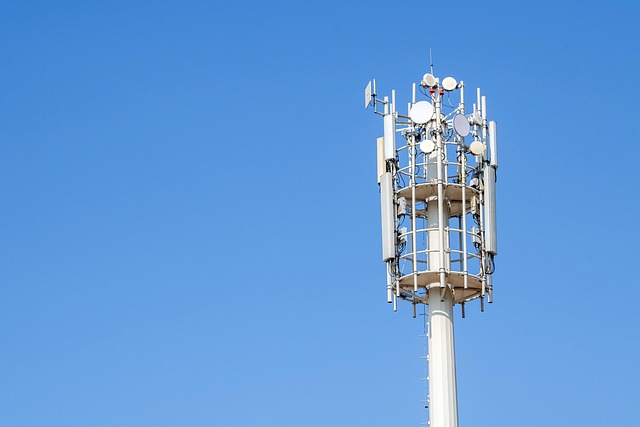
This multi-band strategy allows 5G to deliver speeds between 100 Mbps and 2 Gbps in real-world conditions, with latency as low as 1-10 milliseconds, which can vary depending on location, network congestion, and device compatibility. The technology employs advanced features like massive MIMO (multiple-input multiple-output) with 64 or more antennas per base station, compared to typically four antennas on 4G towers.
How Much Faster Is 5G Than 4G?
Speed comparisons between 4G vs 5G reveal substantial differences in both theoretical peaks and everyday performance. Testing by OpenSignal in late 2024 found that T-Mobile’s 5G network averaged 150 Mbps, while AT&T delivered 49.1 Mbps and Verizon achieved 56.2 Mbps on their 5G networks.
In contrast, 4G LTE networks across these same carriers typically provide 20-50 Mbps in practice. 5G delivers faster speeds, offering improved performance in data transfer rates, lower latency, and better coverage compared to 4G.
The speed advantage of 5G becomes most apparent with specific tasks. Downloading a full HD movie that would take 5-10 minutes on 4G can complete in under 15 seconds on a strong 5G connection. With 5G’s faster connections, users experience quicker downloads and smoother streaming, making it ideal for high-bandwidth activities.
5G in Reality?
Real-world testing in Sydney recorded 5G speeds exceeding 700 Mbps under optimal conditions, though more typical 5G performance ranges between 100-400 Mbps depending on network congestion and spectrum type.
However, context matters significantly. Peak theoretical speeds for 5G can reach 20 Gbps using mmWave technology, while 4G tops out around 1 Gbps. But you’re unlikely to experience these maximum rates in daily use.
The International Telecommunications Union set the standard for 5G at 1 Gbps with 1 millisecond latency, benchmarks that represent the technology’s mature potential rather than current widespread performance as of January 2026. These high speeds reduce latency and improve network responsiveness, enhancing the efficiency of data transmission for demanding applications.
Upload speeds also show measurable improvements. While 4G typically delivers 10-30 Mbps for uploads, 5G averages 50-150 Mbps, making cloud backups, video conferencing, and content creation noticeably faster for power users and professionals.
These increased speeds are especially beneficial for content creators and professionals who rely on rapid uploads. Additionally, 5G enables the deployment and enhancement of cloud services, supporting data-intensive applications like augmented reality (AR) and virtual reality (VR) that require robust bandwidth and low latency.
Lower Latency: The Hidden Game-Changer
Beyond raw speed, latency represents one of the most significant technical advantages in the 5G versus 4G comparison. Latency measures the time it takes for data to travel from your device to a server and back, essentially the network’s reaction time.
5G reduces latency compared to 4G by leveraging improvements in radio technology and network architecture, such as deploying distributed, software-defined networks closer to end devices. Lower latency means more responsive connections with less noticeable lag.
4G networks typically operate with 30-70 milliseconds of latency in real-world conditions, though the target specification aimed for 20-40 ms. While this proved adequate for video streaming and web browsing, it created noticeable delays in interactive applications. Anyone who’s experienced that awkward pause on video calls before someone’s laugh comes through has felt the impact of 4G latency.
5G was engineered to achieve latency below 5 milliseconds in standalone (SA) deployments, with some ideal scenarios reaching 1-4 ms. Testing data from 2024 showed 5G latency averaging 29-34 ms on most networks, still significantly better than 4G but not yet hitting the theoretical minimum.
In urban centers like London, measurements recorded 5G latency as low as 17 ms, demonstrating the technology’s improving performance. NSA 5G serves as a bridge from 4G LTE to 5G, allowing mobile network operators to implement 5G capabilities on their current 4G infrastructure.
This latency reduction matters most for real-time applications. Competitive online gaming benefits dramatically from the nearly instant response times, eliminating the input lag that can determine victory or defeat.
Video conferencing feels more natural without the slight delay between speaking and being heard. For emerging applications like remote surgery, autonomous vehicles, and industrial automation, ultra-low latency becomes essential rather than merely convenient.
5G Coverage vs 4G: Where Can You Actually Use It?
Coverage availability represents perhaps the most practical consideration when evaluating 4G vs 5G in 2026. While speed improvements sound impressive, they’re meaningless without signal access in the places you actually use your phone.
4G LTE coverage in the United States has reached maturity, with networks covering 99% of the population and 67-78% of the land area depending on carrier. Verizon, AT&T, and T-Mobile all maintain robust 4G networks that function reliably in urban centers, suburbs, and increasingly in rural regions. This near-universal coverage means 4G remains the baseline connectivity standard across most of the country.
5G deployment tells a different story. According to January 2024 data, T-Mobile provides 5G coverage across approximately 54% of the United States by land area, AT&T covers about 30%, and Verizon reaches roughly 13%.
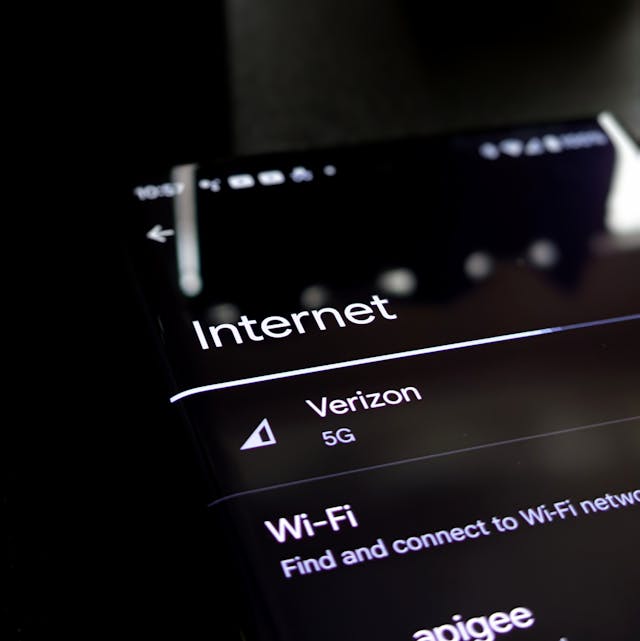
However, these figures include all types of 5G, not just the fastest mmWave deployments. T-Mobile reports that 98% of Americans have access to some form of 5G from their network as of 2025, though this primarily consists of low-band and mid-band coverage.
Global projections from Ericsson estimate that 5G will cover 60% of the world’s population at the end of 2026, up from 55% currently. However, this coverage skews heavily toward high-income countries, where 84% of people have 5G access, compared to just 4% in low-income nations. Within high-income markets, an urban-rural divide persists with 89% of city dwellers covered versus only 59% in rural areas.
The practical reality for most users is that 5G devices automatically fall back to 4G LTE when 5G isn’t available, ensuring continuous connectivity. This interoperability means upgrading to a 5G phone doesn’t sacrifice coverage in areas where newer infrastructure hasn’t rolled out yet.
Network Capacity: Performance in Crowded Spaces
One advantage of 5G that often goes underappreciated involves network capacity and how many simultaneous connections it can handle effectively. This becomes most noticeable in high-density environments where many people crowd together.
4G networks support roughly 4,000 devices per square kilometer, which sounds substantial until you experience a concert, sports stadium, or busy airport. During these scenarios, 4G often struggles as thousands of people attempt to share limited bandwidth simultaneously, resulting in frustratingly slow speeds despite showing full signal bars.
5G network technology was designed to support up to 1 million devices per square kilometer through a combination of technologies. This ability to connect more devices at once is a key advantage of 5G, making it ideal for environments with high device density.
Massive MIMO allows base stations to serve dozens of users simultaneously on the same frequency band by directing focused beams to individual devices using beamforming. Network slicing enables carriers to allocate dedicated resources for different traffic types, ensuring critical services maintain performance even when consumer traffic surges.
In practical terms, this means 5G maintains usable speeds in crowded venues where 4G bogs down. Real-world testing during events in New Delhi found that 5G small cells successfully handled crowds ten times larger than previous 4G infrastructure could manage without significant slowdowns. 5G requires new small-cell base stations to operate and function, which are essential for delivering this increased capacity and performance.
Is 5G Worth It in 2026?
The question of whether upgrading from 4G to 5G makes sense depends heavily on your individual circumstances and priorities. As of January 2026, several key factors should inform your decision.
If you live or work primarily in major metropolitan areas where 5G Ultra Wideband or mid-band coverage has deployed extensively, the speed and latency improvements deliver noticeable benefits for data-heavy activities.
Usage Consideration
Users who regularly stream 4K video, download large files, participate in video conferences, or play competitive online games will experience measurably better performance on 5G networks. Content creators uploading videos to the cloud see dramatic time savings with 5G’s faster upload speeds.
However, for users whose phone usage centers on calls, text messaging, social media, web browsing, and standard HD video streaming, 4G networks still provide perfectly adequate performance. The tasks most people perform daily don’t push 4G’s capabilities to their limits. In these cases, the speed difference between 4G vs 5G may not translate into noticeably better day-to-day experience.
Coverage availability in your specific location matters more than national statistics. Before upgrading, check your carrier’s coverage map for 5G availability where you actually spend time—home, workplace, and frequent destinations. Living in a suburban or rural area may mean 5G coverage remains sparse or non-existent in 2026.
Device Consideration
Device costs present another consideration. While 5G phones have become more affordable, with capable options starting around $400 compared to $1,500+ when the technology first launched, comparable 4G devices still cost less. Plan pricing varies by carrier, with some including 5G at no additional charge while others charge premium rates for 5G access.
Battery life represents a practical concern worth noting. 5G connectivity, particularly when devices search for signals in areas with weak coverage, can drain batteries faster than 4G. Newer devices have optimizations to manage this, and users can manually switch to 4G mode to preserve battery life when maximum speeds aren’t needed.
Future-proofing provides one compelling argument for 5G adoption. As carriers focus infrastructure investments on 5G and eventually phase out older technologies (3G has already shut down, 2G is following), purchasing a 5G-capable phone ensures your device remains compatible with expanding network capabilities over its multi-year lifespan.
Do You Need a New Phone for 5G?
Accessing 5G networks requires a device with compatible hardware and chipsets that can communicate using 5G radio frequencies. Existing 4G phones cannot connect to 5G, regardless of carrier or plan. The different radio technologies and frequency bands necessitate specific antennas and modems built for 5G standards.
Most smartphones released from 2020 onward include 5G capability as standard, making it increasingly common. All iPhone models from the iPhone 12 forward support 5G, as do the majority of flagship and mid-range Android devices from Samsung, Google, Motorola, and other manufacturers produced in recent years.
You can verify your current phone’s capabilities by checking the technical specifications online or in your device settings. On iPhones, navigate to Settings > Cellular > Cellular Data Options > Voice & Data to see available network options. If “5G” appears as a selection, your device supports the technology.
Not all 5G devices offer identical capabilities. Some only support sub-6 GHz bands, while others include mmWave compatibility for the fastest 5G speeds. If accessing 5G Ultra Wideband is important to you, confirm your device specifically supports high-band spectrum (n260 and n261 for mmWave) before purchasing.
Real-World Applications: When 5G Actually Matters
Understanding the practical scenarios where 5G network advantages make a tangible difference helps evaluate whether the technology aligns with your usage patterns.
5G in Entertainment
For entertainment, 5G eliminates buffering during 4K and 8K video streaming, even in peak usage times. Downloading movies, TV seasons, or large gaming files completes in seconds rather than minutes. Cloud gaming services like Xbox Cloud Gaming or NVIDIA GeForce NOW stream smoothly with minimal input lag on 5G connections, making controller-free mobile gaming genuinely playable.
5G supports applications such as 4K/8K streaming, cloud gaming, remote surgery, autonomous driving, and smart cities, while 4G primarily supports HD streaming and social media.
Remote workers benefit from stable, high-speed connections for video conferencing that rival home broadband. Multiple participants sharing screens, presenting HD video, and collaborating in real-time experience fewer drops and higher quality on 5G compared to 4G, especially away from Wi-Fi.
5G in IoT
The Internet of Things (IoT) sees expanded possibilities as 5G’s capacity supports numerous connected devices simultaneously. Smart home systems, wearables, connected vehicles, and security cameras all communicate more reliably without competing for limited 4G bandwidth.
Earlier cellular networks such as 3G and LTE constrained the development and deployment of immersive technologies like AR and VR due to their limitations in latency and data transfer speeds. 5G is now overcoming these barriers, enabling more seamless VR and AR experiences.
Emerging technologies like augmented reality and virtual reality require low latency and high bandwidth that only 5G provides effectively. AR navigation overlays, immersive VR experiences, and mixed reality applications work smoothly on 5G but struggle on 4G networks. 5G technology enhances virtual reality applications by providing the necessary bandwidth and low latency for real-time processing.
Industries are leveraging 5G for automation, remote equipment control, and real-time data analysis. Manufacturing facilities use 5G for precise navigation of automated vehicles, hospitals explore remote surgical assistance, and logistics companies track shipments with greater accuracy through 5G-enabled sensors.
Private 5G networks can be utilized in manufacturing and logistics to control and monitor operations more effectively. Such networks are designed to support smart cities by enabling real-time data exchange and connectivity for various applications.
5G is essential for the development of autonomous vehicles due to its low latency and high-speed capabilities. Effectively it facilitates critical applications like real-time data exchange for autonomous vehicles and remote robotic surgery due to its ultra-low latency.
Understanding 5G Types: Not All 5G Is Equal
One source of confusion around 5G involves the different deployment types that deliver varying performance levels. Carriers advertise “5G” without always clarifying which version users actually access.
Low-band 5G uses frequencies below 1 GHz, similar to existing 4G spectrum. This offers the widest coverage with signals that penetrate buildings well and travel long distances. However, speeds typically match or only modestly exceed good 4G performance, ranging from 50-100 Mbps. Most nationwide 5G from major carriers falls into this category.
Mid-band 5G operates on frequencies between 3-24 GHz and represents the sweet spot balancing coverage with performance. Speeds reach 100-400 Mbps in typical conditions while still covering reasonable distances. This powers much of the 5G deployment in urban and suburban areas.
High-band 5G, specifically mmWave using 24-100 GHz frequencies, delivers the dramatic speeds up to 1-2 Gbps that define 5G’s maximum potential. The tradeoff involves extremely limited range—often measured in city blocks rather than miles—and poor building penetration.
Carriers deploy small cell stations throughout dense urban centers to provide mmWave coverage, typically labeled as 5G Ultra Wideband (Verizon) or 5G+ (AT&T).
The Bottom Line: Making Your Decision
Choosing between 4G and 5G in 2026 ultimately comes down to a practical assessment of your priorities and circumstances.
Upgrade to 5G if you live in areas with strong 5G coverage, regularly use data-intensive applications, want the fastest available mobile speeds, or plan to keep your device for several years and want future compatibility. Heavy streamers, gamers, remote workers, and tech enthusiasts will appreciate the performance improvements enough to justify any additional costs.
Stick with 4G if your current device performs well for your needs, you primarily use your phone for basic tasks, 5G coverage is limited in your area, or you’re budget-conscious and prefer lower device and plan costs. For calls, texts, social media, and standard video streaming, 4G delivers perfectly adequate performance.
Remember that 4G isn’t disappearing anytime soon. Networks will maintain 4G LTE infrastructure for years while 5G continues expanding. The two technologies coexist and complement each other, with 4G covering 99% of the US population as reliable baseline connectivity.
The transition from 4G to 5G resembles previous generational shifts—a gradual evolution rather than an overnight revolution. While 5G offers measurable improvements in speed, latency, and capacity, the technology is still maturing.
As coverage expands, devices become more affordable, and carriers optimize their networks, 5G’s advantages will become more universally accessible. Until then, evaluate the technology based on what it delivers today in your specific situation rather than what it promises for tomorrow.

Blog Author
Peter
Peter started BazTel.co to make mobile internet easier for travellers. He noticed how tough it was to find good network options while visiting new countries. That’s when he built BazTel — a place where anyone can buy eSIMs online without confusion or long steps. He believes tech should be simple and useful, not complicated. When he’s free, he likes to travel, test BazTel himself, and keep improving it based on real user problems.