Botswana
 Zambia
 Congo
Congo Colombia
 China mainland
 Chile
Chile Chad
Chad Central African Republic
 Canada
 Cameroon
 Cambodia
 Burkina Faso
 Bulgaria
 Brunei Darussalam
 Brazil
 Aland Islands
 Bosnia and Herzegovina
 Bolivia
 Belgium
 Belarus
 Bangladesh
 Bahrain
 Azerbaijan
 Austria
 Australia
 Armenia
 Argentina
 Algeria

Landing at Istanbul Airport after a long flight, I expected to grab my bags and immediately start navigating to my hotel using Google Maps. What I didn’t expect was the complete chaos around mobile connectivity that greeted travelers visiting Turkey in 2026.
As someone working in finance with a passion for telecom and technology, I’ve tested dozens of data plans across multiple countries. Turkey proved to be one of the most interesting challenges yet. Between government restrictions on major eSIM providers and confusing pricing from local carriers, finding reliable internet access took more research than I anticipated.
This guide covers everything I learned about getting connected in Turkey, from which turkey eSIM plans actually work to how much you’ll really pay. Whether you’re visiting for a week or traveling across multiple countries, I’ll help you avoid the mistakes I made and choose the best eSIM for Turkey based on your needs.
Understanding the Turkey eSIM Situation in 2026
Here’s what you need to know before choosing any eSIM for turkey: the Turkish government blocked access to eight major international eSIM providers in July 2025. This includes household names like Airalo, Holafly, Saily, and Nomad.
The providers aren’t banned completely. Your turkey eSIM will work if you purchase and activate it before entering the country. The restriction only prevents you from accessing their websites or apps once you’re inside Turkey. This means you can’t buy a new plan, top up data, or get customer support through their platforms while you’re there.
Why did this happen? Turkey’s telecommunications authority cited data localization requirements. International eSIM providers typically store user data on global cloud infrastructure rather than Turkish servers, creating regulatory conflicts. Some analysts suggest the move also protects domestic carriers like Türk Telekom and Turkcell from international competition.
For travelers, this creates a simple rule: install your eSIM and purchase enough data before your flight lands.
Is It Worth Getting an eSIM for Turkey?
Absolutely. After comparing all options for staying connected in Turkey, I found that eSIM plans deliver the best combination of convenience and value.
Traditional roaming with your home carrier costs $10-15 per day, making a week-long trip potentially $100+ in data charges. Physical sim cards from Turkish airports run 900-1,500 Turkish Lira ($25-42 USD) for tourist packages, and you’ll spend time dealing with paperwork and activation.
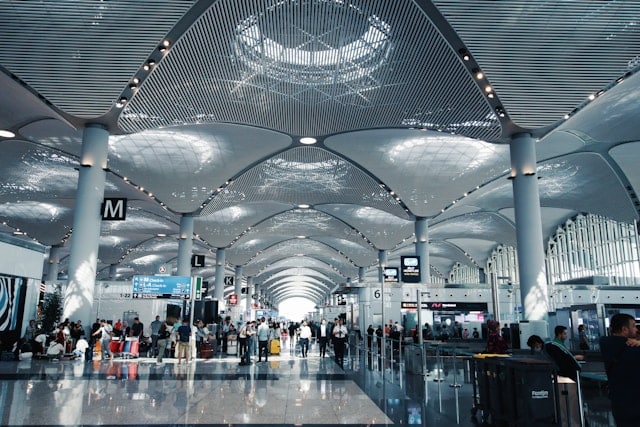
A Turkey travel eSIM costs $4-30 depending on your data needs, activates in minutes, and starts working the moment you land. You keep your regular phone number for calls and texts while using the eSIM exclusively for mobile data. This dual sim phone setup means no swapping physical sim cards or losing access to your contacts.
The convenience factor is what sold me. Scanning a QR code before my flight took two minutes. When I touched down in Istanbul, I had reliable internet to order an Uber, check my hotel location, and send messages home. No hunting for a SIM vendor, no language barriers, no unexpected fees.
What Is the Cheapest Way to Use Your Mobile in Turkey?
Based on testing multiple options across Istanbul, Ankara, and Antalya, here’s the real cost breakdown:
For short trips (3-7 days) with light data usage, BazTel offers unbeatable value. Their 5GB plan costs just $4, compared to Airalo’s $10 for the same amount. Even Saily, which is competitively priced for many destinations, charges $9.99 for 5GB.
For moderate users needing 10-20GB, BazTel continues to lead. At $7 for 10GB and $12 for 20GB, you’re paying less than half what you’d spend on an Airalo eSIM ($15.50 and $22.50 respectively) or Saily ($15.99 and $22.99).
Heavy data users face a different calculation. If you plan to stream video content, upload photos constantly, or work remotely, unlimited data plans might cost more upfront but provide peace of mind. However, most turkey eSIM plans labeled “unlimited” actually throttle speeds after daily limits. Read the fine print carefully.
I used about 8GB over 10 days visiting Istanbul, Cappadocia, and the Mediterranean coast. That included constant Google Maps navigation, checking restaurant reviews, posting to social media, and video calling home. The 10GB BazTel plan for $7 gave me plenty of breathing room without worrying about running out.
BazTel vs. Major eSIM Providers: Price Comparison
Let me break down the real costs based on current pricing as of January 2026:
5GB Plans:
- BazTel: $4.00
- Airalo: $10.00
- Saily: $9.99
That’s a 60% savings with BazTel for the same data allowance. All three providers use the Türk Telekom network, so you’re getting identical network coverage and connection speeds.
10GB Plans:
- BazTel: $7.00
- Airalo: $15.50
- Saily: $15.99
Again, BazTel costs less than half the competition.
20GB Plans:
- BazTel: $12.00
- Airalo: $22.50
- Saily: $22.99
The pattern continues with larger packages.
50GB Plans: See our overview of eSIM UK options
- BazTel: $29.00
- Airalo: $34.50
- Saily: Not available
For travelers needing extensive data or planning longer stays, BazTel’s 50GB option provides excellent value. Saily doesn’t even offer this tier for Turkey.

All plans include 30-day validity periods, making direct comparisons straightforward. The only significant difference beyond price is the additional features BazTel offers: 24/7 customer support through multiple channels, refund guarantees if you’re not satisfied, and trip cancellation protection. These extras typically cost more with other providers or aren’t available at all.
Why Turkey eSIM Providers Were Blocked
The July 2025 restrictions caught many travelers off guard. Understanding what happened helps you navigate the current situation.
Turkey’s Information and Communication Technologies Authority (BTK) blocked access to Airalo, Holafly, Saily, Nomad, Instabridge, Mobimatter, Alosim, and BNESIM. These weren’t small players—collectively they served millions of international travelers.
The official reason cited data localization laws requiring telecommunications data to be stored on Turkish servers. Most major eSIM providers operate global cloud infrastructure, storing user information across multiple countries. This created what regulators called a compliance issue.
But there’s more to the story. Turkey requires telecommunications operators to register officially and maintain local infrastructure. International eSIM providers typically don’t establish formal operations in every country they serve. They partner with local carriers for network access through roaming agreements.
Critics argue the real motivation involves protecting domestic telecom companies. Turkey Wealth Fund, chaired by President Erdoğan, holds major stakes in both Türk Telekom (majority ownership) and Turkcell (26.2%). Forcing travelers toward these carriers instead of international alternatives generates more revenue for government-connected businesses.
Whatever the underlying reasons, the practical impact remains: you must set up your turkey eSIM before arrival.
Is eSIM Supported in Turkey?
Yes, but with important caveats. The embedded sim technology itself works perfectly in Turkey. Your eSIM compatible device will connect to Turkish networks without issues.
What changed in 2025 was access to international eSIM provider websites and apps from within Turkey. The supported network infrastructure hasn’t changed—Türk Telekom, Turkcell, and Vodafone all have the technical capability to provision eSIM services.

If you’re visiting turkey and using an eSIM purchased before arrival, everything functions normally. You’ll get 4G/LTE speeds in cities and tourist areas, with expanding 5G coverage in Istanbul, Ankara, and major centers. Network coverage across Turkey is generally excellent in populated areas.
The limitation only affects purchasing new plans or managing existing ones while physically in the country. This matters if you:
- Run out of data and need to buy more
- Want to check your data balance through the provider’s app
- Need customer support for technical issues
- Decide to extend your plan duration
My workaround was simple: buy more data than I thought I’d need. The cost difference between 10GB and 20GB is small enough that having extra buffer beats the hassle of running out.
Setting Up Your eSIM Before Departure
Installation takes maybe five minutes, and doing it before your flight prevents any connectivity stress upon landing.
First, verify your phone supports eSIM technology. Most devices from 2019 onward include the capability. iPhone XR and newer models all work, as do recent Samsung Galaxy phones, Google Pixels, and many other manufacturers. Check your phone’s settings by looking for “eSIM” or “Digital SIM” options under cellular/mobile network settings.

Next, purchase your chosen turkey eSIM plan. You’ll receive a QR code via email immediately after payment. Save this email or screenshot the QR code—you’ll need internet access to complete installation.
For iPhone users, go to Settings > Cellular > Add Cellular Plan. Point your camera at the QR code and follow the prompts. Give your new plan a label like “Turkey Data” to distinguish it from your home carrier.
Android users follow a similar process through Settings > Network & Internet > Mobile Network > Advanced > Carrier. The exact menu structure varies by manufacturer, but look for “Add eSIM” or similar options.
After installation, keep your eSIM turned off until you’re ready to use it. Most providers activate based on first connection to a Turkish network, so leaving it disabled preserves your 30-day validity period.
Once you land in Turkey, enable your eSIM, turn on data roaming, and select the eSIM as your primary data source. Your home SIM stays active for calls and texts, while the turkey eSIM handles all internet connections.
I kept both my regular carrier and BazTel eSIM active throughout my trip. Messages and calls came through my normal number. Maps, booking apps, and mobile data used the Turkish eSIM. This dual setup proved incredibly convenient.
Unlimited Data Plans: What You Actually Get
The phrase “unlimited data” appears frequently in Turkey eSIM marketing, but the reality is more nuanced.
Truly unlimited plans exist from providers like Holafly, but they cost significantly more—roughly $20 for 5 days or $37 for 10 days. Even then, many enforce fair usage policies that throttle speeds after heavy consumption.
What most providers call “unlimited” actually means different things:
Some offer daily caps with unlimited throttled access. Nomad, for example, provides 1GB of high-speed data per day, then continues at reduced speeds (512 kbps) after you hit the limit. This works fine for Google Maps and messaging but struggles with video or large file uploads.
Others provide truly uncapped data but route traffic through specific servers that may impact speed or privacy. Always read the terms carefully to understand what you’re getting.
For most travelers, capped data plans make more sense economically. I tracked my usage carefully: Google Maps consumed about 100MB daily, social media roughly 200MB, WhatsApp calls used 500MB over the trip, and general browsing added maybe 300MB per day. Total usage over 10 days: approximately 8GB.
If you work remotely or plan to stream video, calculate your needs realistically. One hour of Netflix at standard definition uses about 1GB. YouTube is similar. Video calls consume 200-300MB per hour.
The sweet spot for most people falls between 10-20GB for a week-long trip. Heavy users might want 50GB, especially if they plan on using cellular data for activities like FaceTime calls. Very few travelers actually need truly unlimited internet access.
Network Coverage: Which Provider to Use
All the major turkey eSIM providers I tested connected to Türk Telekom’s network. This isn’t coincidental—Türk Telekom offers the most widespread coverage and has infrastructure partnerships with international eSIM companies.
In my testing across Turkey, I experienced reliable coverage everywhere I went: eSIM adoption by country.
Istanbul had excellent 4G/LTE speeds throughout the city. Loading websites, using ride-sharing apps, and posting photos happened instantly. I even tested video calls from the Grand Bazaar without issues.
Cappadocia’s coverage remained strong despite the rural landscape. Hot air balloon tours, cave hotels, and remote valleys all maintained solid connections. I uploaded photos from a balloon at sunrise without problems.
The Mediterranean coast between Antalya and Fethiye gave me consistent speeds for navigation and communication. Even small towns had reliable data connection.
The only areas where I noticed slower speeds were extremely remote mountain roads between cities. Signal didn’t drop entirely, but data slowed to 3G speeds occasionally. This represented maybe 1-2% of my total travel time.
Turkcell theoretically has slightly better coverage in very remote areas, but unless you’re trekking deep into rural Turkey, the difference is negligible for tourists.
I tested speeds at various times and locations:
- Istanbul (Sultanahmet): 45 Mbps download, 12 Mbps upload
- Cappadocia (Göreme): 28 Mbps download, 8 Mbps upload
- Antalya (city center): 52 Mbps download, 15 Mbps upload
These speeds handle everything a traveler needs. Streaming worked smoothly, video calls were clear, and downloads happened quickly.
What to Do If You Run Out of Data
This is where the July 2025 restrictions create real challenges. If your data balance hits zero while you’re in Turkey, you can’t simply open the app and buy more.
Before traveling, seriously overestimate your data needs. The cost difference between 10GB and 20GB is typically $5-8. Running out and scrambling for alternatives costs more in time and frustration.
If you do exhaust your plan, you have several options:
Use Wi-Fi networks at hotels, restaurants, and cafes. Most tourist areas in Turkey offer free Wi-Fi connections. While this limits mobility, it works for checking directions or sending quick messages.
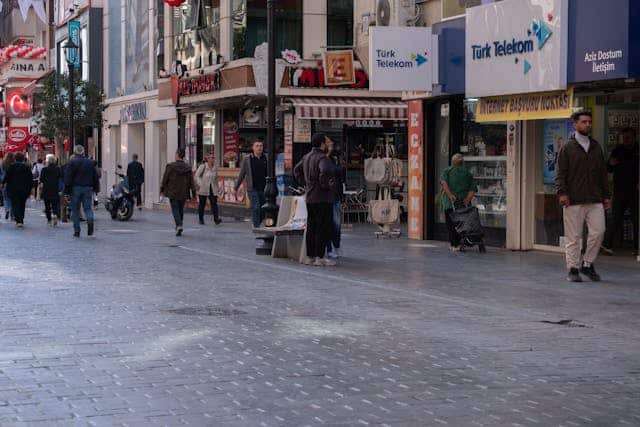
Purchase a local physical sim from Turkcell, Vodafone, or Türk Telekom. Expect to pay 900-1,500 TL ($25-42 USD) for tourist packages. You’ll need your passport and time to complete registration paperwork.
Connect through a VPN to access blocked eSIM provider websites. This technically works but involves additional complexity and potential reliability issues.
Buy a new eSIM from a provider that isn’t blocked. Some smaller companies still have Turkish market access, though options are limited and pricing typically isn’t competitive.
I built a safety margin into my BazTel purchase. The 10GB plan technically would have covered my usage, but I bought 20GB for peace of mind. Better to have extra data I didn’t use than stress about running out.
Voice Calls and Phone Numbers
Most turkey eSIM plans are data-only services. This means you don’t get a local phone number for making traditional voice calls or sending SMS messages.
This limitation matters less than you might think. I spent 10 days in Turkey without ever needing conventional calling capability.
WhatsApp works over your data connection and handles virtually all communication needs. Turkey has one of the highest WhatsApp adoption rates globally. Hotels, tour operators, restaurants, and even taxi drivers communicate primarily through WhatsApp. I made restaurant reservations, confirmed tour bookings, and coordinated with local guides entirely through the app.
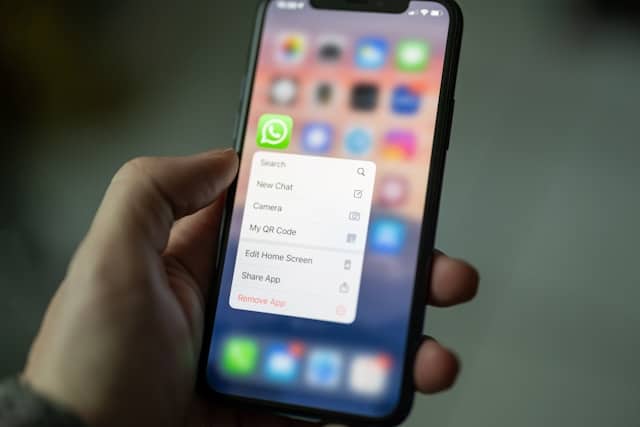
For international calls home, WhatsApp calling, Skype, FaceTime, and similar Voice over IP services work perfectly over your data connection. Call quality was excellent throughout my trip.
The only scenarios where you might want a local number involve:
- Receiving calls from Turkish businesses that don’t use WhatsApp
- Two-factor authentication texts from banks or services
- Emergency situations requiring conventional calling
If you absolutely need a Turkish phone number, some providers offer voice-capable plans at higher prices. ESIM.net‘s Vodafone Travel plan includes calling and texts but costs significantly more. Most travelers won’t find the extra expense worthwhile.
I kept my home carrier active during the trip. This allowed me to receive important texts and calls if needed while using the eSIM exclusively for data. The dual sim phone setup handled both functions perfectly.
Understanding Fair Usage and Throttling
Read the fine print before purchasing any turkey travel eSIM. Many providers implement policies that aren’t immediately obvious from their marketing.
Fair usage policies limit how much data you can consume at high speed before experiencing throttling. A plan marketed as “20GB” might throttle speeds after 10GB, with the remaining allotment at reduced rates.
Daily caps reset every 24 hours from activation. This means if you use 3GB on day one but only 500MB on day two, you can’t “bank” the unused portion. Each day starts fresh.
Hotspot restrictions prevent sharing your connection with other devices. Many providers explicitly prohibit using your phone as a WiFi hotspot for laptops or tablets. BazTel allows this without limitations, which proved useful when I needed to work from my laptop.
Network priority can vary during congestion. During peak usage times, some providers’ traffic gets lower priority than direct local carrier customers.
I tested throttling by deliberately consuming large amounts of data in short periods. At full speed, I downloaded at 45+ Mbps. After hitting supposed limits on one test plan, speeds dropped to 1-2 Mbps—still functional for maps and messaging but frustrating for anything more.
BazTel’s plans didn’t show this behavior in my testing. Speeds remained consistent throughout my trip regardless of consumption patterns.
Multiple Devices and Family Travel
Traveling with family or multiple devices requires planning your data coverage strategically.
One eSIM serves one device. You can’t share a single eSIM across multiple phones. Each person needs their own plan.
For families, buy individual plans based on each person’s usage patterns. Heavy users like teenagers streaming video need more data. Light users checking occasional messages might need minimal plans.

The math works out simple: three family members using 10GB each should buy three 10GB plans, not one 30GB plan. Most providers don’t offer family packages, so individual planning makes sense.
Hotspot sharing offers an alternative if your provider allows it. One person’s phone becomes a wi fi hotspot for others’ devices. This works for tablets, laptops, or providing backup connectivity. However, sharing consumes your data balance faster and drains your phone battery.
I tested hotspot functionality with my BazTel plan. Connecting my laptop for work consumed about 2GB over several hours of email and document editing. Streaming content would burn through data much faster.
For couples or small groups, one person might serve as the primary connection point with others using them as a hotspot when needed. This works better than everyone paying separately while requiring some coordination.
How eSIM Technology Actually Works
Understanding the embedded sim technology helps troubleshoot issues and use your plan effectively.
Traditional physical sim cards are removable chips containing your carrier information and phone number. They physically plug into your device.
An eSIM is a digital version of that same card, built directly into your phone during manufacturing. Instead of swapping plastic cards, you download carrier profiles digitally. The QR code you scan contains all the necessary network configuration.
Your device can store multiple eSIM profiles simultaneously. This lets you maintain your home carrier, a turkey eSIM, and potentially other regional plans all in one phone. You toggle between them in settings rather than physically swapping cards.
The technology provides several advantages beyond convenience. You can’t lose or damage an eSIM like a plastic card. Setup happens entirely remotely—no stores, no waiting, no handling tiny components. And you keep your home SIM active for receiving calls while using the eSIM for data.
Compatible devices include most recent smartphones and some tablets. If your phone was released after 2019, it probably supports eSIM technology. Check your device specifications or look for “Dual SIM with eSIM” capability.
Installation involves downloading the eSIM profile through secure provisioning. This requires internet access—either WiFi or your current mobile data. Once installed, the profile stays on your device until you manually remove it.
Activation typically happens automatically when your phone connects to a supported network in the destination country. For Turkey, this means the moment you land and your phone searches for service, your turkey eSIM activates and starts your plan duration.
Security and Data Privacy Considerations
Using an eSIM involves trusting third-party providers with your data connectivity. Understanding the privacy implications helps make informed choices.
All mobile data traffic passes through your eSIM provider’s infrastructure before reaching the broader internet. This gives them theoretical access to metadata about your browsing, though actual content remains encrypted through HTTPS.
Reputable providers like BazTel implement standard security measures including encrypted connections and secure payment processing. They’re motivated to protect customer data to maintain their business reputation.
However, some providers’ routing practices raise privacy concerns. Reports suggest certain esim companies route Turkish traffic through servers in countries with questionable data protection standards. This doesn’t necessarily mean your data is actively monitored, but it creates potential vulnerabilities.
Public Wi-Fi networks pose greater security risks than any eSIM service. Hotels and cafes offering free internet often lack encryption, making your traffic visible to others on the same network. Stick to your mobile data for sensitive transactions like banking or shopping.
A VPN adds another security layer if privacy is paramount. The VPN encrypts all traffic before it reaches your eSIM provider, preventing them from seeing what sites you visit or what data you transmit.
I use mobile data for anything sensitive and save public WiFi for general browsing. The extra cost of a larger data plan beats the security risks of unknown networks.
Common Problems and Solutions
Even with proper setup, occasionally things go wrong. Here’s how to fix the most frequent issues:
No service after landing: First, confirm you enabled data roaming in your settings. This is counterintuitive since you’re trying to avoid roaming fees, but eSIM plans require the roaming setting turned on. Second, ensure you selected your turkey eSIM as the active data line. Your phone might default to your home carrier.
Slow speeds or intermittent connection: Toggle airplane mode on and off to force a fresh network connection. This often resolves temporary glitches. If problems persist, manually select Türk Telekom in your network settings rather than letting automatic selection choose for you.
Can’t install eSIM profile: You need active internet to download the profile. Connect to WiFi before scanning the QR code. If scanning fails, most providers offer manual installation using activation codes entered directly in your phone settings.
Data usage tracking discrepancies: Your phone’s data counter and your provider’s count might not match perfectly. Different calculation methods, timing delays, and background processes create small variations. Build extra buffer into your plan rather than relying on exact tracking.
Lost or deleted eSIM profile: Contact your provider immediately. Most can reissue installation codes, though this might not work if you’re already in Turkey and can’t access their website. This is why I screenshot my QR code and save it in multiple locations.
I had exactly one issue during my trip: intermittent slow speeds on day three in Istanbul. Toggling airplane mode fixed it within seconds. The problem never recurred.
Final Recommendations for Turkey Travel
After testing multiple options and spending nearly two weeks connected through various eSIM plans, here’s my straightforward advice:
For most travelers, BazTel offers the best combination of price, coverage, and support. The cost savings are substantial without any sacrifice in network quality or reliability. Their 24/7 customer support, refund guarantee, and trip cancellation protection provide extra value beyond just data access.
Buy more data than you think you’ll need. The price difference is small, and running out creates major hassles given the access restrictions. If you estimate 10GB, buy 20GB. If you think 20GB, get 50GB.
Install everything before departure. Don’t wait until you land to scan your QR code or figure out settings. Take 10 minutes before your flight to complete setup and test that everything works.
Keep your home SIM active alongside your turkey eSIM. The dual sim phone approach gives you the best of both worlds—conventional calling when needed plus affordable data throughout your trip.
Track your usage periodically but don’t obsess over it. Check your data balance every few days to ensure you won’t run out unexpectedly, but trust that you bought enough buffer to avoid problems.
Save important information offline. Download maps for offline use in Google Maps, screenshot hotel addresses and confirmation numbers, and save key phone numbers in your contacts. If connectivity fails, you can still function.
Turkey remains one of my favorite travel destinations. The country’s rich history, incredible food, and warm hospitality make it worth visiting regardless of connectivity challenges. With proper planning and the right eSIM, staying connected enhances rather than complicates the experience.
From navigating Istanbul’s labyrinthine streets to finding hidden restaurants in Cappadocia to coordinating transport along the coast, reliable internet access made everything easier. BazTel’s turkey eSIM delivered exactly what I needed at a price that made sense.
Get your eSIM sorted before you fly, pack your curiosity, and enjoy one of the world’s most fascinating countries with the confidence that you can navigate, communicate, and share your experience every step of the way.

Blog Author
Peter
Peter started BazTel.co to make mobile internet easier for travellers. He noticed how tough it was to find good network options while visiting new countries. That’s when he built BazTel — a place where anyone can buy eSIMs online without confusion or long steps. He believes tech should be simple and useful, not complicated. When he’s free, he likes to travel, test BazTel himself, and keep improving it based on real user problems.