Botswana
 Zambia
 Congo
Congo Colombia
 China mainland
 Chile
Chile Chad
Chad Central African Republic
 Canada
 Cameroon
 Cambodia
 Burkina Faso
 Bulgaria
 Brunei Darussalam
 Brazil
 Aland Islands
 Bosnia and Herzegovina
 Bolivia
 Belgium
 Belarus
 Bangladesh
 Bahrain
 Azerbaijan
 Austria
 Australia
 Armenia
 Argentina
 Algeria

Poland surprised me. I’ll say that upfront. I landed in Warsaw expecting grey Soviet architecture and left two weeks later having eaten the best dumplings of my life, stood inside a chapel carved entirely from salt, and hiked trails with views that rival the Swiss Alps. This country is one of the most underrated places to visit in all of Europe.
If you’re searching for things to do in Poland, you’ve picked a destination that punches well above its weight. The country sits right in the heart of central Europe, yet it costs a fraction of what you’d spend in France or Italy. History buffs, foodies, hikers, and city-break lovers all find something here. And yes, you’ll stay connected the whole time — more on that later.
I’ve put together this guide based on my own trips, covering the top attractions, the cities worth your time, the day trips you shouldn’t skip, and practical travel tips that’ll save you headaches. As of 2026, Poland remains one of the safest countries in Europe according to the Global Peace Index. Let’s get into it.
Why Poland Deserves a Spot on Your Travel List
Poland is the kind of country that changes your assumptions. Before my first trip, I pictured a handful of memorial sites and not much else. The reality? Poland has 17 UNESCO World Heritage Sites, a food scene that revolves around hearty, satisfying dishes like pierogi and zapiekanka, and landscapes that range from Baltic Sea coastline to rugged mountain peaks.
The country is also incredibly well connected. Trains between major cities are fast, affordable, and reliable. You can book through the official Intercity PL website, and I’d recommend doing so 30 days in advance for the best prices. A ticket from Warsaw to Krakow costs under 100 PLN if you plan ahead.
For travellers from Australia, the UK, or the US, Poland offers old world charm at prices that won’t empty your wallet. A sit-down meal for two in Krakow’s old town runs about 120–160 PLN (roughly $32–43 USD). That’s hard to beat anywhere in Europe.
Krakow: Poland’s Most Beautiful City
Krakow is where most visitors start, and honestly, it’s the city that sets the bar impossibly high for everywhere else you’ll go. Often called the most beautiful city in Poland, it earned that reputation centuries ago and hasn’t let it slip.
Old Town Krakow and the Main Market Square
Krakow’s old town is a UNESCO World Heritage Site, and you’ll understand why within five minutes of arriving. The historic center is built around Rynek Glowny — Europe’s largest medieval market square. It dates back to the 13th century. Cafes spill out onto cobblestones. Street musicians play. Horse-drawn carriages circle the perimeter. Every hour, a trumpeter plays from the tower of St. Mary’s Basilica. The melody cuts off abruptly mid-phrase, honouring a medieval watchman who was shot through the throat while sounding the alarm.
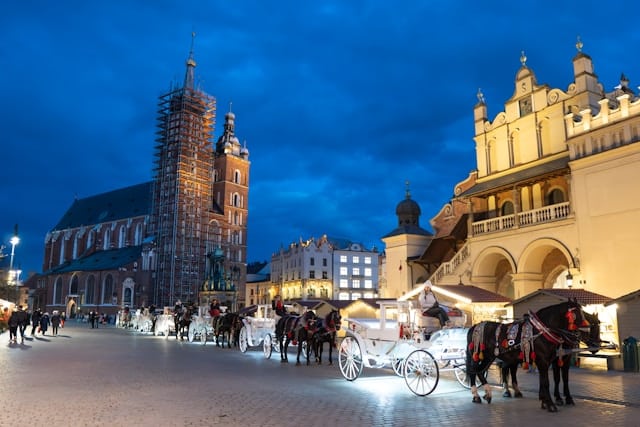
The Cloth Hall (Sukiennice) sits at the centre of the market square. It’s been a trading post for 700 years — making it arguably the world’s oldest shopping mall. Upstairs, you’ll find a gallery of Polish art. Downstairs, vendors sell amber jewellery, wooden crafts, and embroidered scarves.
Take a few hours to wander the side streets. Grodzka and Florianska are lined with beautiful architecture from different eras. Many buildings survived World War II intact, which is rare for this part of eastern Europe. That’s part of what makes visiting Krakow so special.
Wawel Castle and the Vistula River
At the southern end of old town Krakow, Wawel Hill rises above the Vistula River. This is where Polish kings ruled for centuries. Wawel Castle, the royal castle that crowns the hill, is a sprawling complex of Renaissance courtyards, Gothic chapels, and state rooms filled with tapestries and armour. The cathedral next door is where Polish monarchs were crowned and buried.
I spent a solid three hours here and could have stayed longer. The dragon’s den at the base of the hill is fun — a cave that exits onto the riverbank where a fire-breathing dragon statue greets you. Kids love it. Adults quietly love it too.
Walk along the Vistula River afterwards. The boulevards have been beautifully renovated, and on warm evenings, locals gather on the banks with drinks and picnic blankets. It’s a perfect way to wind down after a day of sightseeing.
Kazimierz: The Jewish Quarter
South of old town, the Kazimierz neighbourhood tells a story that spans centuries. This was historically home to Polish Jews, and from the 14th century until World War II, it thrived as a centre of Jewish culture and religious life. Today, it’s one of the most vibrant districts in the city — packed with bars, street art, bookshops, and restaurants.
Visit the Old Synagogue and the Remuh Synagogue. Walk through Plac Nowy, where locals queue for zapiekanka (open-faced toasted baguettes with mushrooms and cheese). In the evening, Kazimierz comes alive with live music drifting from basement bars. The contrast between its heavy history and its current energy is something you have to experience.
Oskar Schindler’s Enamel Factory is also here. The museum dedicated to the Nazi occupation of Krakow during World War II is one of the most well-curated in Poland. Book tickets online — it sells out fast.
Wieliczka Salt Mine: An Underground World
Just 20 minutes from Krakow by bus or train, the Wieliczka Salt Mine is one of those places to visit in Poland that genuinely leaves you speechless. This UNESCO World Heritage Site has been in operation since the 13th century — that’s over 700 years of continuous salt mining. Commercial extraction only stopped in 1996.
The tourist route covers about 3.5 kilometres across three levels. You’ll descend over 800 steps (all downhill — a lift brings you back up). Underground, the temperature sits at a constant 14–17°C, so bring a layer.
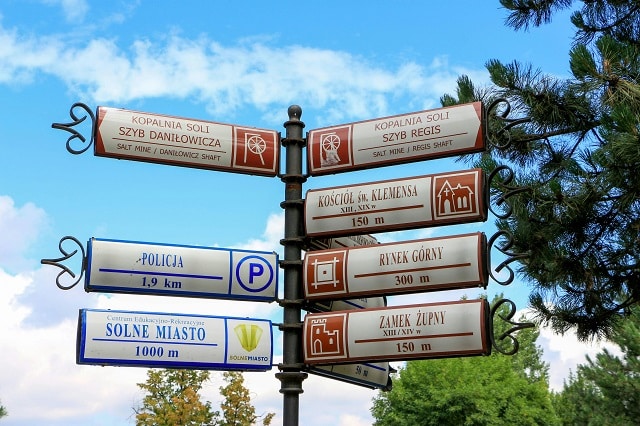
The highlight is St. Kinga’s Chapel, a cathedral carved entirely from salt — walls, floor, chandeliers, even the altar. Miners began creating it centuries ago, adding details generation after generation. The Wieliczka Salt Mine features nine levels of subterranean passages and tunnels, an underground lake, and sculptures that look like they belong in an art gallery, not 135 metres below ground.
Pro tip: take the early morning tour. By midday, the queues are brutal. Around 1.2 million people visit annually, and it gets crowded in summer. Book your wieliczka salt mine tickets online through the official website.
Auschwitz Birkenau: A Place of Remembrance
Some places to visit in Poland aren’t about enjoyment — they’re about understanding. Auschwitz Birkenau is the largest and most notorious Nazi concentration camp from World War II. Over 1.1 million people, the vast majority of them Jewish, were murdered here between 1940 and 1945.
The memorial is located in Oswiecim, about 70 kilometres west of Krakow. You can reach it by taking the Lajkonik bus service from Krakow (15 PLN) or a train from Krakow Glowny to Oswiecim for 9 PLN, then a short taxi ride. Guided tours last approximately three and a half hours and cover both Auschwitz I and Auschwitz II-Birkenau.
Admission to the grounds is free, but entry requires a personalised pass booked in advance at visit.auschwitz.org. During peak season (April to October), guided visits are mandatory. I’d recommend booking at least a month ahead — slots fill up quickly.
This is an emotionally heavy experience. The preserved barracks, the piles of personal belongings, the gas chambers — they confront you with the reality of the Holocaust in a way no textbook can. It’s essential. It’s uncomfortable. And it matters.
The second world war left deep scars across Poland. Visiting Auschwitz Birkenau is one of the most important things you can do to understand the country’s WWII history and the broader Jewish history of this region.
Warsaw: Poland’s Resilient Capital
Warsaw is Poland’s capital and largest city, home to over 1.8 million people. It’s a place that was almost completely destroyed during World War II — around 85% of the city was reduced to rubble. What you see today is a testament to Polish pride and determination.
Warsaw’s Old Town and Historic Center
Warsaw’s old town was meticulously reconstructed after being destroyed during World War II. Every building, every facade, every cobblestone was rebuilt based on paintings, photographs, and architectural drawings. The effort was so remarkable that UNESCO granted it World Heritage status — one of the few reconstructed sites to receive that honour.
Warsaw’s historic center is compact and walkable. Start at the Royal Castle, which overlooks Castle Square. The castle was rebuilt from ruins after the war and now houses a museum with period rooms and royal art collections. The market square nearby is ringed with colourful townhouses and outdoor cafes.
Walk south along Krakowskie Przedmiescie — Warsaw’s most elegant boulevard — toward Lazienki Park. In summer, free Chopin concerts are held under the trees every Sunday. It’s one of the most memorable things to do in the Polish capital.
Warsaw Uprising Museum and POLIN Museum
Two museums in Warsaw stand out. The Warsaw Uprising Museum is dedicated to the 1944 uprising against Nazi occupation, when Polish resistance fighters held the city for 63 days before being crushed. The museum uses film, audio, and interactive exhibits to recreate the desperation and courage of that period.
The POLIN Museum of the History of Polish Jews is equally powerful. Located on the site of the former Jewish ghetto, this museum dedicated to the thousand-year history of Jews in Poland traces everything from early medieval settlement to the Holocaust and contemporary Poland. It won the European Museum of the Year award, and it deserves every bit of that recognition.
Both museums require several hours to do justice. Don’t rush them.
Gdansk: Baltic Beauty with Maritime Soul
Head north and the character of Poland shifts entirely. Gdansk sits on the Baltic Sea coast and feels different from anywhere else in the country. It’s a port city with a rich maritime history, colourful merchant houses, and amber shops on every corner.
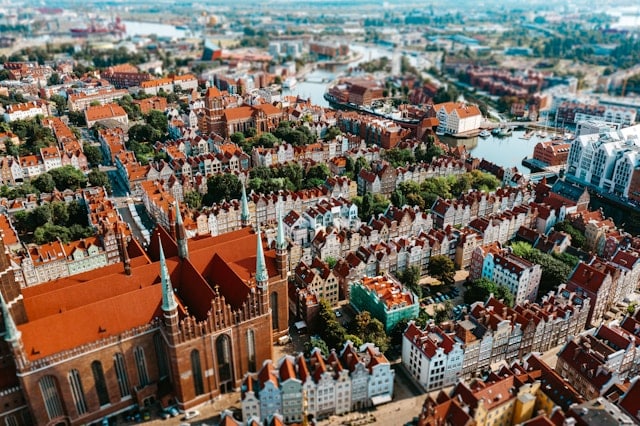
Exploring Gdansk’s Old Town
Gdansk’s old town was also reconstructed after World War II, and the result is stunning. The Long Market (Dlugi Targ) is the centrepiece — a wide pedestrian boulevard lined with narrow, pastel-coloured townhouses. The Neptune Fountain stands at one end. At the other, the Motlawa River opens up to views of the medieval crane and waterfront promenades.
The beautiful old town here has a different feel from Krakow. It’s more maritime, more mercantile, more Hanseatic. St. Mary’s Church dominates the skyline — it’s one of the largest brick churches in the world. Climb the tower for panoramic views across the city and out toward the Baltic Sea.
Gdansk also played a huge role in modern history. It’s where World War II began, when German warships shelled the Polish garrison at Westerplatte in September 1939. And in 1980, it was the birthplace of the Solidarity movement that helped bring down communist rule across eastern Europe. The European Solidarity Centre tells that story brilliantly.
The Amber Museum and Day Trips from Gdansk
Gdansk is the amber capital of Poland. The Amber Museum, housed in a historic tower, traces the history of this Baltic gem from prehistoric resin to modern jewellery. It’s a quick visit but surprisingly interesting.
From Gdansk, several day trips are within easy reach. Malbork Castle is the obvious headliner — more on that below. Sopot, a seaside resort town 20 minutes by commuter train, has beaches, a famous wooden pier, and a lively nightlife scene. For quieter Baltic Sea vibes, take the train to the small fishing villages along the coast.
Malbork Castle: The World’s Largest Brick Castle
About an hour south of Gdansk by train sits Malbork Castle — the world’s largest brick castle and a UNESCO World Heritage Site. Originally built by the Teutonic Knights in the 13th century as their headquarters, it’s a fortress that sprawls across 21 hectares of grounds.
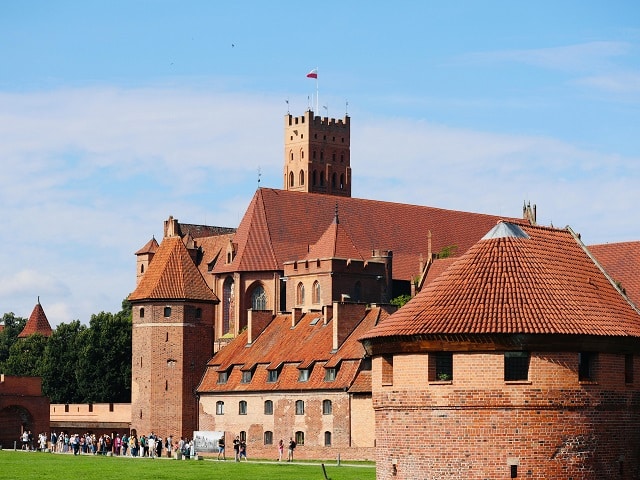
The Teutonic Knights were a German Catholic military order who controlled large stretches of northern Poland and the Baltic coast during medieval times. They used Malbork as a base of power, collecting river tolls from ships travelling the Vistula and Nogat rivers. The castle fell to Polish forces in 1457 and then served as a royal residence for Polish kings for the next 300 years.
Touring Malbork Castle takes three to four hours. The audio guide is excellent. Highlights include the Grand Masters’ Palace, the amber museum, the medieval kitchens, and the Gothic church. During the second world war, about half the castle was destroyed, but meticulous restoration has brought it back to its imposing glory.
Trains from Gdansk Glowny take 30–55 minutes depending on the service. From the train station in Malbork, it’s a 15-minute walk to the castle gates. Book your ticket online to skip the queue — Malbork Castle sees between 700,000 and 800,000 visitors per year.
Tatra Mountains: Poland’s Premier Hiking Destination
If you need a break from cobblestones and museums, head south. The Tatra Mountains sit on Poland’s border with Slovakia and offer some of the most spectacular hiking in central Europe.
Zakopane is the gateway town — a ski resort in winter and a hiking base in summer. It sits at 850 metres elevation in the foothills of the Tatra Mountains. The town has a distinct highlander culture. Wooden chalets line the main street. Vendors sell smoked oscypek cheese. The vibe is Alpine, but unmistakably Polish.
The most popular hike is to Morskie Oko — a glacial lake surrounded by granite peaks. The trail is well-maintained and takes about two hours each way from the trailhead. In peak season, arrive early. By mid-morning, the path gets crowded.
For more serious trekkers, routes up to Swinica (2,301m) and Kopa Kondracka (2,005m) offer craggy ridgelines and panoramic views across southern Poland and into Slovakia. The Tatra Mountains are a perfect destination for anyone who wants to combine outdoor adventure with cultural exploration.
Getting there from Krakow takes about two hours by bus. FlixBus and local carriers run regular services.
Wroclaw: A Picturesque City of Bridges and Gnomes
Wroclaw doesn’t get the same attention as Krakow or Warsaw, and that’s part of its appeal. This beautiful city in western Poland sits on the Oder River, spread across 12 islands connected by over 100 bridges. The old town square is one of the largest and most beautiful in the country.
But Wroclaw is best known for its gnomes. Over 600 small bronze dwarf statues are scattered across the city — each with its own personality and backstory. Hunting for them turns a simple walk into a city-wide treasure hunt. Kids adore it. Adults pretend they don’t, then post photos on Instagram anyway.
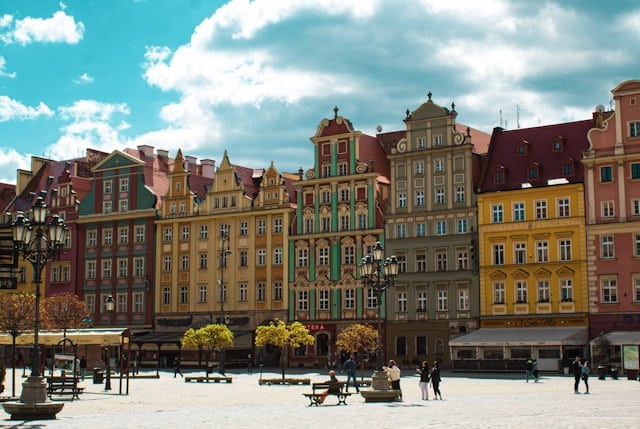
The Cathedral Island (Ostrow Tumski) is the oldest part of the city and one of the most beautiful places to visit in Poland. At dusk, a lamplighter still makes the rounds igniting gas lamps by hand. It’s a small tradition, but it feels like stepping back in time. Wroclaw has a vibrant student population, so the nightlife and cafe scene are excellent.
Bialowieza National Park: Europe’s Last Primeval Forest
In the eastern part of Poland, near the Belarusian border, Bialowieza National Park is home to the last primeval forest in Europe. This UNESCO World Heritage Site is ancient — some oak trees here are over 500 years old. The forest is famously home to a population of European bison, the continent’s heaviest land animals. You might also spot wild boar, elk, foxes, and rare bird species.
Most of the national park is a strictly protected zone. You’ll need a registered guide to enter. Tours range from a few hours to full-day expeditions. The European Bison Show Reserve inside the park guarantees close encounters with bison if the wild ones prove elusive.
Bialowieza is off the beaten path. That’s exactly why it’s worth the detour.
More Outdoor Adventures Across Poland
Poland has 23 national parks. Beyond Bialowieza and the Tatra Mountains, Slowinski National Park on the Baltic coast features shifting sand dunes that look more like the Sahara than central Europe. Walking trails wind through forests and along the shore. It’s a surreal landscape that most visitors don’t know exists.
The Masurian Lake District in northern Poland offers sailing, kayaking, and fishing across over 2,000 interconnected lakes. It’s the place to go if you want to slow down completely.
Polish Culture: Street Art, Food, and Festivals
One thing I didn’t expect in Poland was the street art. Warsaw’s Praga district and Krakow’s Kazimierz both have incredible murals — political, playful, and provocative. In Gdansk, street art has become part of the city’s identity, with large-scale pieces across the old shipyard district.
Food is a highlight everywhere. Pierogi are the obvious star — savory dumplings stuffed with everything from sauerkraut and mushrooms to meat and potatoes. Zapiekanka is the Polish answer to pizza: a toasted baguette smothered in toppings. Try a milk bar (bar mleczny) for cheap, traditional Polish dishes served cafeteria-style. These old-school canteens survived from the communist rule era and still serve portions that could feed a small army.

Poland’s Christmas markets are legendary, especially in Wroclaw, Gdansk, and Krakow. If you’re visiting in December, budget extra time for mulled wine, handmade crafts, and gingerbread. St. Dominic’s Fair in Gdansk (July/August) is one of the largest open-air cultural and trade events in Europe, running for over 750 years.
Practical Travel Tips for Visiting Poland
Getting Around
Poland’s train network is excellent. The PKP Intercity service connects all major cities. Warsaw to Krakow takes about 2.5 hours. Krakow to Gdansk is about 5–6 hours. Book on the official intercity.pl website. FlixBus and Polski Bus cover routes that trains don’t. Before you go, it’s worth understanding how eSIMs work for international travel so you can rely on maps and tickets without worrying about roaming. Google Maps works reliably across Poland for navigation, whether you’re driving or using public transport.
If you’re driving, Polish roads are generally good on main routes. Drive on the right. Seatbelts are mandatory. Headlights must be on year-round. Plan routes carefully — some single-lane roads in the eastern part of the country are narrower than expected, and construction can cause delays.
Staying Connected with an eSIM
Here’s something I wish I’d sorted sooner on my first trip: mobile data. You need reliable internet for maps, translations, restaurant reviews, and keeping in touch. Rather than hunting for a local SIM card at the airport, I now use a BazTel eSIM for Poland.
BazTel’s plans for Poland start from just $1, which is hard to beat. But the real differentiator is how you install it. Most eSIM providers still make you scan a QR code or download a separate app. BazTel has updated its process to something much simpler. After you buy your plan, the eSIM appears on your online dashboard. From there, you click one button — one for iPhone, another for Android — and it installs directly onto your phone. If you’re visiting multiple countries on the same trip, a BazTel eSIM data plan for Europe can keep you covered as you cross borders. No QR code. Forget about app download. Certainly, no fiddling around at the airport gate.
I tested this before my last trip and it worked exactly as advertised. The eSIM connected to a local Polish network as soon as I landed. Coverage was solid across Warsaw, Krakow, Gdansk, and even out in the Tatra Mountains. If you’re hopping between several countries, looking at the best eSIMs for travel can help you pick a plan that works smoothly beyond Poland. For anyone visiting Poland, sorting your connectivity before you board the plane saves a surprising amount of stress.
When to Visit
May to September offers the best weather for sightseeing and hiking. Summer brings crowds, especially in Krakow and at Auschwitz, so book accommodation and tickets early. Shoulder seasons (April–May and September–October) are ideal — fewer tourists, lower prices, and comfortable temperatures.
Winter has its own appeal. Christmas markets run from late November through December. Zakopane fills with skiers and snowboarders. Warsaw’s old town looks magical under snow. Just pack warm layers.
Currency and Costs
Poland uses the Polish zloty (PLN), not the euro. As of 2026, 1 USD buys roughly 3.7 PLN. ATMs are everywhere. Credit cards are widely accepted in cities, but carry some cash for smaller towns, market stalls, and milk bars.
Common Questions About Travelling to Poland
What are the top things to do in Poland for first-time visitors?
Start with Krakow’s old town, the Wieliczka Salt Mine, and Auschwitz Birkenau. Add Warsaw for its museums and reconstructed old town. If time allows, Gdansk and the Tatra Mountains round out a comprehensive first visit. These are the top attractions that give you a broad understanding of the country.
Is Poland safe for tourists?
Yes. Poland consistently ranks among the safest countries in Europe. Petty crime exists in tourist hotspots — keep valuables secure as you would anywhere — but violent crime against tourists is extremely rare.
How many days do I need in Poland?
A week covers the essentials: two to three days in Krakow (with day trips to Wieliczka and Auschwitz), two days in Warsaw, and two days in Gdansk. Ten days or more lets you add the Tatra Mountains, Wroclaw, or Bialowieza.
What’s the best way to get from Krakow to Auschwitz?
The Lajkonik bus from Krakow to Auschwitz costs 15 PLN and takes about 90 minutes. Alternatively, take a train from Krakow Glowny to Oswiecim (9 PLN) then a short taxi to the memorial. Guided tours with transport from Krakow are also widely available.
Do I need a tour guide for Poland?
Not always. Cities like Krakow and Warsaw are easy to explore independently with a good map. A fun walking tour of old town Krakow is worth doing on your first day to get oriented. For Auschwitz, a tour guide is mandatory during peak season and strongly recommended year-round. Local guides at sites like Malbork Castle and Bialowieza make a real difference — an amazing guide transforms a good visit into an outstanding one.
Is English widely spoken?
In major cities and tourist areas, yes. Younger Poles generally speak good English. In rural areas, communication can be trickier. Having Google Translate downloaded offline helps.
What should I eat in Poland?
Pierogi (dumplings) are essential. Try them with sauerkraut and mushroom, or the sweet versions with blueberries. Zapiekanka from any street vendor. Zurek (sour rye soup served in a bread bowl). And don’t leave without trying Zubrowka bison grass vodka — it’s Poland’s most famous spirit for a reason.
Can I use an eSIM in Poland?
Absolutely. Poland has excellent 4G and 5G coverage across all major cities and most rural areas. A travel eSIM like BazTel’s lets you arrive connected. Plans start from $1, install directly from your dashboard with one click, and work across the country, and broader eSIM plans for Europe make it just as simple to stay online if you’re adding neighbouring countries to your itinerary.
Final Thoughts: Why Poland Should Be Your Next Trip
Poland has more to offer than most travellers realise. It’s a country where medieval old towns sit alongside sobering World War II memorials. Where you can hike through a primeval forest in the morning and eat the best pierogi of your life by dinner. Where every city tells a story of destruction and rebuilding, resilience and reinvention.
The places to visit are diverse, accessible, and affordable. The top attractions — Krakow’s old town, Wieliczka Salt Mine, Auschwitz Birkenau, Warsaw’s rebuilt heart, Gdansk’s waterfront, Malbork Castle, the Tatra Mountains — are world-class. And the emerging scene of street art, craft beer, and modern museums shows contemporary Poland pushing forward with energy and creativity.
Sort your eSIM before you go (BazTel makes that ridiculously easy), whether you choose a global eSIM plan for a longer multi-country trip or tack on an eSIM for Germany if you’re pairing Poland with Berlin or Munich. Book your train tickets early, pack comfortable shoes, and prepare to be surprised. Poland is the perfect destination for anyone looking for a European trip that feels authentic, enriching, and genuinely exciting.
See you in Poland. You won’t regret it.

About the author
Peter Basil
Founder, CIPM, MBA
I'm Peter, the founder of BazTel. I built this company at the intersection of two things I know well: finance and travel. Before starting BazTel, I worked in investment analytics at State Street, one of the world's largest custodian banks, and later at TCorp, the New South Wales Government's investment fund.