Botswana
 Zambia
 Congo
Congo Colombia
 China mainland
 Chile
Chile Chad
Chad Central African Republic
 Canada
 Cameroon
 Cambodia
 Burkina Faso
 Bulgaria
 Brunei Darussalam
 Brazil
 Aland Islands
 Bosnia and Herzegovina
 Bolivia
 Belgium
 Belarus
 Bangladesh
 Bahrain
 Azerbaijan
 Austria
 Australia
 Armenia
 Argentina
 Algeria

In a world where digital convenience is prioritized, the traditional SIM card is up against some stiff competition from a much smarter option: the eSIM (Embedded SIM). eSIM is changing the mobile connectivity game whether you’re a frequent traveler, a mobile hero, or just sick of dealing with multiple SIM cards, but what exactly makes it better?
In this blog, we’ll look at all the great benefits of eSIM, where it can be applied, and how it can transform the mobile experience for users and businesses.
What is an eSIM?
An eSIM is literally something that is soldered onto the motherboard of your mobile device, smartphone, tablet, smartwatch, or IoT device! The eSIM card is an embedded, programmable chip, unlike traditional SIM cards (subscriber identity module), which are physical and removable.
Unlike traditional SIM cards, the eSIM is programmed over-the-air and soldered onto your device’s motherboard. Here’s how an eSIM works: it is reprogrammable and can be activated digitally, allowing users to switch networks or carriers without physically removing or replacing a SIM card.
The new generation of SIM technologies is supported and strongest from the largest telecom carriers in the world. It works with brands like Apple, Samsung, Google, and several others. However, not all smartphones or tablets are eSIM-compatible, which can create barriers for some users. When activating an eSIM, a stable internet connection is required to download the carrier profile.
eSIM Compatible Devices
eSIM technology is rapidly transforming the way we connect our mobile devices, offering a level of flexibility and convenience that simply isn’t possible with traditional SIM cards. Unlike physical SIM cards that require a SIM tray and manual swapping, eSIMs are embedded directly into the device’s hardware. This means there’s no need for a physical card or the hassle of using a paper clip to access a SIM slot—everything is managed digitally.
Many of today’s most popular smartphones support eSIM technology. For example, Apple introduced eSIM compatibility with the iPhone XS and iPhone XR, and every iPhone model since the iPhone 12 continues to support eSIM. On the Android side, devices like the Google Pixel 3 and newer also offer eSIM functionality. It’s not just phones but also smartwatches such as the Apple Watch Series 3 and later, as well as some Samsung Galaxy Watches, which allow users to stay connected on the go without needing to carry their phone or insert a physical SIM.
One of the standout benefits of eSIM-compatible devices is the ability to store multiple carrier profiles on a single device. This is a game changer for anyone who travels frequently or needs to manage both personal and business numbers. With eSIM, you can easily switch between different networks or activate a local SIM card for your destination, all without removing your old SIM or worrying about losing a tiny physical card. This flexibility helps users avoid expensive roaming fees and ensures they can always stay connected to the best available network.
Quick Hint
Not all devices support eSIM technology yet, but the list is growing quickly as more manufacturers embrace this mobile technology. If you’re considering a new phone or wearable, it’s a good idea to check if it’s eSIM compatible. You can usually find this information in your device’s settings under the SIM or Network section, or by visiting your service provider’s website. Many mobile operators and electronics retailers also highlight which devices support eSIM, making it easier to make an informed choice.
eSIM activation is straightforward. Most service providers will give you a QR code to scan, and your device will guide you through the on-screen instructions to set up your new mobile plan. This digital activation process is much faster and more secure than waiting for a new SIM card to arrive in the mail or visiting a store.
As more networks support eSIM and more devices become compatible, users will enjoy even greater freedom to manage their mobile connectivity. Whether you’re looking to save money on international roaming, want to store multiple carrier profiles for different networks, or simply prefer the convenience of managing everything from your phone, eSIM technology is paving the way for a smarter, more connected future.
Top Advantages of eSIM
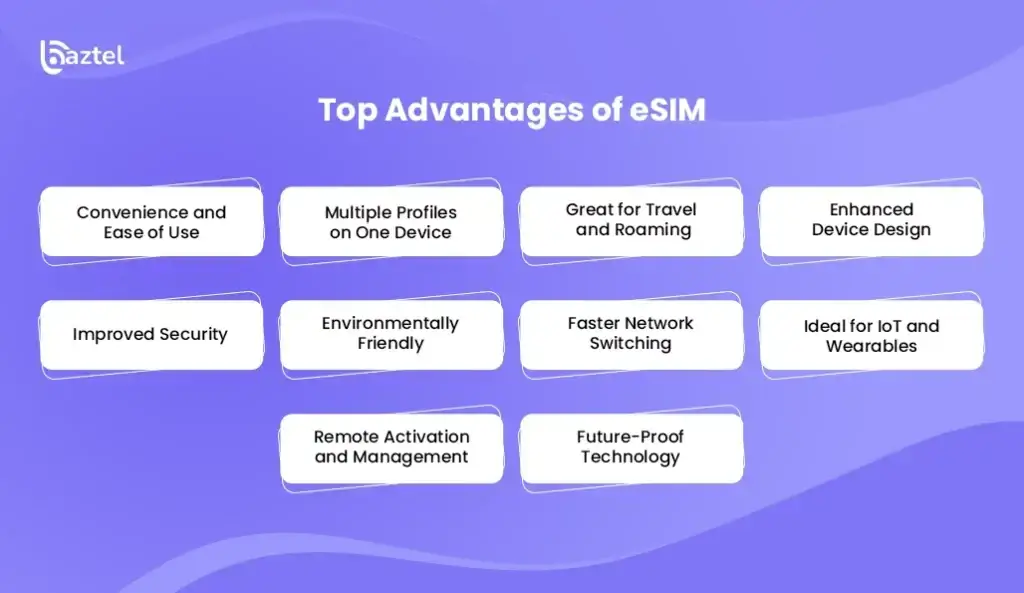
eSIM technology is transforming the way we connect our devices, offering a modern alternative to traditional SIM cards. Among the top eSIM advantages are its simplicity, flexibility, and digital activation process, which allow for quick operator switching and seamless integration with compatible devices. The numerous benefits of eSIM include easy activation, enhanced device integration, and the ability to manage multiple profiles without the need for physical SIM cards. These eSIM benefits make it a compelling choice for users seeking convenience and adaptability in their mobile connectivity.
Convenience and Ease of Use
One of the most obvious advantages of eSIM is the incredible convenience it offers. With an eSIM, you no longer need to visit a store or wait for a SIM card to be delivered. You can:
- Activate a plan digitally by scanning a QR code or downloading an app from your carrier.
- Switch plans or carriers immediately, without having to order a new card.
- Prevent loss or destruction of physical SIM cards.
With eSIM, users can activate or switch their data plan and mobile data remotely, without needing a physical SIM card. This makes managing your connectivity much easier, especially when traveling or changing carriers.
This plug-and-play feature is particularly priceless in today’s digital world, where the power of instant access is at stake.
Multiple Profiles on One Device
eSIM enables you to have several carrier profiles saved on one device. Although you can only employ one or two profiles concurrently (based on your device), switching between them is easily done. With one eSIM-enabled device, most modern phones can store between 5 to 10 eSIM profiles, making it easy for travelers and professionals to manage separate personal and work numbers. Travelers can also manage multiple eSIM profiles on a single device, allowing them to keep business and personal numbers separate.
This is helpful for:
- Global travelers who intend to use a local carrier without losing their home number.
- Business professionals who switch back and forth between work and personal numbers on the same phone.
- Tech testers and developers who switch between network operators.
Great for Travel and Roaming
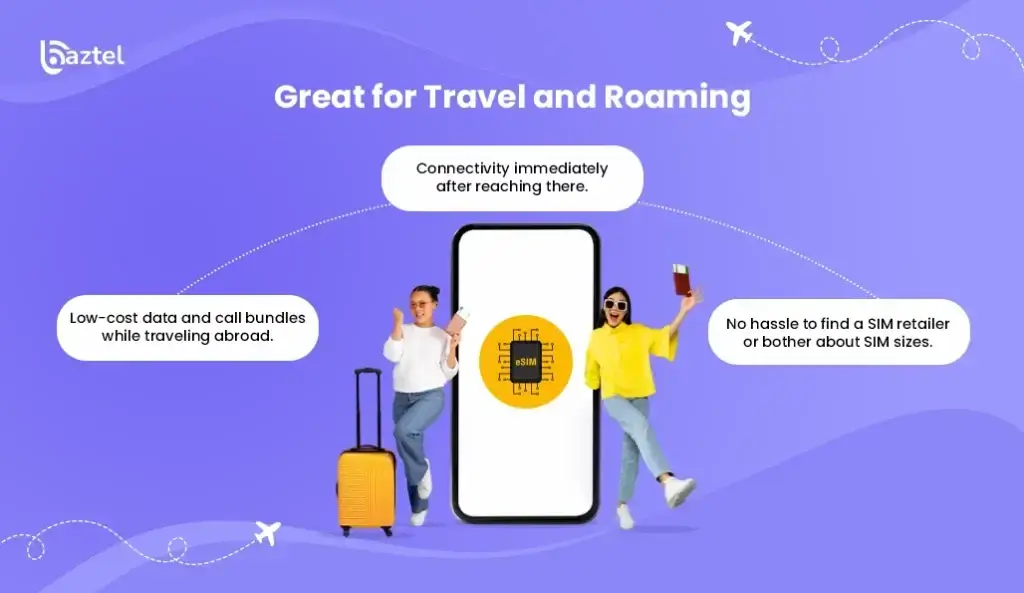
The eSIM is a boon for travelers. Rather than purchasing local SIMs or incurring high roaming charges, travelers can set up a local plan even before arrival in a foreign land.
Advantages for travelers are:
- Low-cost data and call bundles while traveling abroad.
- Connectivity immediately after reaching there.
- No hassle to find a SIM retailer or bother about SIM sizes.
- Easily add an international plan or connect to a local network without needing a physical sim card, reducing costs and avoiding roaming fees.
Most international eSIM operators provide regional or country-specific plans that are affordable and dependable.
Additionally, eSIMs can be activated in a matter of minutes, providing a seamless experience for travelers who need to switch networks quickly.
Enhanced Device Design
Removing the physical SIM slot allows manufacturers to design sleeker, more compact devices, especially in new devices. By eliminating the SIM tray, manufacturers can free up internal space for larger batteries, directly improving battery life—a key factor for many users when choosing a smartphone. This space-saving measure can be used to:
- Increase battery capacity or efficiency.
- Enhance water and dust resistance (IP ratings).
- Improve waterproofing and protection against moisture by reducing ingress points.
- Simplify hardware, particularly for small devices such as smartwatches and IoT devices.
Consequently, eSIM adds to the future of slim, high-performance devices.
Improved Security
eSIMs are less prone to theft or tampering compared to physical SIM cards. Since there’s no removable component, it’s harder for someone to:
- Steal your SIM and clone your number.
- Commit SIM-swap fraud.
- Remove and misuse your SIM in another device.
Moreover, if your phone is lost or stolen, you can remotely disable the eSIM profile through your carrier or device’s management platform.
Environmentally Friendly
By eliminating the need for physical SIM cards, eSIMs contribute to reducing plastic waste and packaging materials. This makes them a greener, more sustainable alternative for environmentally conscious users and enterprises.
Given that billions of SIM cards are produced and exported around the world every year, moving to eSIMs can drastically reduce carbon footprints.
Faster Network Switching
With eSIM, it is as easy as a few taps to change between carriers or plans. This opens up a competitive benefit for consumers:
- Quickly compare and switch to improved data or voice plans.
- Experiment with new providers without being locked into a physical SIM.
- Employ network plans optimized for particular activities (e.g., gaming, work, travel).
eSIM technology also allows users to switch between different mobile networks quickly and easily. When switching devices, eSIM requires activation on the new phone and deactivation from the old one, making the process more secure and streamlined.
This level of network agility is especially desirable in markets with several telecom providers and fluctuating prices.
Ideal for IoT and Wearables
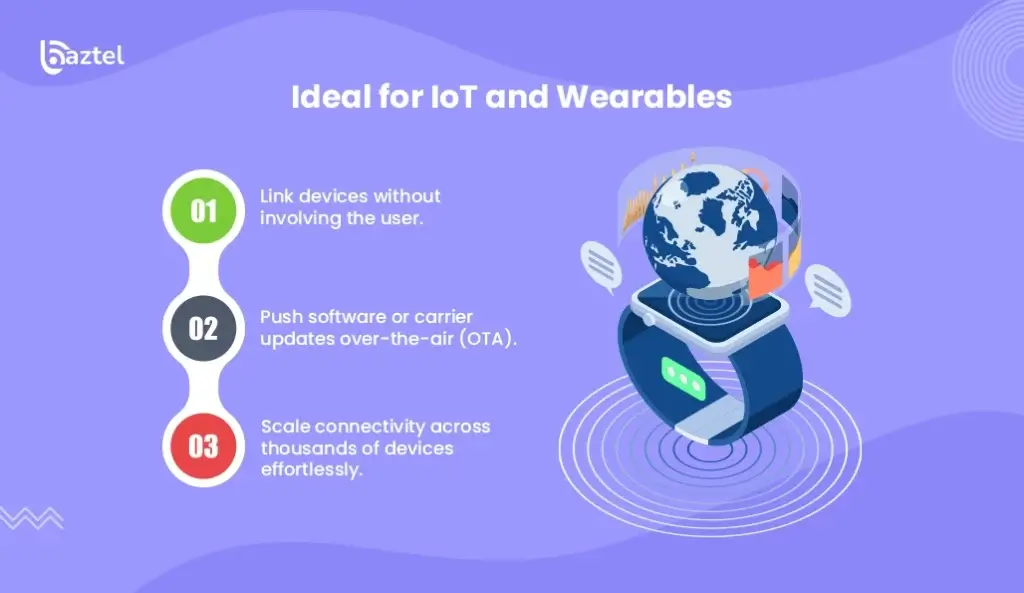
eSIMs are particularly well-placed for Internet of Things (IoT) devices, where size and far-end provisioning are important. Whatever the device—smartwatch, connected car, smart thermostat, or health monitor—eSIM simplifies it to:
- Link devices without involving the user.
- Push software or carrier updates over-the-air (OTA).
- Scale connectivity across thousands of devices effortlessly.
This makes eSIM a key technology in building smart homes, smart cities, and 5G ecosystems.
Remote Activation and Management
eSIM enables remote SIM provisioning (RSP), allowing carriers to update your SIM profile without physical presence on your phone.
To activate an eSIM, you typically need a stable internet connection and should be connected to a Wi-Fi network. Most carriers provide a QR code to scan for eSIM activation. On iPhone, you need to ensure your model supports eSIM and is connected to Wi-Fi; on Android, you must verify device support and Wi-Fi connection. If you accidentally delete your eSIM, you need to contact your provider for a new QR code.
Advantages of remote provisioning include:
- Corporate IT teams can remotely manage devices for employees.
- Users can change plans or recover profiles without visiting a store.
- Over-the-air updates enhance security and connectivity without effort.
This makes eSIM highly scalable and enterprise-friendly.
Future-Proof Technology
As telecom infrastructure advances, eSIM is expected to become the standard SIM technology. Brands like Apple have already launched eSIM-only phones in the US (e.g., iPhone 14), and more manufacturers are following suit.
eSIM technology is expected to become the mainstream standard for mobile connectivity by 2025 due to its advantages in convenience, security, and flexibility. However, physical SIM cards still offer universal compatibility with older devices, so if you have an old phone, it may not support eSIM and will require a traditional SIM card.
Investing in an eSIM-compatible device today ensures:
- You’re ready for future digital transformations.
- You benefit from upcoming enhancements in mobile connectivity.
- You avoid the hassles of obsolete SIM formats.
eSIM vs Physical SIM: Quick Comparison
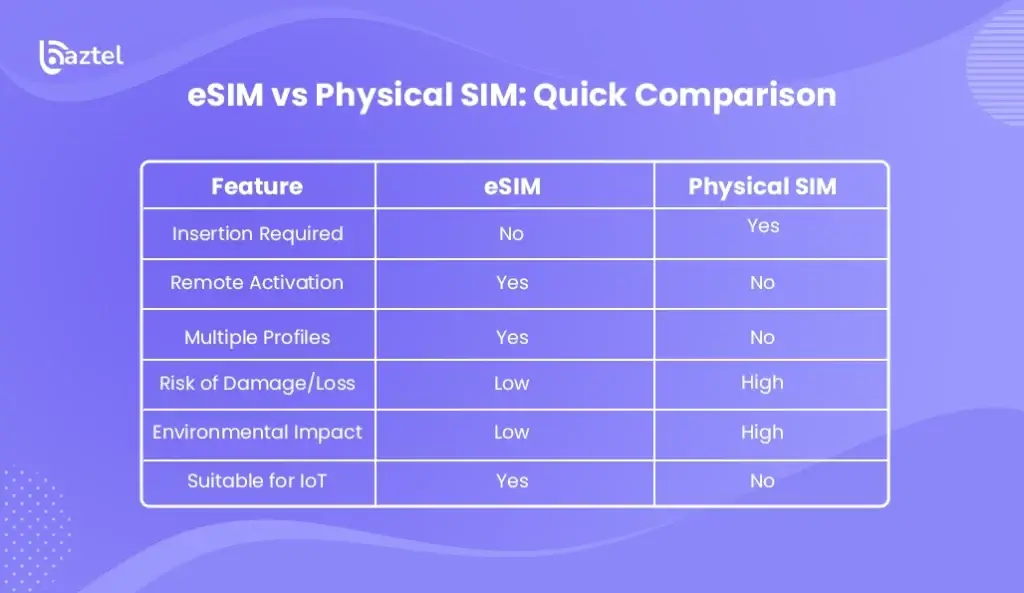
In a mobile phone, a traditional SIM card (subscriber identity module) can be easily swapped, which poses a risk of unauthorized access if someone gains physical access to the device. In contrast, eSIMs are embedded directly into smartphones, making them more secure and less susceptible to such risks.
Final Thoughts
The eSIM represents a major change in our interactions with one another, not simply a small improvement. For today’s quick, digital-first life, eSIM technology is the ideal match since it provides unmatched convenience, security, seamless travel, and long-term flexibility.
At BazTel, we’re not merely a telecom company—we’re your international partner. With a passion for frustration-free connection and a dedication to excellence, we’ve transformed the way tourists and international users remain connected. Our eSIM solutions bring network changing, plan management, and staying online within reach—irrespective of where life leads you.
Select BazTel and discover the future of communication—easy, clever, and borderless.

About the author
Peter Basil
Founder, CIPM, MBA
I'm Peter, the founder of BazTel. I built this company at the intersection of two things I know well: finance and travel. Before starting BazTel, I worked in investment analytics at State Street, one of the world's largest custodian banks, and later at TCorp, the New South Wales Government's investment fund.