
 Botswana
 Zambia
 Congo
Congo Colombia
 China mainland
 Chile
Chile Chad
Chad Central African Republic
 Canada
 Cameroon
 Cambodia
 Burkina Faso
 Bulgaria
 Brunei Darussalam
 Brazil
 Aland Islands
 Bosnia and Herzegovina
 Bolivia
 Belgium
 Belarus
 Bangladesh
 Bahrain
 Azerbaijan
 Austria
 Australia
 Armenia
 Argentina
 Algeria

My first morning in Hanoi, I sat on a tiny plastic stool, knees to my chest, slurping a bowl of pho beside a woman who had clearly been making it for forty years. A scooter nearly clipped my elbow. Nobody flinched. I was hooked. If you are weighing up a Vietnam trip and trying to figure out which things to do in Vietnam are actually worth your time, this is the honest guide I wish I had before my first visit. The list of things to do in Vietnam can feel endless online, so I have narrowed it down to what is genuinely worth your hours.
I have spent weeks bouncing between Hanoi, Ho Chi Minh City, Hoi An, Da Nang, Halong Bay and the Mekong Delta. Some of the famous spots earn the hype. A few are overrated. And there are places almost no first timers hear about that ended up being my favourite. Below is what I would actually recommend, sorted region by region, with the practical bits I had to learn the hard way.
Why Vietnam Hits Different
Vietnam stretches roughly 1,650 km from north to south, which means the weather, the food and the vibe shift dramatically depending on where you land. Northern Vietnam gives you misty mountains, rice terraces and a colder, moodier feel. Central Vietnam is where you get lantern-lit ancient towns, beaches and the country’s best food in my opinion. Southern Vietnam is hot, fast and tropical, with the Mekong Delta on your doorstep and Phu Quoc a short flight away.
The best time to visit Vietnam for most first timers is March to April or September to November. The weather is mild across most of the country and you avoid the worst of the rainy season. I went in early November once and got near-perfect days from Ho Chi Minh up to Hanoi.
One quick practical note before we dive in. Tap water is not safe to drink, Grab works almost everywhere as a ride app, and you will need data on your phone constantly for maps, translation and bookings. I now use a BazTel eSIM whenever I land because the key benefits of eSIM technology make travel logistics so much easier, and the new install process is genuinely the easiest setup I have ever used. You buy the plan, log into your dashboard, tap a single button for iPhone or Android, and it installs straight onto your phone. No QR code, no app, no fiddling around in airport WiFi while a queue forms behind you.
Northern Vietnam: Hanoi, Halong Bay and the Mountains
Northern Vietnam is where I would tell most people on a first visit to Vietnam to start. It is colder, calmer and the food scene in Hanoi alone is worth the flight.
Get Lost in Hanoi’s Old Quarter
Hanoi’s Old Quarter is a maze of narrow streets, each historically named after the trade once sold there. Silver Street. Sugar Street. Bamboo Street. You can spend a full day just wandering, eating, and dodging scooters. I keep coming back to this neighbourhood because it captures local life better than anywhere else in the country.
Start your morning at Hoan Kiem Lake. By 6am the lake is full of locals doing tai chi, jogging and ballroom dancing in groups. It is one of those moments where you feel like you are seeing the real city, not a postcard version of it. Then duck into the Old Quarter for a bowl of bun cha or a banh mi from a street vendor with a queue.
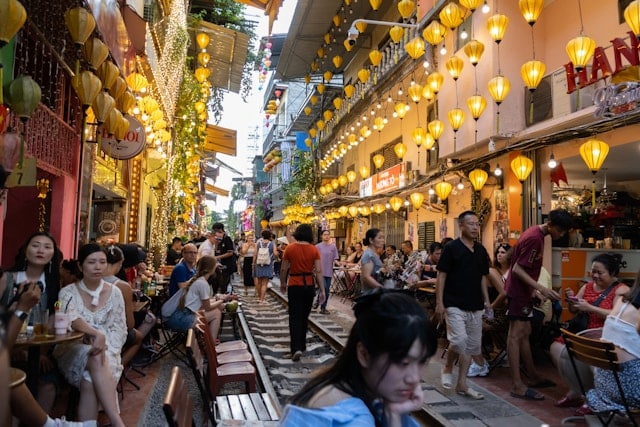
A few specific spots I would not skip. Train Street, where a working railway line cuts between cafes that are barely a metre from the tracks. Hoa Lo Prison, known to American POWs as the Hanoi Hilton, which gives you a sobering perspective on the Vietnam War from the Vietnamese side. And the water puppet show near Hoan Kiem Lake, which sounds touristy but is genuinely a unique slice of Vietnamese culture.
Try Egg Coffee (Trust Me)
Vietnamese coffee is its own world. Strong, slow-dripped, often served with sweetened condensed milk. But the one you have to try in Hanoi is egg coffee. It sounds weird. It tastes like a warm tiramisu in a mug. The original spot is Cafe Giang in the Old Quarter, tucked down a tiny alley. I was sceptical the first time. I now order it every chance I get.
Cruise Halong Bay (or, Better, Lan Ha Bay)
Cruising Halong Bay is the iconic Vietnam experience. A UNESCO World Heritage site, Ha Long Bay covers around 1,500 square kilometres and contains thousands of limestone karsts rising out of emerald water. Photos do not do it justice. My first morning waking up on a junk boat in the middle of those karsts, fog still clinging to the cliffs, is one of my fondest memories from any trip I have taken.
Here is the honest part. Halong Bay is busy. Cruise companies pack the main routes. If you want a quieter experience, ask for an itinerary that goes into Lan Ha Bay or Bai Tu Long Bay instead. Lan Ha Bay sits just south of the main bay, near Cat Ba Island, and has the same scenery with a fraction of the boats. Bai Tu Long is further north and even more remote. I did Lan Ha on my second visit and it was a noticeable upgrade.
For anyone on their first trip I would recommend an overnight cruise rather than a day trip. The day trips spend half their time on the bus from Hanoi. Overnight gets you sunset, dinner on the water, kayaking through caves and a sunrise over the karsts. Worth the splurge.
Sapa, Ninh Binh and the Ha Giang Loop
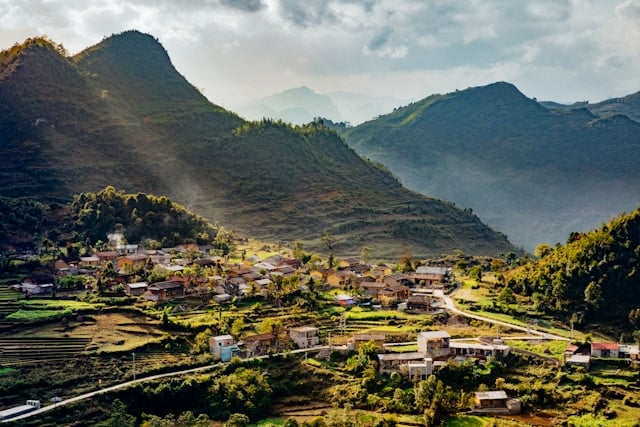
If you have a week or more, push beyond Hanoi into the mountains. Sapa is a hill town in the far north, surrounded by terraced rice fields that climb the slopes. Trekking through the rice terraces and staying in a homestay with a local Hmong family was one of my favourite things on my last Vietnam trip. The rural life up there feels worlds away from the chaos of Hanoi.
Ninh Binh, often called the Halong Bay on land, is about 90 minutes south of Hanoi and makes a great day trip or overnight. You take a small boat through limestone caves and rice fields. It is one of those incredible landscapes you keep stopping to photograph. Tam Coc and Trang An are the two main boat routes.
And then there is the Ha Giang Loop. This is a multi-day mountain motorbike route in the far north of Vietnam, known for its dramatic scenery, steep mountain passes and small villages tucked into valleys. It is not for first timers unless you are an experienced rider, but if you are confident on a bike it is widely considered one of the great road trips in Southeast Asia.
Central Vietnam: Hoi An, Da Nang and the Caves
Central Vietnam is, hand on heart, my favourite part of the country. It is where the food gets the most interesting, the beaches actually deliver, and Hoi An sits in the middle of it all like a small lantern-lit miracle.
Hoi An: The Town That Made Me Cancel My Flight
I planned to spend two nights in Hoi An. I stayed five. The ancient town of Hoi An is a UNESCO World Heritage site, and Hoi An earns the title. The ancient town is a tangle of narrow streets, mustard yellow shophouses, historic buildings and thousands of silk lanterns strung between them. Hoi An was a major trading port from the 15th to the 19th century, and the historic buildings still show the Chinese, Japanese and European influences from that era.
By day, Hoi An is sleepy and walkable. By night, the lanterns come on and Hoi An transforms. If you can time your visit to Hoi An with the Hoi An Lantern Festival, held on the 14th day of every lunar month when the moon is full, do it. The town turns off its electric lights and the candle-lit lanterns take over. People release small paper lanterns onto the Hoai River. It is one of the few touristy things I have done that genuinely lived up to the photos, and it remains one of my fond memories of any visit in Vietnam.
Things I would actually do in Hoi An. Take a cooking class — I did one in Hoi An that started at the morning market and ended with us cooking cao lau and white rose dumplings, both dishes that you basically only find in Hoi An. Get something tailor-made; Hoi An is famous for it and a custom shirt costs a fraction of what it would back home. Rent a bicycle and do an easy bike ride out to An Bang Beach through the rice fields and surrounding villages. And do a basket boat tour in the coconut palm waterways just outside Hoi An. It is touristy, yes, but the boat operators put on a show and it gives you a glimpse into traditional fishing techniques and local culture you would otherwise miss.
Da Nang and Ba Na Hills
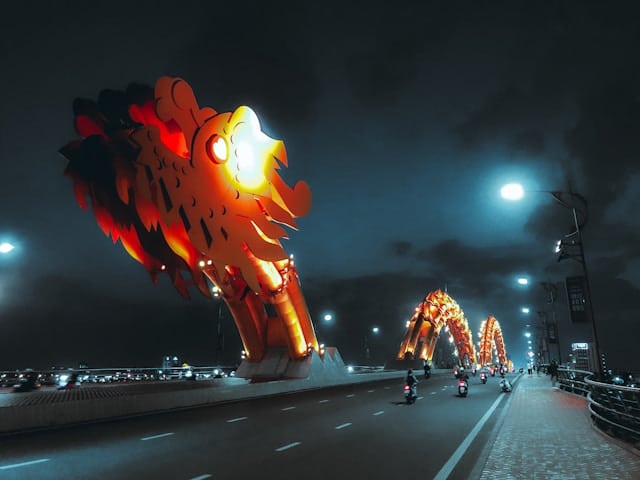
Da Nang is just 30 minutes from Hoi An and works as either a base or a day trip. The city itself has long beaches like My Khe, a busy food scene and the famous Dragon Bridge that breathes fire on weekends. I usually base myself in Hoi An and pop into Da Nang for a day.
The big drawcard near Da Nang is Ba Na Hills, a mountain resort about an hour from the city. You take the world’s longest non-stop cable car up into the clouds, which is a memorable cable car ride in itself. At the top is the Golden Bridge, the one held up by two giant stone hands you have probably seen on Instagram. Yes, it is a theme park up there. Yes, it is touristy. But if the weather is clear the views are genuinely spectacular. Go early morning to beat the crowds and get clearer photos.
Phong Nha and Paradise Cave
If you have a few extra days in central Vietnam, head north to Phong Nha-Ke Bang National Park. This park is home to UNESCO-listed caves, including Son Doong, the world’s largest natural cave. Son Doong itself requires a multi-day expedition and a serious budget, but you can visit Paradise Cave and Phong Nha Cave on a normal day trip. Walking into Paradise Cave is one of the more humbling experiences I have had as a traveller. The scale is hard to describe.
Southern Vietnam: Saigon, the Mekong and Phu Quoc
Southern Vietnam is hotter, faster and more chaotic than the north. Ho Chi Minh City is the engine room and the Mekong Delta is right next door. If you are short on time, a few days here is enough to get the flavour.
Ho Chi Minh City: Saigon’s Energy
Ho Chi Minh, still called Saigon by most locals, is loud, hot and exhilarating. Crossing the road for the first time is a rite of passage. The trick, as every guidebook tells you and as I had to learn the hard way, is to walk slowly and steadily. The scooters will flow around you. Stop suddenly and you create a problem.
Two things in Ho Chi Minh I would not skip. The War Remnants Museum, which presents the Vietnam War (called the American War here) from the Vietnamese perspective. It is heavy, especially the photography on the upper floors. But it is essential context for the country. And the Cu Chi Tunnels, about 90 minutes from the city, where you can climb down into a section of the underground tunnel network used by the Viet Cong. The tunnels are tiny. Even the widened tourist sections require crouching. It gives you a visceral sense of what the war was actually like on the ground.
For food, do a street food tour. I cannot stress this enough. Saigon’s street food scene is wild and a guided food tour gets you into spots you would walk past on your own. Banh xeo, com tam, bun thit nuong. I have had some of the best meals of my life from food stalls in District 1 and District 4.
The Mekong Delta
The Mekong Delta sprawls south of Ho Chi Minh City, a massive web of rivers, rice fields and floating markets. You can do it as a day trip, but if you have the time, an overnight in a homestay near Ben Tre or Can Tho is a much better experience. You wake up at 5am and head out to the floating markets when they actually float — by 8am the boats have mostly packed up.
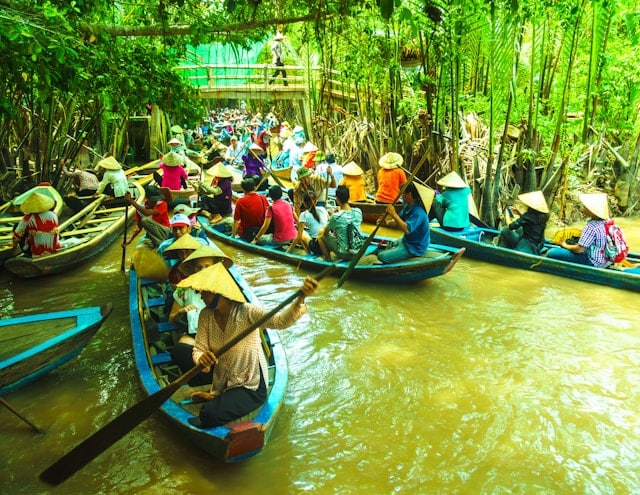
On my Mekong trip I cycled through rural villages, ate fruit straight off the trees, and watched a family make rice noodles by hand in their backyard. The pace of rural life down there is the opposite of Saigon, and that contrast is exactly why it is worth going.
Phu Quoc: Vietnam’s Beach Escape
Phu Quoc is Vietnam’s largest island, sitting off the southwest coast in the Gulf of Thailand. It is the country’s beach holiday destination, and it has been compared to Bali and the Maldives by travel publications. Whether that is fair depends on which part of the island you visit, but the beaches on the west and south coasts are genuinely beautiful. Bai Sao on the south is the postcard one.
There is also the Hon Thom cable car, which at 7.9 km is one of the longest sea-crossing cable cars in the world. It is a touristy ride but the views over the islands are something else. For travellers wanting a perfect escape after a busy itinerary, three or four nights in Phu Quoc at the end of your Vietnam trip is a great way to wind down.
Vietnamese Food: The Real Reason to Come
If I am being honest, the food might be the single best reason to visit Vietnam. Vietnamese food is fresh, balanced, herb-heavy and ridiculously cheap by most international standards. A bowl of pho on a plastic stool will cost you about a dollar fifty. A banh mi from a good street vendor, less than two dollars.
The dishes you have probably heard of — pho, banh mi, bun cha, fresh spring rolls — are great and you should eat them often. But each region has its own specialties as follows:
- Hanoi, get bun cha and egg coffee
- While in Hue, the old imperial city in central Vietnam, try bun bo Hue, a spicy beef noodle soup that is completely different from northern pho
- If you decide to go to Hoi An, then you must try cao lau and white rose dumplings
- Offcourse when in Ho Chi Minh, com tam (broken rice with grilled pork) and banh xeo
My single biggest food tip for anyone planning a first visit to Vietnam: do at least one guided food tour, ideally on your first or second night in a new city. A good guide will take you to spots you would never find, explain what you are eating, and give you the confidence to wander into food stalls solo for the rest of your trip. It pays for itself within a day.
Practical Tips for Your First Visit to Vietnam
Getting Around
For a first visit in Vietnam, I recommend flying between the main hubs (Hanoi, Da Nang, Ho Chi Minh) and using Grab or trains for shorter hops. Vietjet and Vietnam Airlines both run regular cheap domestic flights. Understanding how eSIMs work for international travel also helps you stay connected smoothly between airports, stations and cities. The Reunification Express train is a classic experience if you have time, especially the leg between Da Nang and Hue, which hugs the coast. I would not recommend renting a motorbike on a first trip unless you have real experience riding — Vietnam’s traffic is no joke.
Money and Costs
Vietnam is one of the cheapest countries in Southeast Asia. As of 2026, you can travel comfortably on around USD $50–80 a day including a mid-range hotel, three meals out, transport and a couple of activities. Backpackers can do it on half that. Building eSIM data into your budget is easy once you understand the main advantages of eSIM over traditional roaming. Always carry some Vietnamese dong cash, especially outside the big cities. Many street vendors and small restaurants do not take card.
Staying Connected
Reliable mobile data is non-negotiable in Vietnam. You will use it for Grab, Google Translate at food stalls, navigating the Old Quarter without getting hopelessly lost, and uploading photos as you go. I used to grab a physical SIM at Tan Son Nhat or Noi Bai airport but the queues can be brutal after a long flight. These days I just install a BazTel eSIM for Vietnam before I land. The new BazTel install flow has removed the QR code scan entirely. After purchasing the eSIM, you log into your dashboard, hit the install button (one for iPhone, one for Android), and the eSIM installs directly onto your phone with no app download or QR scan needed. By the time I am off the plane I already have data.
Plans on BazTel start from around $1, with coverage across 160+ countries, so it is also handy if Vietnam is part of a longer Southeast Asia trip where you want a single global eSIM plan to cover multiple borders.
Visas, Safety and Respect
Most nationalities now need a Vietnam e-visa, which you apply for online in advance. Check your country’s specific requirements before you book flights. Vietnam is broadly safe for tourists. The biggest risks are scooter accidents and the occasional scam, both of which you avoid with common sense. Dress modestly when visiting temples, remove your shoes when entering homes, and do not point with your feet. Vietnamese culture values politeness and quiet respect, and a little effort goes a long way.
Common Questions About Visiting Vietnam
How many days do I need in Vietnam?
For a first visit in Vietnam, I would aim for 10 to 14 days. That is enough to comfortably cover Hanoi, Halong Bay, Hoi An, Da Nang and Ho Chi Minh City, with a couple of days spare for the Mekong Delta or a beach. If you only have a week, pick one region (north or central) and do it properly rather than trying to cram everything in. Vietnam is a big country and the travel time between regions adds up, so it helps to have your connectivity sorted with an eSIM plan for international travel before you start hopping between cities.
What is the best time of year to visit Vietnam?
March to April and September to November are generally the best windows. The weather is pleasant across most of the country and you avoid the heaviest rains. December to February is dry in the south but quite cold in Hanoi and the northern mountains. June to August is hot and humid everywhere, with the wet season hitting central Vietnam hardest from September onwards in some years.
Is Vietnam safe for first time travellers?
Yes. Vietnam is generally a safe destination for tourists, including solo travellers. Petty theft happens in busy areas like Saigon’s District 1, so keep an eye on your phone and bag. Traffic is the bigger risk — be cautious crossing roads and do not rent a motorbike unless you really know what you are doing.
Should I visit northern or southern Vietnam first?
If you can swing it, fly into Hanoi and out of Ho Chi Minh (or vice versa). That way you go top to bottom or bottom to top in a logical line and avoid backtracking. Looking at a global eSIM review for travelers can also help you decide how to stay connected if you are pairing Vietnam with other countries. I personally prefer starting in the north because the weather generally improves as you head south, and it feels like a natural arc from misty mountains to tropical beaches.
What is the most underrated thing to do in Vietnam?
Honestly, just sitting on a plastic stool eating street food and watching local life unfold. It is not flashy, it costs a few dollars, and it ends up being the memory most people talk about long after the cable car rides and the cruise photos. The hidden gem of Vietnam is the everyday.
Final Thoughts: Building Your Vietnam Itinerary
If you take three things from this guide to things to do in Vietnam, take these. First, do not try to see all of Vietnam on your first visit. Pick north and central Vietnam, or central and southern Vietnam, and give each place a few days to breathe. Second, eat your way through Vietnam — street stalls, food tours, cooking classes, the works. The food is the through-line of any good Vietnam trip. Third, get your data sorted before you land in Vietnam so you spend your first hour eating banh mi instead of queuing at an airport SIM counter.
Vietnam rewards travellers who slow down. If you are pairing it with nearby countries like Cambodia, an eSIM for Cambodia makes it easy to cross borders without hunting for new SIM cards. The biggest mistake I see people make on a first visit to Vietnam is treating it like a checklist — Halong Bay, Hoi An, Cu Chi Tunnels, done. The real magic of Vietnam is in the unplanned stuff. The early morning walk around Hoan Kiem Lake. The conversation with a homestay owner in Sapa. The bowl of cao lau you find by accident down a side street in Hoi An. Leave room for it.
My next trip back to Vietnam is already half-planned, and I keep coming back to the same rural villages and favourite places I found on earlier visits. That is the kind of country Vietnam is. Once you visit Vietnam, you start counting down to the next trip. There are always more things to do in Vietnam waiting for you. Safe travels.

Blog Author
Peter
I'm Peter, the founder of BazTel. I built this company at the intersection of two things I know well: finance and travel. Before starting BazTel, I worked in investment analytics at State Street, one of the world's largest custodian banks, and later at TCorp, the New South Wales Government's investment…


