Botswana
 Zambia
 Congo
Congo Colombia
 China mainland
 Chile
Chile Chad
Chad Central African Republic
 Canada
 Cameroon
 Cambodia
 Burkina Faso
 Bulgaria
 Brunei Darussalam
 Brazil
 Aland Islands
 Bosnia and Herzegovina
 Bolivia
 Belgium
 Belarus
 Bangladesh
 Bahrain
 Azerbaijan
 Austria
 Australia
 Armenia
 Argentina
 Algeria

Thailand runs on your phone. You land in Bangkok, open Grab for a ride, pull up Google Maps to find your hotel, and message your group on WhatsApp. Try doing any of that without mobile data. It doesn’t work. I learned this the hard way on my first trip, standing in the arrivals hall at Suvarnabhumi with no signal and no clue where my driver was.
Since then, I’ve flown to Thailand five times. I’ve tried physical SIM cards from airport kiosks. I’ve used pocket Wi-Fi devices. I’ve tested eSIM plans from multiple providers. And after all of it, I’m convinced that an eSIM is the best way to stay connected in Thailand — if you pick the right one. This guide covers what I’ve learned: which eSIM for Thailand offer the best value, which local networks actually deliver reliable coverage, and how the setup process works across providers. As of April 2026, all pricing and plan details have been verified.
What Is an eSIM and Why Does It Make Sense for Thailand?
An eSIM (embedded SIM) is a digital version of the traditional physical SIM card. Instead of swapping a tiny chip into your phone, you install a mobile plan directly onto your device. It’s built into most modern phones — iPhone XS and later, Samsung Galaxy S20 and later, and Google Pixel 3 and later all support eSIM technology.
For Thailand travel, this makes sense for a few reasons. You can purchase your eSIM plan before you fly. Your phone connects to a local network the moment you land. There’s no passport registration at a kiosk, no language barriers with shop staff, and no risk of losing a nano-SIM in an airport bathroom. You keep your home SIM card active for calls and texts while the eSIM handles your data. For most travellers, this dual setup is the sweet spot.
Thailand’s local networks — AIS, TrueMove H, and DTAC — all offer excellent 4G and 5G coverage. Most eSIM providers connect through one or more of these. The practical difference between a physical SIM and an eSIM in Thailand isn’t speed or coverage. It’s convenience and the ability to manage everything from your phone before your trip even starts.
Thailand’s Local Networks: AIS, TrueMove H, and DTAC
Understanding the local network landscape helps when choosing an eSIM for Thailand. As of 2026, Thailand effectively has two major network groups following the 2023 merger of TrueMove H and DTAC into True Corporation.
AIS remains Thailand’s largest carrier with approximately 46% market share and the widest geographical coverage in the country. AIS has the strongest signal in remote areas, northern mountain roads around Chiang Mai and Chiang Rai, smaller islands like Koh Tao and Koh Lipe, and along intercity highways. If your trip takes you off the beaten path, an eSIM that routes through AIS is the safer bet.
True Corporation (TrueMove H and DTAC combined) holds about 51% of subscribers. Their network is competitive in Bangkok, Phuket, Chiang Mai, and other major cities, with strong 5G coverage across urban areas. The merged network is still integrating some infrastructure, but in practice, coverage in tourist corridors is excellent.

For a typical Thailand itinerary — Bangkok, Chiang Mai, and a few islands — either network handles Google Maps, Grab, video calls, and social media without issues. In remote areas, AIS consistently holds signal longer. This matters if you’re heading to Pai, island-hopping the Andaman coast, or driving the Mae Hong Son Loop.
Best eSIM for Thailand: My Top 3 Picks Compared
After testing several providers across multiple trips, three stand out as solid options for Thailand in 2026. Here’s how they compare on the data plans most travellers actually buy.
BazTel — Best Value and Simplest Setup
BazTel offers 5GB for $5.00, 10GB for $8.00, and 20GB for $14.00. All plans run for 30 days and connect to both the AIS and True networks. BazTel is an Australian-founded travel eSIM provider covering 160+ countries with plans starting from just $1. What sets BazTel apart is the setup: there’s no QR code to scan and no app to download. After you purchase, the eSIM appears on your online dashboard. You tap the installation button — one for iPhone, one for Android — and it installs directly onto your phone. That’s it. The whole process took me under two minutes.
BazTel also offers 24/7 customer support, a satisfaction guarantee, and a trip cancellation guarantee. If you want to test it before committing, they have a 1GB plan for $1 — hard to beat for a trial run.
Airalo — Most Recognised App-Based Provider
Airalo is one of the most recognised names in travel eSIMs. Their Thailand plans include 5GB for $8.00, 10GB for $11.00, and 20GB for $18.00, all valid for 30 days. Airalo connects primarily through the AIS and True networks. The app is polished and easy to use. Topping up mid-trip takes seconds. Their coverage in major cities like Bangkok and Chiang Mai is reliable. If you’re considering Airalo beyond Thailand, it’s worth reading a fuller Airalo eSIM review to understand how its global strengths compare with BazTel. The trade-off is price — you’ll pay noticeably more per gigabyte compared to BazTel.
Saily — Best for Security-Conscious Travellers
The Saily eSIM is backed by the team behind NordVPN. Their Thailand data plans are priced at 5GB for $7.99, 10GB for $10.99, and 20GB for $19.99, each for 30 days. Saily doesn’t publicly disclose which network it connects to in Thailand, though users report solid 4G speeds in most areas. The app includes extra features like an ad blocker and web protection. It’s a solid option if you value security features alongside your mobile data.
At every data tier, BazTel is the most affordable. For a 10GB plan, you save $3.00 compared to Airalo and $2.99 compared to Saily. Over a longer trip where you might purchase a new plan or top up, those savings add up — especially when you’re already watching your travel budget across pad thai stands and Chiang Mai temple entries.
How Much Data Do You Need for Thailand?
This depends on how you travel. Let me break it down by usage patterns.
Google Maps uses roughly 3–5MB per hour for basic navigation. If you’re using it two hours a day for a 10-day trip, that’s only about 100MB total. WhatsApp messaging uses 1–5MB per day for texts and around 15–20MB for a few voice calls. Grab, which you’ll use constantly in Bangkok, uses minimal data per ride. Social media browsing — Instagram, Facebook, TikTok — eats 20–50MB per day depending on how much you scroll.
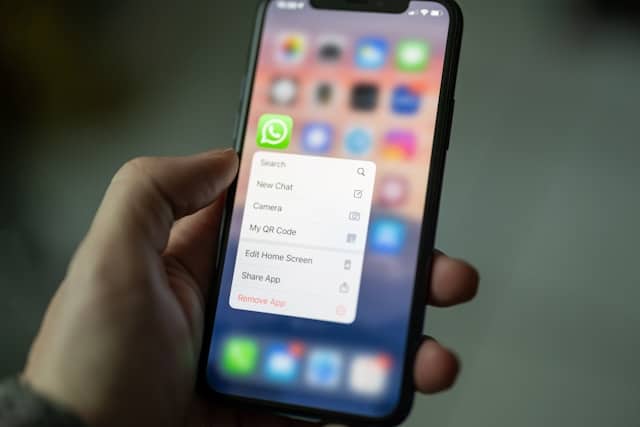
For most travellers on a 7 to 10-day trip through Bangkok and Chiang Mai, 5GB is plenty. You can navigate, message, use ride-hailing apps, post photos, and check reviews without worrying about data usage. If you’re a heavier user who streams music, takes video calls, or uses your phone as a hotspot for a laptop, step up to 10GB or 20GB. Digital nomads working from Chiang Mai cafés or Koh Phangan co-working spaces looking to keep costs low should think about broader Thailand travel on a budget rather than just buying the biggest data plan.
One tip: download offline maps for Bangkok and Chiang Mai before your trip. This reduces Google Maps data usage significantly and gives you a backup if you hit a dead zone on a remote island.
Is It Worth Getting an eSIM for Thailand?
Short answer: yes. Here’s why it makes sense for almost every type of traveller.
A local Thailand eSIM typically costs between $5 and $20 for a multi-day plan with generous data. Compare that to roaming from an Australian carrier. Telstra charges $10 per day for a Travel Pass. Optus and Vodafone offer $5 daily roaming add-ons. For a 14-day trip, that’s $70–$140 just for data that runs through a foreign network anyway. An eSIM from BazTel covering the same period costs $8 to $14 depending on your data needs.
Beyond the cost savings, eSIM plans give you access to local network speeds. In Bangkok and Chiang Mai, that means 4G LTE and often 5G connectivity. Roaming connections are typically deprioritised by local towers, so even if your carrier says you have coverage, the speeds can be frustratingly slow during peak hours.
The convenience factor matters too. You set up your eSIM before your flight. When you land at Suvarnabhumi or Don Mueang, your phone connects automatically. No hunting for a kiosk. No handing over your passport. No waiting in a queue at midnight. For a solo traveller arriving late or someone anxious about navigating an unfamiliar airport, that instant connectivity is worth every cent.
Which SIM Is Best for Thailand from Australia?
If you’re flying from Australia, you have three realistic options: using your Australian carrier’s roaming, buying a physical SIM at a Thai airport, or installing an eSIM before you leave home — especially if you already use an eSIM for Australia and want the same convenience when you head to Thailand.
Australian roaming is the most expensive choice. Telstra, Optus, and Vodafone all cover Thailand, but daily fees add up fast. For trips longer than a couple of days, it’s rarely worth it.
Physical SIMs at Thai airports are cheap and work well. AIS, TrueMove H, and DTAC all have counters at Suvarnabhumi and Chiang Mai airports. Tourist packages range from about 300 to 900 Thai baht ($9–$27 AUD). The downside is the queue, the passport registration, and the need to physically swap your SIM card — which means your Australian number goes offline for the duration.
An eSIM is the best of both worlds. You install it before you fly. Your Australian SIM stays active for calls and texts. You get local Thai data speeds at a fraction of the roaming cost. BazTel’s simple setup — no app, no QR code — makes it especially straightforward. You purchase online at baztel.co, open your dashboard, and tap install. By the time you board your flight, your Thailand eSIM is ready to connect the moment you land.
Coverage Across Thailand: Bangkok, Chiang Mai, and the Islands
Bangkok has blanket 4G and 5G coverage from all networks. Whether you’re exploring the Grand Palace, eating street food in Chinatown, or navigating the BTS Skytrain, your eSIM will work flawlessly. Signal stays strong underground in MRT stations and in the massive shopping malls.
Chiang Mai is nearly as reliable. The city centre, Nimman Road, the Old City, and surrounding areas all have strong coverage. I used my eSIM for Google Maps navigation through side streets and for video calls from a café near the Night Bazaar without any dropped connections. The Chiang Mai countryside — heading toward Doi Suthep, Doi Inthanon, or the road to Pai — is where network choice matters. AIS holds signal better on mountain roads.

The southern islands vary. Phuket and Koh Samui have excellent coverage across all networks. Koh Phangan and Koh Tao are solid in main towns but can get patchy in more remote areas. Smaller islands like Koh Lipe or Koh Yao may have intermittent signal regardless of which network your eSIM connects to. For island hopping, an eSIM on the AIS network is the most reliable data connection you can get.
Pattaya, Krabi, Hua Hin, and other popular tourist towns all have strong 4G coverage. In the vast majority of places a tourist would visit in Thailand, your eSIM will deliver reliable internet access for everything from navigation to social media.
Setting Up Your eSIM: How the Process Works
Most eSIM providers follow a similar setup flow. You purchase a plan online, receive a QR code via email, and scan it through your phone’s settings to install the eSIM profile. You then set the new eSIM as your mobile data line and keep your home SIM for voice. It’s simple enough, but it still requires you to scan a code and sometimes juggle between an email and your camera app.
BazTel does it differently, and this is where easy activation really shines. After you purchase your Thailand eSIM on baztel.co, it shows up immediately on your online dashboard. From there, you click one button — clearly marked for iPhone or Android. The eSIM installs directly onto your device. No QR code. No app. No fumbling with settings. I set mine up while packing my bag the night before my flight.
Regardless of which provider you choose, install the eSIM before you leave home while you still have a reliable Wi-Fi connection. Don’t wait until you’re at the airport. And once you land in Thailand, make sure data roaming is turned on for the eSIM and turned off for your home SIM. That way, every app — Google Maps, Grab, WhatsApp — runs through the local Thai network at local speeds, and you avoid surprise roaming fees on your home plan.
Unlimited Data Plans: Are They Worth the Extra Cost?
Several eSIM providers offer unlimited plans for Thailand. Holafly is the most well-known, with plans starting around $19.50 for 5 days and climbing to $96 for 50 days. The appeal is obvious — you never worry about running out of data.
But there are caveats. Many unlimited plans come with a Fair Usage Policy (FUP). This means your speed gets throttled after you hit a daily or total data limit. Holafly, for example, caps hotspot data at 500MB per day. If you’re sharing data with a laptop, that runs out fast.
For most travellers, a capped plan with generous data is the smarter choice. A 10GB plan from BazTel costs $8.00 and lasts 30 days. Unless you’re streaming video constantly or working remotely with heavy uploads, 10GB comfortably covers a two-week trip. The unlimited plans make sense for digital nomads or long-stay travellers who need constant connectivity across multiple devices without monitoring data usage. Everyone else saves money with a fixed plan.
Regional eSIMs: Worth It for Southeast Asia Travel?
If Thailand is part of a longer trip through Southeast Asia, regional eSIMs can be tempting. Providers like Airalo and Saily offer plans covering multiple countries — Thailand, Vietnam, Cambodia, Malaysia, Singapore, and more, while BazTel’s global eSIM is designed for travellers bouncing between several regions without juggling multiple providers.
The trade-off is price. Regional eSIMs cost more per gigabyte than country-specific plans. And because they route through a broader network of carriers, coverage in any single country can be less optimised. If you’re spending most of your trip in Thailand, a Thailand-specific eSIM gives you better value and more reliable data.

The exception is frequent border crossings. If you’re doing the classic Bangkok to Siem Reap to Ho Chi Minh City loop, a regional plan saves the hassle of buying a new eSIM at every stop. But even then, buying separate country eSIMs often works out cheaper. With BazTel covering 160+ countries, you can purchase a new plan for each destination without switching providers or learning a new app, whether you need an eSIM for Singapore on a city stopover or something longer for the rest of your route.
Frequently Asked Questions About Thailand eSIMs
Which eSIM is best for Thailand? BazTel offers the best combination of price, coverage, and simple setup for Thailand in 2026. Plans start at $5 for 5GB, connect to AIS and True networks, and install in under two minutes with no QR code or app required.
Which SIM card is best for tourists in Thailand? For physical SIMs, AIS tourist packages offer the widest coverage. For eSIMs, BazTel provides the same network access at a lower price point without the airport queue.
Can I use an eSIM and my regular SIM at the same time? Yes. Most modern phones support dual SIM functionality. Your eSIM handles Thai data while your physical SIM card stays active for your home number. Just set the eSIM as your default data line and disable data roaming on your home SIM.
Do I need a local number with my eSIM? Not usually. Most eSIM plans are data only service plans. In Thailand, nearly everything runs on data — Grab, Google Maps, WhatsApp, LINE, hotel bookings. A local number is only essential if you need to receive SMS verification codes from Thai services.
Does my phone work with eSIM in Thailand? If you have an iPhone XS or later, Samsung Galaxy S20 or later, or Google Pixel 3 or later, your device supports eSIM. Make sure your phone is carrier-unlocked before you travel. You can check in your phone’s settings under “About” or “SIM Status.”
How do I manage multiple eSIM profiles? Your phone can store multiple eSIM profiles for different countries. When you arrive in Thailand, activate the Thailand plan as your data line. When you travel to your next destination, switch to a new eSIM. BazTel lets you manage all your plans from the online dashboard.
Final Verdict: The Best eSIM for Thailand
Thailand’s mobile infrastructure is among the best in Southeast Asia. Strong 4G everywhere. Growing 5G in major cities. Affordable data plans across the board. The only question is which eSIM provider delivers the best value for your trip.
After comparing prices, testing coverage from Bangkok to Chiang Mai to the islands, and evaluating the setup experience, BazTel is my top pick for Thailand. It’s the most affordable option at every plan size. The no-QR-code, no-app installation is the simplest I’ve tested. And connecting to both AIS and True networks means reliable coverage whether you’re navigating the Grand Palace or riding a scooter through Chiang Mai’s back streets.
Airalo and Saily are solid options if you already use those platforms. Both deliver reliable data and have polished apps. But on pure price and ease of setup, BazTel wins. Visit baztel.co to choose your Thailand plan, and you’ll be connected before your flight even boards.

About the author
Peter Basil
Founder, CIPM, MBA
I'm Peter, the founder of BazTel. I built this company at the intersection of two things I know well: finance and travel. Before starting BazTel, I worked in investment analytics at State Street, one of the world's largest custodian banks, and later at TCorp, the New South Wales Government's investment fund.