
 Botswana
 Zambia
 Congo
Congo Colombia
 China mainland
 Chile
Chile Chad
Chad Central African Republic
 Canada
 Cameroon
 Cambodia
 Burkina Faso
 Bulgaria
 Brunei Darussalam
 Brazil
 Aland Islands
 Bosnia and Herzegovina
 Bolivia
 Belgium
 Belarus
 Bangladesh
 Bahrain
 Azerbaijan
 Austria
 Australia
 Armenia
 Argentina
 Algeria

I booked a flight to Shanghai last year on a whim. Three hours later, I was neck-deep in tabs about Chinese visa requirements, transit exemptions, and the COVA application form. Sound familiar?
If you’re a U.S. citizen planning to visit China in 2026, the sheer volume of conflicting information online can make your head spin. Some sites say Americans get visa-free entry. Others insist you need an invitation letter. Half the articles were written before the COVA system even launched.
Here’s the good news. Getting a China visa is not as complicated as the internet makes it look. The People’s Republic of China updated its rules dramatically over the past two years, and the process is now more straightforward than it’s been in a decade. The bad news? It’s still not as simple as booking a ticket.
This guide covers everything: every visa type available, the step-by-step application process, current fees, visa-free transit options, the new Digital Arrival Card, special situations for applicants born in China, and how to stay connected once you get past immigration. I wrote this from personal experience, cross-referenced with official Chinese embassy sources, so you can stop doom-scrolling Reddit threads at 2 a.m.
Do U.S. Citizens Actually Need a Visa to Enter China?
Short answer: it depends on your trip length and itinerary. Unlike travelers from 50 countries that now enjoy 30-day visa-free entry—including the UK, Canada, Australia, and most of Europe—U.S. citizens are not on that list. American passport holders still need a visa for most trips to mainland China.
There are three main exceptions. First, the 240-hour visa-free transit policy lets Americans stay up to 10 days without a visa when transiting to a third country. Second, Hainan Island allows visa-free stays of up to 30 days for tourism if you arrive by direct international flight. Third, the 24-hour airside transit lets you pass through any Chinese airport without a visa if you stay in the restricted area and leave within 24 hours.
The Chinese government updated its visa-free transit policy on December 17, 2024, expanding coverage from 144 hours to 240 hours across what is now 65 ports of entry in 24 provinces. That’s a meaningful upgrade for short trips. But if you’re planning a two-week tour hitting Beijing, Xi’an, Chengdu, and Guilin, you’ll want a proper tourist visa.
As of late 2025, there’s one more requirement regardless of visa status: all travelers must complete a separate mandatory China Arrival Card before entry. More on that later.
Types of China Visas Available for U.S. Citizens
The People’s Republic of China issues over a dozen visa categories. Each one corresponds to a specific purpose. Applying for the wrong visa type is like trying to unlock your front door with your car key. Here are the ones that matter most for Americans.
Tourist Visa (L Visa)
The L visa is the most common for Americans heading to China. It covers sightseeing, visiting friends, cultural exploration, and study tours. As of 2026, most U.S. citizens receive a 10-year, multiple-entry visa by default. Each entry allows up to 60 days. You can extend once at a local Public Security Bureau for an additional 30 days.
A major simplification arrived on January 1, 2024. The Chinese embassy no longer requires flight bookings, hotel reservations, or invitation letters for standard tourist visa applications from U.S. citizens. You fill out the application form, submit your valid passport, and wait. That’s a dramatic improvement from the old process, where visa applicants had to produce round-trip tickets, hotel confirmations, and sometimes a detailed itinerary.
The validity of a China visa starts from the date of issuance. A 10-year multiple-entry tourist visa lets you enter China as many times as you want during that decade, provided each stay doesn’t exceed the per-entry limit. It even survives passport renewals—you carry your old passport with the valid visa alongside your new one.
Business Visa (M Visa)
The business visa covers commercial activities: client meetings, trade fairs, partner negotiations, contract signings. U.S. citizens can also receive a 10-year, multiple-entry business visa. You’ll need a company letterhead invitation from a Chinese business partner or an invitation letter from a Chinese entity describing the nature of your visit. The letter should include the inviting company’s name, contact details, address, official seal, and the legal representative’s signature.
Work Visa (Z Visa)
If you’re accepting employment in mainland China, the work visa is mandatory. It’s issued as a single-entry visa valid for 3 months. After arrival, you must apply for a work-based residence permit through the local Public Security Bureau within 30 days. Your employer typically handles most of the paperwork, including obtaining a work permit notification letter.
Student Visa (X Visa)
The student visa comes in two forms. X1 is for long-term study exceeding 180 days. It requires an admission letter from a Chinese educational institution (usually a JW201 or JW202 form) plus a residence permit application after entry. X2 covers short-term study under 180 days. The intended duration of stay is based on the admission letter.
Family Visit Visa (Q Visa)
The Q visa is for visiting family members who are Chinese citizens or hold permanent residence in China. Q1 is for long-term stays (over 180 days), Q2 for short visits. Both require an invitation letter from your family member, plus their Chinese ID or permanent residence card number. For spousal visits, you’ll also need a marriage certificate. If visiting parents, bring their original passport copies. The Q2 visa for U.S. citizens can be issued with 10-year, multiple-entry validity.
Journalist Visa (J Visa)
Foreign journalists entering China for reporting purposes need a J visa. J1 is for resident correspondents, J2 for short-term reporting. The journalist visa requires pre-approval from the Chinese authorities before issuance. Foreign journalists cannot enter China on a tourist visa to conduct news reporting—doing so violates visa conditions and can result in detention or deportation.
Other Visa Types at a Glance
Additional categories include the crew visa (C) for international transport workers, the transit visa (G), the talent visa (R) for high-end foreign talent, the private affairs visa (S1/S2) for family members of foreigners working or studying in China, and the non-business visit visa (F) for academic exchanges and study tours. Chinese visas are generally issued as single-entry, double entry, or multiple-entry, with the duration of stay specified in the visa itself.
How to Apply for a China Visa: The Complete Step-by-Step Process
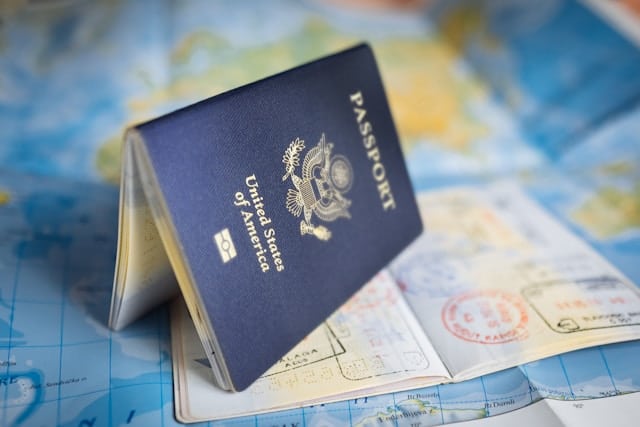
The visa application process changed significantly on September 30, 2025, when the Chinese embassy launched the updated China Online Visa Application (COVA) system. Every application now flows through this online platform. Here’s exactly what to do.
Step 1: Determine Your Consulate Jurisdiction
You must apply at the Chinese embassy or consulate that covers your state of residence. Applying at the wrong location results in automatic rejection. The COVA system asks you to select your consulate on the very first page, and you cannot change it. If you choose incorrectly, you’ll need to start a new application form from scratch.
The Chinese embassy in Washington, D.C. covers Virginia, Maryland, and the District of Columbia. Consulates in New York, Chicago, San Francisco, Los Angeles, and Houston each cover specific groups of states. Your driver’s license or a utility bill serves as proof of residence to confirm jurisdiction.
Step 2: Complete the COVA Online Visa Application Form
Visit consular.mfa.gov.cn/VISA and create an account. The visa application form is detailed—expect 30–45 minutes if you have everything ready. You’ll enter passport details, travel plans, employment history for the past five years, educational background, and family information including any family members with Chinese nationality.
Your name must match your valid passport exactly. Not “close enough.” Michael is not Mike. A missing middle initial triggers rejection. Double-check every character.
The photo upload is where most applications stumble. China requires a 33×48mm photo—not the 2×2 inch (51×51mm) U.S. passport size. The COVA system accepts JPEG files between 40–120 KB, with pixel dimensions of 354×472 to 420×560. White background, ears visible, neutral expression, no glasses with thick frames. The automated checker sometimes rejects perfectly valid photos—this is a known system bug. If yours fails, keep going. Consular officials review photos manually and accept compliant ones regardless.
If you’ve previously obtained a Chinese visa, you must upload a copy of your most recently issued visa, even if it’s in an old passport. Visa applicants born in China or of Chinese descent may need to provide additional documents like a naturalization certificate or original birth certificate.
Step 3: Wait for the Online Preliminary Review
After submitting your online visa application, the consulate conducts a preliminary review. This takes 1–3 business days. Do not go to the consulate yet. Wait until your COVA status changes to “Passport to be submitted.” If corrections are needed, the system flags it as “Rejected and to be modified” with feedback. If you’ll be traveling while applying, learn how manual eSIM activation works so you can stay connected even without reliable Wi‑Fi for QR scanning.
Step 4: Submit Your Passport In Person
Once approved, bring the following to the visa section of your Chinese embassy or consulate. No appointment is needed—walk in during business hours.
• Printed COVA application form with barcode (signed in the confirmation page and section 9) • Valid passport with at least 6 months remaining validity and 2 blank pages • One printed 33×48mm photo (bring it even if COVA accepted the digital upload) • Copy of your most recent previous Chinese visa, if applicable (even from an old passport) • Proof of U.S. residence: driver’s license or utility bill • Previous passport containing old visa, if applicable • For applicants born in China: naturalization certificate, original passport, or birth certificate
If this is your first Chinese visa in five years and you’re between 14 and 70, you’ll provide fingerprints at the counter. Consular officials may request an interview or additional supporting documents during the review.
Step 5: Pick Up Your Visa
Processing time runs about 4 business days for regular service after passport submission, plus the 1–3 day online review. Expect roughly one week total. Express service cuts the base to 2–3 days for an additional $25 service fee. When your COVA status shows “Passport to be collected,” go pick it up. Payment is at pickup only: credit card (Visa or Mastercard), money order, or cashier’s check. Cash and personal checks are not accepted at most locations.
When you receive your passport, immediately verify that all information on the visa sticker is correct. If there’s any error, tell the staff immediately.
China Visa Fees for U.S. Citizens
The Chinese embassy extended its reduced visa fee schedule through December 31, 2026. Here’s the current fee structure for U.S. citizens:
| Visa Type | Standard Fee | Express (+$25) |
|---|---|---|
| Single Entry | $140 | $165 |
| Double Entry | $140 | $165 |
| 6-Month Multiple Entry | $140 | $165 |
| 12-Month or 10-Year Multiple Entry | $140 | $165 |
The $140 is the reduced rate for U.S. citizens—before December 2023, it was $185. Non-U.S. citizens pay significantly less: as low as $23 for a single-entry visa or $68 for a 12-month multiple-entry. Americans pay a flat $140 regardless of entry type due to reciprocity agreements between the two governments.
Third-party visa agencies charge an additional service fee ranging from $100 to $400 on top of the embassy fee. Total cost through an agency can run $250–$600 depending on the provider, visa type, and processing speed.
The 240-Hour Visa-Free Transit Policy: Can You Skip the Visa Entirely?
If your trip is under 10 days and you’re transiting through China to a third country, the visa-free transit policy can save you significant time and money. It’s the most practical way for U.S. citizens to visit China without going through the full visa application process.
How It Works
Citizens of 55 countries—including the United States—can enter China visa-free for up to 240 hours (10 days) when transiting to a third country or region. You need a valid passport with at least 3 months remaining validity and a confirmed onward ticket to your next destination with a departure date within the 240-hour window.
The critical rule: Country A → China → Country C. Not Country A → China → Country A. A round trip does not qualify. However, Hong Kong, Macau, and Taiwan count as separate “regions.” So USA → Hong Kong → Shanghai → USA can work, as long as you don’t have a stopover in Hong Kong on the Shanghai–USA leg.
How the 240-Hour Clock Works
Your stay period begins at midnight (00:00) on the day after arrival. If you land at 6:00 PM on July 1, the 240 hours start at midnight on July 2. You must depart before 11:59 PM on July 11. That’s effectively closer to 11 calendar days of time in China.
Where You Can Go
Under the updated policy (effective December 2024), you can travel freely within 24 designated provinces. You’re no longer restricted to a single city or region. Tourism, business meetings, visiting family, and cultural exchanges are all permitted. Work, study, and journalism still require proper visas.
There are now 65 ports of entry across China that participate in this policy, including Beijing Capital Airport, Shanghai Pudong, Guangzhou Baiyun, Chengdu Shuangliu, and dozens more. You can enter through one port and exit through another.
At Immigration
Look for the “240-Hour Visa-Free Transit” counter at immigration. Present your passport and onward ticket. You’ll fill out a landing card and receive a temporary entry permit stamped in your passport showing your allowed stay duration. If you already hold a valid Chinese visa but want to use the transit option instead, tell the immigration officer.

Hainan Island: 30-Day Visa-Free for Americans
Separate from the transit policy, U.S. citizens can visit Hainan Island visa-free for up to 30 days. You must arrive by direct international flight into Haikou or Sanya airports, or from Hong Kong or Macau. You cannot travel to mainland China from Hainan without a visa. Think of Hainan as a standalone beach destination—palm trees, resorts, and no visa paperwork.
China’s Digital Arrival Card: The New Mandatory Entry Requirement
As of November 20, 2025, all foreign nationals entering mainland China must complete a China Digital Arrival Card (CDAC). This applies whether you have a visa, enter visa-free, or are in transit. It’s separate from the visa and is not optional.
What It Is
The CDAC replaced the old paper arrival form. You submit it online up to 72 hours before landing. The form collects your passport details, flight or transport information, accommodation address in China, and basic travel details. After submission, you receive a QR code. Immigration officers scan this QR code alongside your passport at the border.
How to Fill It Out
Access the form through: the NIA official website at s.nia.gov.cn/ArrivalCardFillingPC, the “NIA 12367” mobile app (available on iOS and Android), or WeChat/Alipay mini programs. The form supports English, Japanese, Korean, and other languages. It takes 5–10 minutes. Save the QR code to your phone—screenshot it for backup.
You’ll need: your passport information page photo (the system auto-extracts data from it), flight number, arrival port, and the address of your first accommodation in China. Double-check every field against your passport. Any mismatch causes delays at immigration.
Who Is Exempt
Seven groups don’t need to fill it out: holders of a China Permanent Resident ID Card (green card), non-Chinese nationals with Mainland Travel Permits from Hong Kong or Macau, group visa holders, 24-hour airside transit passengers, cruise passengers departing on the same ship, fast-track lane travelers, and foreign crew members of international transport vehicles. Everyone else—including visa-free transit travelers—must complete it.
Each entry requires a new card. If you leave mainland China and re-enter (China → Hong Kong → China), submit a fresh one.
Watch Out for Scam Websites
Only use official NIA channels. Several third-party websites charge unnecessary fees for what is a free government service. Legitimate URLs always contain .gov.cn. The official filling site is s.nia.gov.cn. If anyone charges you $20–50 to “process” your arrival card, they’re pocketing money for something you can do for free in 10 minutes.

Special Situations: Applicants Born in China, Chinese Descent, and Dual Nationality
If Your U.S. Passport Lists China as Your Birthplace
This is strictly enforced. If your passport shows China as your birthplace—whether you were adopted, emigrated, or naturalized—the Chinese embassy will request additional documents. You’ll typically need your old Chinese passport, a copy of a previous Chinese visa, or your naturalization certificate. If you can’t produce these, the consulate may require an original birth certificate or name change documentation.
Chinese Nationality and Dual Citizenship
The People’s Republic of China does not recognize dual nationality. Chinese authorities may consider anyone of Chinese descent or Chinese origin born in China to still hold Chinese nationality unless they formally renounced it. If you hold a Chinese identity card (身份证), Chinese residency book (户口本), or enter on a Chinese-issued travel document, Chinese authorities may treat you as a Chinese citizen only and not recognize your U.S. citizenship.
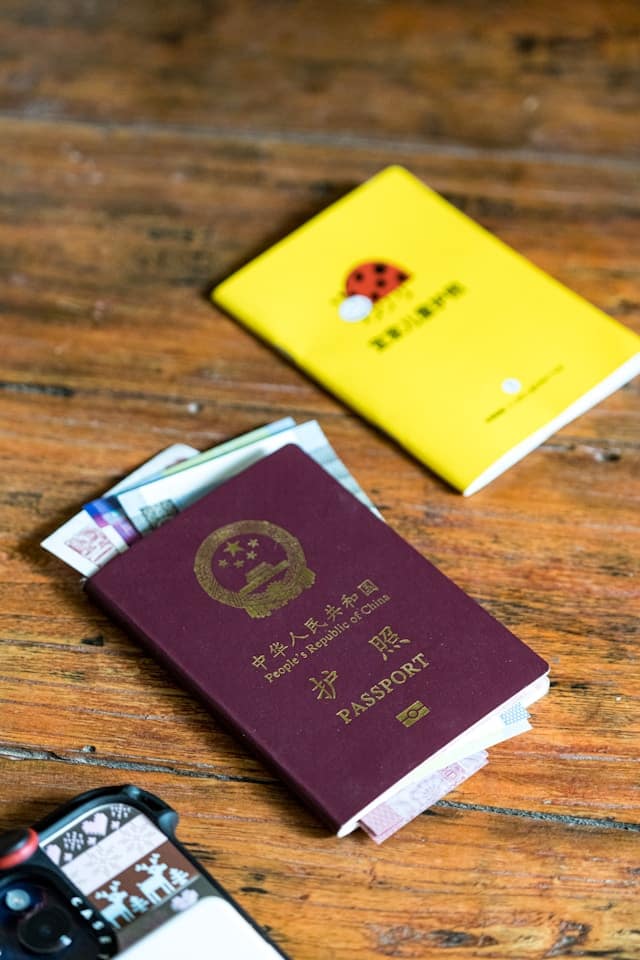
This has practical consequences. Chinese citizens residing abroad who obtained foreign nationality may face additional scrutiny. Consular officials may ask for documentation proving your Chinese nationality status was formally terminated. If you’re of Chinese descent but were never a Chinese national (born abroad to naturalized parents, for example), bring whatever documentation you have to clarify your situation.
Family Members of Chinese Citizens or Permanent Residents
If you’re married to a Chinese citizen or visiting family members who are Chinese nationals, the Q visa process requires specific documentation. Your relative in China must provide an invitation letter with their full name, date of birth, Chinese ID number, current address, and phone number. For spousal visits, include your marriage certificate. For parent visits, include the parents’ passports or ID copies. The invitation letter format should follow the template provided on the Chinese embassy website.
Valid Visa in an Expired Passport
If your valid Chinese visa is in an old passport, you don’t need a new visa. Enter China carrying both your current valid passport and the previous passport containing the valid visa. Your personal information must match exactly across both documents—including abbreviations, suffixes, and punctuation. If your name changed (through marriage, for example), you’ll need a new visa in your current name. A similar principle applies when transferring an eSIM from iPhone to Android: treat it as a fresh activation and make sure your carrier details are correct on the new device.
Hong Kong and Macau: Separate Rules from Mainland China
U.S. citizens can enter Hong Kong visa-free for up to 90 days and Macau for up to 30 days. No Chinese visa is required for either. Hong Kong SAR and Macau maintain completely separate immigration policies from mainland China.
A common itinerary involves flying into Hong Kong, spending a few days, then crossing into Shenzhen or Guangzhou. For the mainland portion, you need either a Chinese visa or the 240-hour transit exemption. Hong Kong SAR passport holders have their own rules for entering mainland China using a Mainland Travel Permit, but this doesn’t apply to American tourists.
If you’re only visiting Hong Kong and Macau without entering mainland China, you don’t need a China visa at all.
Practical Tips That Save Time and Headaches
Timing Your Application
Apply 1–2 months before your trip. Chinese visas are valid for entry within 3 months of issuance. Apply too early and it might expire before departure. Apply too late and you risk processing time delays, especially during peak seasons (June–August, late January around Chinese New Year) when processing time stretches an extra 5–10 business days.
The Photo Trap That Catches Everyone
The 33×48mm requirement trips up nearly every first-time applicant. This is not the standard 2×2 inch U.S. passport photo. Most drugstores don’t offer it. Use an online photo tool to get the correct dimensions. You need both a digital version (JPEG, 40–120 KB, 354×472 to 420×560 pixels) for the COVA upload and a printed 33×48mm copy for the consulate. Similarly, many eSIM providers rely on a QR code for eSIM activation, so make sure you can access and scan it before you leave.
The Previous Visa Requirement
If you’ve ever had a Chinese visa—even years ago, even in an expired passport—you must provide a copy. Dig through your drawer of old passports. The Chinese embassy takes this seriously, and missing it can delay or complicate your application.
24-Hour Registration
Every foreign national in China must register their address with local police within 24 hours of arrival. Hotels handle this automatically. If you stay in an Airbnb or with friends, you must visit the local police station or use a city-specific WeChat mini-program to register. Failure to comply can result in fines or problems at departure.
Don’t Overstay
Chinese authorities enforce visa duration strictly. Overstaying even by a few days can result in fines, detention at departure, and problems getting future visas. If you need more time, apply for an extension at the local Public Security Bureau before your permitted stay expires.
Realistic China Visa Processing Time in 2026
Under the new COVA system, processing time has two components. The online preliminary review takes 1–3 business days after you submit the application form. Regular processing after passport submission takes about 4 business days.
Total realistic timeline: 5–10 business days from COVA submission to visa pickup. During peak periods, add another 5–10 days. Some applications requiring additional review by Chinese authorities can take 15–20 business days. Express service ($25 extra) cuts the post-submission phase to 2–3 days. Rush service (1 day) may be available at the consulate’s discretion. While you wait, you can set up connectivity at home by following a guide on how to activate and use an eSIM in the USA.
10 Common Mistakes That Get China Visa Applications Rejected
Having gone through this process myself and helped friends navigate it, here are the errors I see most often. Many of the same attention-to-detail habits—like double-checking names and dates—also matter when you activate an eSIM on iPhone or Android before flying.
1. Wrong photo size. 33×48mm is not the U.S. passport standard. Don’t assume yours will work.
2. Unsigned application form. Sign in two places on the printed COVA form. Missing either gets it returned.
3. Wrong consulate jurisdiction. Applying at the wrong location is an automatic rejection. Verify before you go.
4. Missing previous visa copy. Any prior Chinese visa, even in an old passport, must be documented.
5. Insufficient passport validity. You need at least 6 months remaining and 2 blank pages.
6. Inconsistent information. Names, dates, and details must align perfectly across all documents.
7. Wrong visa type. A tourist visa doesn’t cover work. A business visa doesn’t cover journalism. Choose carefully.
8. Forgetting the Digital Arrival Card. Mandatory since November 2025. Fill it out before your flight.
9. Assuming 240-hour transit covers round trips. USA → China → USA doesn’t qualify. You need a third-country destination.
10. Trying to mail your application. The Chinese embassy doesn’t accept mailed applications from individuals. Go in person or use a registered agency.
Staying Connected in China: Why Getting an eSIM Is Non-Negotiable
Nobody talks about this during the visa application, but it might matter more than the visa itself once you land. China’s internet is not like home. The Great Firewall blocks Google, Gmail, Google Maps, WhatsApp, Instagram, Facebook, YouTube, X (Twitter), Netflix, Spotify, and most Western news websites.
I’ve traveled enough to know that staying connected isn’t a luxury—it’s a safety net. You need maps for navigation, translation apps for menus and signs in Chinese characters, and messaging apps to coordinate with travel companions. In China, you also need Alipay or WeChat Pay for almost everything. None of these work reliably without a firewall solution, and choosing between local carriers like China Mobile, China Unicom, or China Telecom—or an international eSIM—can be confusing without a clear comparison of China’s major mobile networks.
The eSIM Advantage
International travel eSIMs route your data through overseas networks, effectively bypassing the Great Firewall. You get full access to Google, WhatsApp, Instagram, and everything else—no separate VPN app needed. Unlike buying a local SIM card (which requires your passport, a visit to a specific store, and registering under your real name), an eSIM installs before you leave home.
At BazTel (baztel.co), we’ve simplified the process even further with our dedicated eSIM for China mainland plans. After purchasing your eSIM, it appears on your online dashboard. Click the installation button—one is designated for iPhone, another for Android—and it installs directly onto your phone. No QR code scanning. No app download. One click from your browser, and you’re set.
That matters more than you’d think. I’ve been in airports where the Wi-Fi was too weak to scan a QR code or download an app. BazTel’s dashboard-based installation works from any browser, even on unreliable airport connections. Plans cover 160+ countries starting from $1, so if your China trip is part of a larger Asia itinerary with a packed list of things to do in China, one plan can handle multiple destinations.
Install Before You Land
This is critical. Some eSIM provider apps have limited access within mainland China due to firewall restrictions. Wait until you land in Beijing to set things up, and you might not be able to download the app or access the provider’s website—just as waiting until arrival to get an eSIM in the UK can leave you scrambling at the airport instead of connecting instantly. Install and activate your eSIM before departure—if you’re unsure whether your device supports it, first confirm that your phone is eSIM compatible. Once activated, it connects automatically when your plane touches down.
Your regular SIM stays active for calls and texts from home. The eSIM handles your data in China. Modern phones support dual SIM, so both work simultaneously, and many travelers simply transfer their physical SIM to an eSIM before international trips.
Total Cost of Visiting China: A Realistic Breakdown for U.S. Citizens
| Expense | Cost Range |
|---|---|
| China Visa (Embassy Fee) | $140 |
| Express Processing (Optional) | +$25 |
| Visa Agency Service Fee (Optional) | $100–$400 |
| Visa Photo (Online Tool) | $5–$15 |
| Digital Arrival Card | Free (Official NIA Site) |
| Travel eSIM (BazTel, 7–14 days) | From $1 |
| Total (DIY, Standard Processing) | ~$150–$165 |
| Total (With Agency + Express) | ~$270–$580 |
Applying directly at the embassy and handling the application form yourself saves hundreds versus using an agency. Your only costs are the visa fee, a photo, and connectivity.
U.S. State Department Travel Advisory for China
As of March 2026, the U.S. State Department rates China as a Level 2 advisory (“Exercise Increased Caution”). Key concerns include arbitrary enforcement of local laws, exit bans that can prevent foreign nationals from leaving during disputes or investigations, and enhanced surveillance in certain regions.
Tibet requires a separate Tibet Travel Permit arranged through a registered tour agency. The Xinjiang Uyghur Autonomous Region may have additional restrictions. Both areas require permits beyond a standard China visa.
Enroll in the Smart Traveler Enrollment Program (STEP) through the U.S. embassy. It’s free and lets the embassy contact you about safety conditions or help locate you in an emergency.
Frequently Asked Questions About China Visa for U.S. Citizens
Can I visit China visa-free as an American?
Not for a standard round trip. Use the 240-hour transit if heading to a third country, or visit Hainan Island visa-free for 30 days with a direct international arrival. For other visits to mainland China, you need a visa.
How long can I stay on a tourist visa?
Each entry typically allows 60 days. You can extend once for 30 more days at a Public Security Bureau office. The 10-year validity refers to how long the visa remains usable for entries, not a continuous stay.
Is the application process really easier now?
Yes. Since January 2024, tourist visa applicants don’t need flight bookings, hotel reservations, or invitation letters. The COVA system handles everything online. Walk-in submissions with no appointment. The main friction points are photo requirements and picking the correct consulate.
Can I use 240-hour transit for a round trip from the U.S.?
No. The visa-free transit requires a third-country destination. USA → China → USA is a round trip. You’d need USA → China → Japan or another third country. Hong Kong counts as a separate region.
What happens if I overstay my visa?
Fines (reportedly $75+ per day), possible detention, deportation, and future visa complications. Apply for an extension before your stay expires, not after.
Do I need a VPN in China?
With a local SIM card, yes. China blocks Google, WhatsApp, YouTube, and most Western services. International travel eSIMs like BazTel route data overseas, so these apps work without a VPN. Install before landing.
What’s the China Digital Arrival Card?
A mandatory online form completed 24–72 hours before landing at s.nia.gov.cn. It generates a QR code you present at immigration. It’s not a visa—it’s a separate entry requirement. Free through official channels.
What’s the difference between a visa and the Arrival Card?
The visa grants permission to enter China. The Arrival Card is a border declaration form. Having a visa does not exempt you from the card. They’re two distinct requirements.
Getting Your China Visa Without the Stress
The China visa process for U.S. citizens has gotten materially easier since 2024. No more scrambling for flight bookings or hotel reservations. The COVA system centralizes everything online. Walk-in submissions mean no appointment anxiety.
If your trip is under 10 days and routes through a third country, the 240-hour transit option might eliminate the visa process entirely. For longer stays, the $140 fee buys you a 10-year, multiple-entry visa—one application for a decade of trips to China.
My biggest advice? Start early, get your photo right, and sort out connectivity before you leave. China is an incredible destination—the food, the history, the sheer scale of everything—but it’s a place where preparation pays off tenfold. A travel eSIM from BazTel keeps you connected from the moment you land, with one-click dashboard installation that works on any phone. No QR codes, no app downloads, no scrambling for Wi-Fi at Beijing Capital Airport.
Safe travels. And start that COVA application today.
Disclaimer: Visa policies and fees can change without notice. This article reflects information available as of April 2026. Always verify current requirements with the official Chinese Embassy website (us.china-embassy.gov.cn) or your nearest consulate. This guide is for informational purposes and does not constitute legal advice.

Blog Author
Peter
I'm Peter, the founder of BazTel. I built this company at the intersection of two things I know well: finance and travel. Before starting BazTel, I worked in investment analytics at State Street, one of the world's largest custodian banks, and later at TCorp, the New South Wales Government's investment…


