Botswana
 Zambia
 Congo
Congo Colombia
 China mainland
 Chile
Chile Chad
Chad Central African Republic
 Canada
 Cameroon
 Cambodia
 Burkina Faso
 Bulgaria
 Brunei Darussalam
 Brazil
 Aland Islands
 Bosnia and Herzegovina
 Bolivia
 Belgium
 Belarus
 Bangladesh
 Bahrain
 Azerbaijan
 Austria
 Australia
 Armenia
 Argentina
 Algeria

Prague hits different. I stepped off the plane, grabbed my eSIM-connected phone, and within minutes I was navigating cobblestone streets that looked lifted from a medieval painting. The Czech capital is one of those rare cities where every corner reveals something worth stopping for — a Gothic spire here, the smell of fresh trdelník there, a jazz trio playing under Charles Bridge at dusk.
I’ve spent considerable time visiting Prague over the past few years, and it keeps pulling me back. This guide covers the best things to do in Prague based on my own experiences, from the unmissable landmarks to the hidden gems that most visitors walk right past. Whether you’re planning a long weekend or a full week, Prague delivers.
Fair warning: there is a lot to cover. Prague is compact enough to walk but dense enough to fill a week. Let’s get into it.
Old Town Square: The Heart of Prague
Start here. Every first-time visitor should. Old Town Square is the emotional centre of the city, and it has been since the 12th century. The square buzzes with street performers, outdoor cafés, and hundreds of people tilting their heads skyward waiting for the top of the hour.
Why? The Prague Astronomical Clock. Installed in 1410, this is the oldest functioning astronomical clock in the world. At the top of every hour, it puts on a brief 45-second show featuring a procession of the Twelve Apostles. The clock’s ornate design represents the sun and the moon, and its various figures symbolise greed, vanity, lust, and death. Is it a short show? Yes. Is it still worth seeing? Absolutely.
Climbing the Old Town Hall Tower
Right below the astronomical clock sits the Old Town Hall. The Old Town Hall Tower offers what I think is the single best aerial view in the city. From the top, you look straight down onto the square’s baroque houses, across to the twin Gothic spires of Týn Church, and out toward Prague Castle on the hill. Purchase tickets at the ground-floor office — as of 2026, adult entry is around 300 CZK. Visit early in the morning to avoid queues. The 9am slot is the quietest.
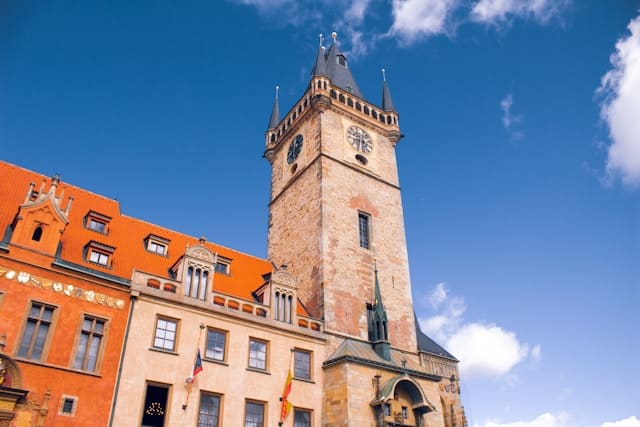
The town hall itself has Romanesque-Gothic cellars worth exploring if you have the time. The town square around it fills with market stalls during Easter and Christmas, transforming the whole area into something that feels genuinely festive rather than commercially staged.
What Else to See Around Old Town Square
Týn Church dominates the skyline from the Old Town side. Look closely and you’ll notice its two spires are not identical — one is slightly wider, supposedly representing the masculine and feminine. The Baroque St. Nicholas Church sits in the northwest corner and hosts regular classical concerts. Don’t confuse it with the other St. Nicholas Church across the Charles Bridge in Lesser Town. Prague has two, and both are stunning.
Street performers set up around the Jan Hus monument most afternoons. Some are excellent, some less so. The square is also the starting point for most walking tour options. I’d recommend joining a guided tour on your first morning — a good tour guide will compress hours of context into a 90-minute stroll.
Charles Bridge: Prague’s Most Iconic Walk
Charles Bridge, completed in 1402, connects Prague’s Old Town with Mala Strana (Lesser Town) and is lined with 30 statues of Catholic Saints. It is a UNESCO World Heritage Site and one of the finest examples of Gothic architecture in Europe. I’ve crossed it dozens of times, and it never gets old.
The best time to visit Charles Bridge is early in the morning or late in the evening. By 10am on any given day, the bridge is shoulder-to-shoulder. At dawn, though, you’ll share it with maybe a dozen photographers and a few runners. The light at that hour is soft, and the Vltava River below reflects the castle skyline perfectly.
The Old Town Bridge Tower
Before you step onto Charles Bridge from the Old Town side, look up. The Old Town Bridge Tower is one of the most beautiful Gothic towers in Europe. You can climb it for panoramic views of the bridge, the Vltava River, and Prague Castle beyond. The bridge tower view is different from the town hall tower view — here, you’re looking down the length of the bridge itself, which is quite dramatic.
On the other side, the Lesser Town bridge tower marks the entrance into Mala Strana. Walking across the Charles Bridge from Old Town to Lesser Town is one of those experiences that feels cinematic in real life. Artists sell paintings along the bridge, musicians play, and the statues loom overhead. Touch the bronze plaque of St. John of Nepomuk for good luck — everyone does.
Prague Castle: The Largest Castle Complex in the World
Prague Castle is recognised as the largest castle complex in the world, covering an area of almost 70,000 square metres. That’s not a typo. It’s enormous. The castle complex has served as the residence for Roman Emperors, Kings of Bohemia, and Czech presidents since its founding in the 9th century. Today it remains the official seat of the Czech president.
Plan at least 2–3 hours here. Ideally, visit Prague Castle first thing in the morning. By midday, it becomes the most crowded attraction in the city. If you arrive by 9am, you’ll move through the courtyards and buildings with far less friction.
St. Vitus Cathedral
Inside the castle complex, St. Vitus Cathedral is the undeniable centrepiece. The Gothic cathedral houses the Bohemian Crown Jewels — displayed to the public only once every eight years. The main tower of St. Vitus Cathedral stands about 103 metres tall, and you can climb the South Tower for sweeping views of the city. The stained glass windows inside are worth the visit alone.
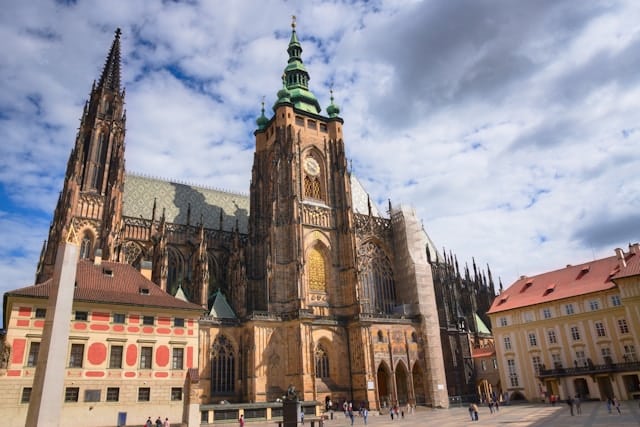
Visit St. Vitus Cathedral early. Entry to the main nave is free, but you’ll need a Basic Circuit ticket (450 CZK as of 2026) to access the deeper sections, the Old Royal Palace, St. George’s Basilica, and Golden Lane.
Golden Lane and the Old Royal Palace
Golden Lane is a narrow street lined with small, colourful houses originally built for castle guards and artisans. Franz Kafka lived briefly at number 22. It’s charming and compact — you can walk through in 15 minutes, but most people linger longer browsing the tiny exhibits inside each house.
The Old Royal Palace offers a look at the Vladislav Hall, where Bohemian kings were elected and jousting tournaments were held indoors. The palace is austere compared to, say, Versailles, but its historical weight is immense.
Pro tip: Golden Lane is free to enter after 5pm in summer (4pm in winter), when the shops close. I actually prefer it at that hour — fewer people, better atmosphere.
Lesser Town (Mala Strana): Baroque Charm Below the Castle
Cross the Charles Bridge and you’re in Lesser Town, Prague’s most picturesque neighbourhood. The cobblestone streets here are quieter than Old Town, lined with baroque houses, independent cafés, and small galleries. It’s the kind of place where you can wander without a plan and stumble into something beautiful every few minutes.
The John Lennon Wall
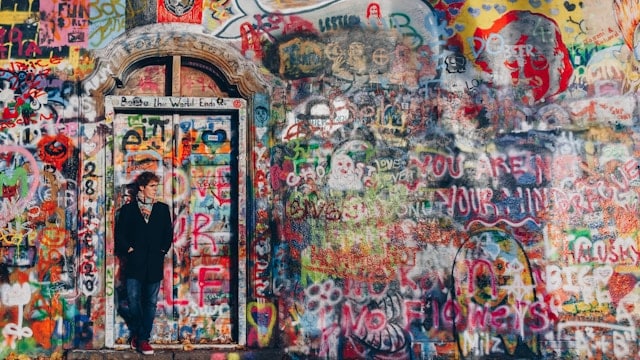
The John Lennon Wall started as an act of political rebellion during the Communist era and has evolved into a constantly changing canvas of street art, peace messages, and Beatles lyrics. It’s on Velkopřevorské náměstí, near the French Embassy. You’re welcome to add your own message — just no spray cans. The Lennon Wall is a quick stop, maybe 15 minutes, but it’s genuinely moving and photographs well.
Church of Our Lady Victorious
This small Baroque church in Lesser Town houses the Infant Jesus of Prague (Pražské Jezulátko), a famous wax figure venerated by Catholics worldwide. The church’s connection to Our Lady Victorious makes it one of Prague’s quieter but significant religious sites. Entry is free.
St. Nicholas Church (Lesser Town)
The St. Nicholas Church in Lesser Town is the grander of Prague’s two Nicholas churches. Its dome dominates the Lesser Town skyline. Inside, the Baroque interior is lavish — gilded, frescoed, and acoustically superb. Classical concerts are held here regularly, and catching a performance inside this space is one of the more memorable things to do in Prague on an evening.
Petrín Hill and the Petrín Lookout Tower
Petrín Hill is one of Prague’s most scenic green spaces. It’s the city’s favourite escape from the crowded centre, and once you’re on top you’ll understand why.
The Petrín Lookout Tower, located on Petrín Hill, is a smaller-scale replica of the Eiffel Tower and stands 63.5 metres tall. When it was built in 1891, its peak was set at the same altitude above sea level as the real Eiffel Tower in Paris. Climbing the 299 steps rewards you with sweeping views of Prague Castle, the Vltava River, and the city’s iconic red rooftops. On a clear day, you can see across most of Bohemia.
Visitors can reach the top of Petrín Hill by walking through rose gardens and shaded pathways or by taking a funicular from the Újezd stop. Note: the funicular has been intermittently out of service for maintenance — check before you go. Petrín Hill also features a mirror maze, cafés, and grassy spots perfect for a picnic.
From the Petrin Tower, you get a particularly good view of the historic Strahov Monastery and Prague Castle on the ridge. I’d recommend combining a Petrín Hill visit with a walk to Strahov Monastery afterwards — it’s about a 10-minute stroll along the ridgeline.
Strahov Monastery: Baroque Libraries and Craft Beer
Strahov Monastery sits above Lesser Town with knockout views of the city below. Founded in 1143, the monastery is home to two of the most beautiful Baroque libraries in Europe — the Theological Hall and the Philosophical Hall. You can peer in through the doorways (photography is allowed for a small fee). The detail on the ceiling frescoes is extraordinary.
What most tourists miss: the Strahov Monastery Brewery, tucked around the back. St. Norbert beer is brewed on-site and poured fresh. The amber lager is my pick. Pair it with a hearty lunch at the monastery restaurant before walking downhill toward Prague Castle. This makes for a natural half-day route: Petrin Tower → Strahov Monastery → Prague Castle → Lesser Town → Charles Bridge.
The Jewish Quarter (Josefov): A Thousand Years of Heritage
The Jewish Quarter, known as Josefov, is a historic area in Prague that reflects the rich Jewish heritage of the city, dating back over a thousand years. Located between Old Town Square and the Vltava River, it’s a compact neighbourhood dense with significance.
The Old Jewish Cemetery in the Jewish Quarter is one of the oldest surviving Jewish burial grounds in Europe, with thousands of gravestones layered over centuries of burials — up to 12 layers deep in some places. The visual effect is haunting: headstones jut at angles, crowded together in a space barely large enough for a single park.
The Pinkas Synagogue, located in the Jewish Quarter, serves as a Holocaust memorial. The names of Czech Jews who perished during World War II are inscribed directly on its walls — over 77,000 names. Upstairs, you’ll find drawings by children from the Terezín concentration camp. It’s a sobering, necessary stop.
Buy tickets for the Jewish Quarter’s synagogues and cemetery through the Jewish Museum of Prague website. A combined ticket covers the major sites. Give yourself 2–3 hours to explore properly.
Wenceslas Square and the National Museum
Wenceslas Square is not a traditional square but rather a long boulevard that serves as a central gathering point in Prague. It’s 750 metres long and has been the backdrop for many of the most significant events in Czech history — from the proclamation of Czechoslovak independence to the Velvet Revolution demonstrations of 1989.
The square is named after Saint Wenceslas, the patron saint of Bohemia. His equestrian statue sits at the top end, right in front of the National Museum. The National Museum itself underwent a major renovation completed in 2020 and is worth visiting for both its neo-Renaissance architecture and its natural history and historical collections.
Wenceslas Square is lined with shops, cafés, and restaurants. It connects Old Town with New Town and is flanked by two of Prague’s busiest metro stations — Můstek and Muzeum. During the day, it’s a shopping and dining hub. After dark, the nightlife scene picks up, though the area can feel a bit edgy late at night. Stay aware.
The Dancing House: Prague’s Bold Modern Landmark
Not everything in Prague is Gothic and Baroque. The Dancing House, completed in 1996 by architects Vlado Milunić and Frank Gehry, is a striking piece of deconstructivist architecture on the banks of the Vltava River. The two towers resemble a dancing couple — nicknamed “Fred and Ginger” after Fred Astaire and Ginger Rogers.
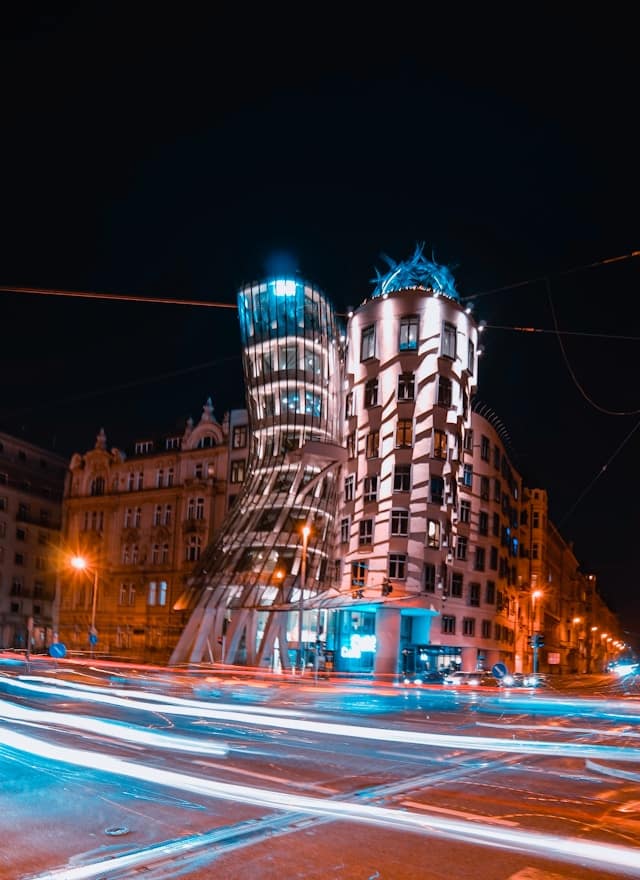
When it was first built, locals were divided. Many felt the Dancing House clashed with Prague’s historic skyline. Today, it’s embraced as a symbol of post-revolution creativity. The building houses offices, a boutique hotel, and the Ginger & Fred restaurant on the top floor. More importantly, the rooftop bar offers panoramic views of the Vltava River and Prague Castle. A drink here at sunset is one of the best things to do in Prague.
The Dancing House is within walking distance of Wenceslas Square (about 10 minutes) and easily combined with a riverside stroll. It takes 15–20 minutes to appreciate from the outside; add an hour if you go up to the rooftop bar for a glass of wine.
What Food Is Prague Famous For? A Guide to Czech Cuisine
Czech cuisine is known for its hearty dishes, often featuring meat, potatoes, and dumplings. This is not diet food. This is fuel-for-cold-winters food, and it’s deeply satisfying.
Must-Try Traditional Czech Meals
Goulash is one of the most popular traditional meals — a rich beef stew with paprika, served with bread dumplings (knedlíky). Traditional Czech meals often include svíčková, a creamy beef sirloin served with a rich sauce, cranberry garnish, and more dumplings. Svíčková is the dish that locals will argue about — everyone’s grandmother made the best version. Order it at a restaurant that takes it seriously (Lokál Dlouhá is a solid bet).
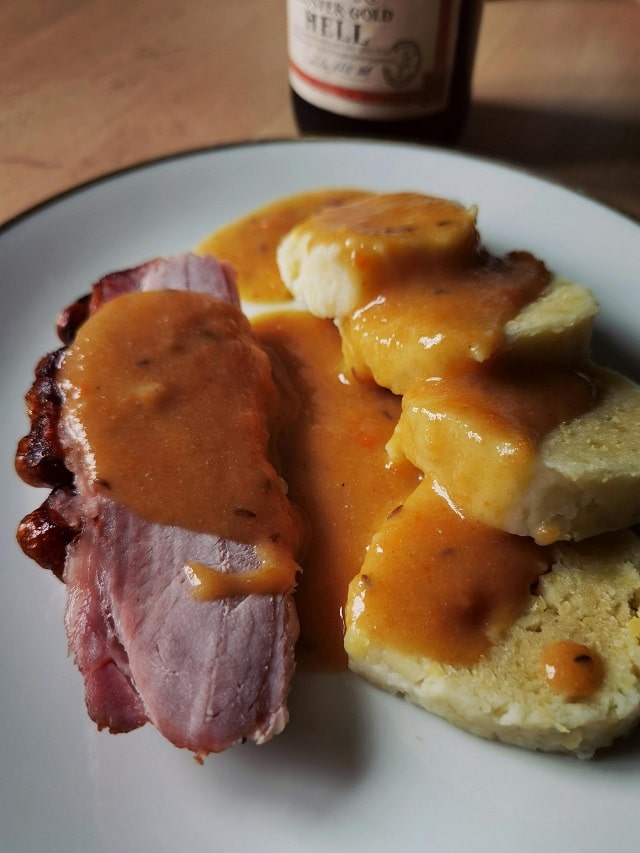
Other local dishes worth seeking out: roasted duck with red cabbage, pork knuckle (koleno), and bramboráky (potato pancakes). For street snacks, try fried cheese (smažený sýr) — breaded, deep-fried Edam served with tartare sauce. It’s the Czech version of fast food, and it’s glorious. Czech food is comfort food at its finest.
Czech desserts are also notable. Apple strudel is a favourite, and trdelník — a spiral pastry cooked over hot coals — is sold on nearly every tourist street. For something more authentic, look for medoník (honey cake) or koláče (sweet pastries). Grab a hot chocolate at one of the Old Town cafés on a cold afternoon. Prague’s hot chocolate tends to be thick, rich, and served in generous portions.
Prague’s Beer Culture: Pubs, Breweries, and Beer Baths
Prague is world-renowned for its beer culture. The Czech Republic has one of the highest beer consumption rates in the world, averaging about 140 litres per person per year. Beer here is often cheaper than water, especially at local pubs. A half-litre of excellent Czech lager costs around 50–60 CZK (roughly $2–2.50 USD as of 2026) at non-tourist venues.
Where to Drink
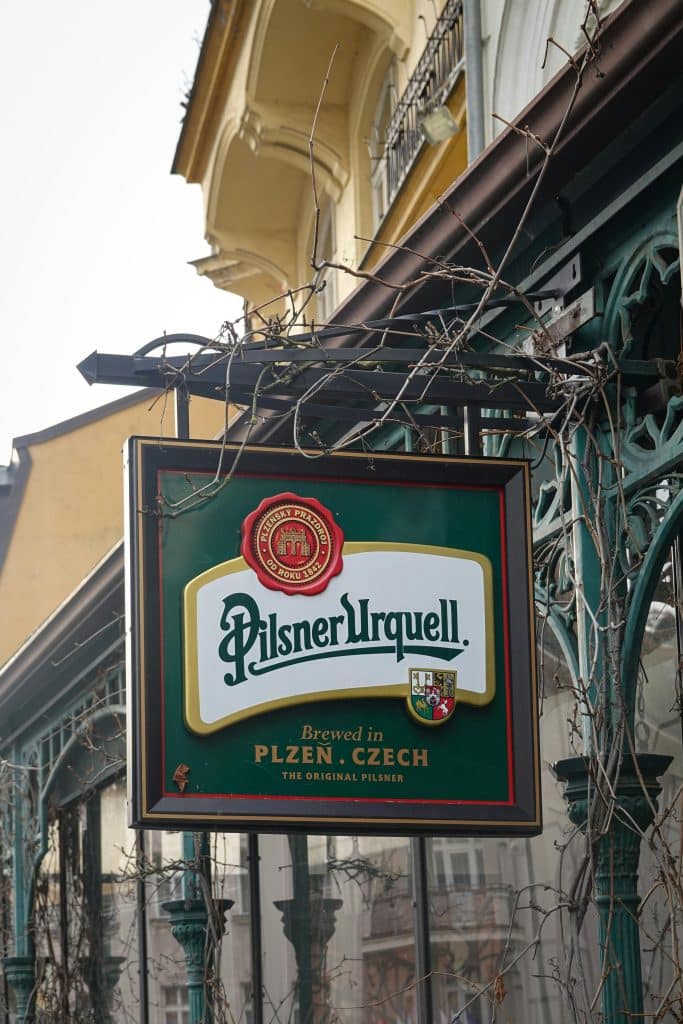
Lokál Dlouhá serves perfectly poured Pilsner Urquell in the Old Town. U Fleků, operating since 1499, brews its own dark lager on-site — touristy but historically significant. For a less crowded experience, head to Vinohradský parlament in the Vinohrady neighbourhood or the Strahov Monastery Brewery near Petrín Hill.
The Beer Bath Experience
Prague offers unique experiences such as beer baths, where visitors can soak in a warm tub filled with hops and barley while enjoying unlimited Czech beer. You’re not actually bathing in beer — the tub is filled with water and beer ingredients (crushed hops, brewer’s yeast, malt). The health claims are debatable. The relaxation is real.
Several beer bath operators run in the city centre. The Original Beer Spa on Žitná Street has strong reviews. Spa Beerland operates two Prague locations, including one near Prague Castle. Sessions typically run 60–120 minutes. Book ahead — slots fill fast, especially on weekends. A beer bath makes for an unexpectedly fun couple’s activity or group outing.
After your beer bath, you’ll rest on a bed of wheat straw beside a fireplace. It’s bizarre. It’s wonderful. Add it to the list of things to do in Prague that you’d never expect.
Cruising the Vltava River
The Vltava River offers unique perspectives of the city’s skyline and historic landmarks during river cruises. From the water, you see Prague differently — Charles Bridge framed against the castle, the National Theatre glowing in late afternoon light, the Dancing House curving along the riverbank.
Multiple operators run cruises ranging from one-hour sightseeing loops to full dinner cruises. A basic one-hour cruise costs around 300–400 CZK. Evening cruises with dinner and live music are pricier but atmospheric. If you prefer something active, pedal boats and kayaks are available along the river during warmer months.
Beyond the Obvious: Hidden Gems and Underrated Experiences
Nuclear Bunker Tour
Prague’s nuclear bunker tour takes you underground into a Cold War-era shelter beneath the city. It’s a fascinating, slightly eerie look at Czechoslovakia’s communist past and the very real fear of nuclear conflict. Not a popular attraction for most tourists, but if you’re interested in 20th-century history, it’s gripping.
Mucha Museum
The Mucha Museum is dedicated to Alphonse Mucha, the Art Nouveau master who created some of the most recognisable poster art of the late 19th century. It’s small and focused — you can see everything in about 90 minutes. His Slav Epic cycle (displayed elsewhere) is monumental, but the museum gives you the personal story behind the art.
Don Giovanni at the Estates Theatre
Mozart premiered Don Giovanni at Prague’s Estates Theatre in 1787. The theatre still stages the opera regularly. Seeing Don Giovanni performed in the same hall where Mozart conducted the premiere is a goosebump moment. Purchase tickets well in advance — performances sell out.
Rooftop Bars with a View
Prague’s rooftop bar scene is underrated. The Dancing House rooftop bar is the most famous, but T-Anker above the Palladium shopping centre offers views over Old Town, and Terasa U Zlaté Studně near Prague Castle is consistently rated as one of the best dining terraces in Europe. Some Prague hotels also have excellent rooftop bars — the Cosmopolitan Hotel Prague being one example. A glass of Czech wine or a cocktail with a Prague Castle backdrop is hard to beat.
For something different, look into a glass bar experience. Several cocktail bars in Old Town and New Town specialise in creative Czech spirits and craft cocktails. The bar scene here punches above its weight.
Hot Chocolate Spots
Prague takes hot chocolate seriously. Choco Café in Old Town serves thick, Belgian-style hot chocolate in a cosy cellar setting. Cacao Prague near Wenceslas Square is another favourite. On a cold winter afternoon, ducking into one of these spots with a cup of hot chocolate and a slice of cake is one of the simple pleasures of visiting Prague.
Practical Tips for Visiting Prague
Is 3 Days Enough for Prague?
Yes, 3 days is enough for Prague to cover the major attractions. Day one: Old Town Square, astronomical clock, Old Town Hall Tower, Jewish Quarter, Charles Bridge. On you second day, I would recommend: Prague Castle, St. Vitus Cathedral, Golden Lane, Lesser Town, Petrín Hill. While the last day you can visit: Wenceslas Square, National Museum, Dancing House, beer bath, and a Vltava River cruise. With three days, you can see the highlights without rushing.
If you have more time, add a day trip to Karlštejn Castle or Kutná Hora. Both are within an hour of Prague by train, and using a Czech Republic eSIM plan keeps you connected for schedules and last-minute changes.
What Is the Rainiest Month in Prague?
June is the rainiest month in Prague, with average rainfall of about 87mm. July is a close second. The showers tend to be short afternoon thunderstorms rather than all-day drizzle. Pack a compact umbrella regardless of when you visit. Prague’s weather can shift quickly, especially in spring and autumn.
The best times to visit are April–May and September–early October. You’ll get mild temperatures, fewer crowds, and reasonable hotel rates. Summer (June–August) is warmest but busiest.
Getting Around: Public Transport and Walking
Prague’s city centre is very walkable. Most popular attractions are within walking distance of each other. Old Town Square to Charles Bridge is about 10 minutes on foot. Charles Bridge to Prague Castle is another 20–25 minutes uphill. Public transport (metro, trams, buses) is efficient, affordable, and covers the entire city. A 30-minute ticket costs 30 CZK, and a Europe-wide eSIM can be handy if Prague is just one stop on a longer rail trip.
Where to Stay: Prague Hotels
Prague hotels range from backpacker hostels to five-star palaces. For a central base, the Old Town and Lesser Town areas offer the most convenience. Boutique hotels in the Old Town put you within steps of the astronomical clock and Charles Bridge. The Cosmopolitan Hotel Prague offers a modern, design-forward option near the city centre. If you want something quieter, the Vinohrady neighbourhood (a 10-minute tram ride from Old Town) has excellent restaurants and lower prices, and a global eSIM makes it easy to keep using maps and ride apps as you move between cities and countries.
Book early for peak season (June–August and Christmas markets in December). Prices drop significantly in January–February and November.
Staying Connected: Why an eSIM Is Essential for Visiting Prague
Here’s something I wish more travel guides covered: connectivity. You need reliable data in Prague. Google Maps for navigating the maze of Old Town streets. Translation apps at restaurants. Booking tickets online. Sharing photos without hunting for café Wi-Fi — all of which get easier when you follow an eSIM travel setup guide.
I use an eSIM from BazTel when I travel. Plans start from $1, covering 160+ countries including the Czech Republic. What I like about BazTel is the installation process — there’s no QR code scanning or app to download. After purchasing, your eSIM appears on your online dashboard. From there, you click an installation button (one for iPhone, one for Android), and it installs directly onto your phone. The whole process takes about two minutes.
Having data sorted before you land means you can navigate from the airport, check reviews, and message your hotel without any friction. Data roaming charges from your home carrier can be brutal in Europe. An international eSIM plan eliminates that problem entirely. For a city like Prague, where you’ll constantly be looking up opening hours, booking tickets, and checking maps, staying connected is not optional — it’s essential.
BazTel’s plans include 24/7 support and a satisfaction guarantee, and they rank among the best eSIM cards for travelers. For more details, visit baztel.co.
Frequently Asked Questions About Things to Do in Prague
What Should You Not Miss in Prague?
Prague Castle, Charles Bridge, and Old Town Square are the three unmissable landmarks. Beyond those: the Jewish Quarter, a beer bath, and at least one meal of traditional Czech cuisine (goulash or svíčková). If time allows, climb the Old Town Hall Tower and visit Petrín Hill for the best views.
Is Prague Safe for Tourists?
Prague is one of Europe’s safest capital cities. Petty crime (pickpocketing) can occur in crowded tourist areas like Old Town Square and on the Charles Bridge. Keep your belongings secure and stay aware, especially in busy tram cars. Violent crime targeting tourists is rare.
Can I Visit Prague on a Budget?
Absolutely. Many of Prague’s best experiences are free or low-cost. Walking across Charles Bridge, exploring Old Town, and wandering through Lesser Town cost nothing. Prague Castle grounds are free to enter (you only pay for interior buildings). Street food like fried cheese and trdelník costs under 100 CZK. Czech beer at local pubs is famously cheap. Budget-conscious travellers can explore Prague comfortably on €40–60 per day excluding accommodation.
Final Thoughts: Why Prague Deserves a Spot on Your List
Prague, Czech Republic, is one of those destinations that genuinely exceeds expectations. The architecture is real — not reconstructed — because the city emerged from World War II largely unscathed. Walking its cobblestone streets feels like stepping through centuries of European history in a single afternoon.
The things to do in Prague span everything from world-class cultural institutions to bizarre-but-brilliant beer baths. The food is hearty and underrated. The beer is legendary and cheap. The views from Prague Castle, Petrín Tower, and the Old Town Hall Tower are among the best urban panoramas in Europe.
My advice? Go for at least three days. Wear comfortable shoes for the cobblestone streets. Get your eSIM sorted before you fly (I use BazTel — baztel.co). And don’t skip the svíčková.
Prague isn’t just worth visiting. It’s worth going back to.

About the author
Peter Basil
Founder, CIPM, MBA
I'm Peter, the founder of BazTel. I built this company at the intersection of two things I know well: finance and travel. Before starting BazTel, I worked in investment analytics at State Street, one of the world's largest custodian banks, and later at TCorp, the New South Wales Government's investment fund.