Botswana
 Zambia
 Congo
Congo Colombia
 China mainland
 Chile
Chile Chad
Chad Central African Republic
 Canada
 Cameroon
 Cambodia
 Burkina Faso
 Bulgaria
 Brunei Darussalam
 Brazil
 Aland Islands
 Bosnia and Herzegovina
 Bolivia
 Belgium
 Belarus
 Bangladesh
 Bahrain
 Azerbaijan
 Austria
 Australia
 Armenia
 Argentina
 Algeria

I landed in Islamabad at 2am last year, bleary-eyed and desperate for a working internet connection. My phone had no signal. The airport SIM kiosks were closed. And the taxi driver looked at me like I was mad for asking about wi-fi. That trip taught me a painful lesson: sort your Pakistan eSIM before you fly.
Since then I have tested multiple travel eSIMs across three separate trips to Pakistan, covering Lahore, Karachi, Islamabad, and the northern areas around Hunza. I work in finance at BazTel, an Australian-founded eSIM provider, so connectivity is both my passion and my livelihood. This guide shares everything I have learned about finding the best eSIM for Pakistan, comparing real pricing, actual coverage, and the installation experience.
Whether you are visiting family, trekking through the Karakoram, or closing a business deal in Karachi, this article will help you stay connected across Pakistan without roaming fees or surprise charges — and similar BazTel eSIM options are also available if your trip extends to nearby destinations like eSIM plans for Afghanistan.
Why You Need an eSIM for Pakistan
Pakistan requires biometric verification for local SIM cards. That means fingerprint scanning, passport copies, and a visit to an official franchise store. In Islamabad, airport kiosks often do not sell SIMs to tourists at all. Even when they do, the process can take 30 minutes or longer. An eSIM sidesteps all of that.
An eSIM is a virtual SIM card built into your phone. It lets you activate a data plan instantly without swapping physical SIM cards or scanning a QR code at a counter. You purchase online, install from your dashboard, and connect the moment you land. No paperwork or queues to worry about and certainly no data roaming charges eating through your wallet.
Most recent smartphone models from Apple, Samsung, and Google support eSIM technology. If your phone was made after 2020, there is a strong chance it is eSIM compatible, and you can confirm this using a detailed eSIM compatibility list for supported devices. You keep your physical SIM for calls and texts on your home number, while the eSIM handles cellular data in Pakistan. Travellers considering a permanent switch can follow a guide on how to transfer a physical SIM to eSIM. Dual SIM functionality at its best.
What I Looked for When Testing Pakistan eSIM Plans
Not all travel eSIMs are created equal. After comparing more than a dozen providers, I narrowed my evaluation to five key factors, many of which mirror the trade-offs when choosing between eSIMs and airport SIM cards for travel.
Coverage and network quality. Pakistan has four major carriers: Jazz, Telenor, Zong, and Ufone. Jazz leads with the widest coverage across urban and rural areas. According to Opensignal’s February 2025 report, Jazz scored highest for coverage experience at 6.7 out of 10. Most international eSIM providers connect to Jazz, which is why coverage in major cities like Lahore, Karachi, and Islamabad is strong. Signal drops in mountainous regions and the northern areas, where SCOM provides the strongest signal.
Pricing transparency. The cheapest Pakistan eSIM plans start around $3.29 USD for 1GB. The most expensive run close to $300 USD. I focused on the mid-range sweet spot: 5GB, 10GB, and 20GB plans that suit most travellers for a 7 to 30 day trip.
Installation experience. Some providers still rely on QR code scanning, which requires a stable internet connection and a second device. Others have moved to direct installation from a dashboard or app. This matters when you are mid-trip and need to install a new eSIM quickly.
Data plan flexibility. Can you top up? Does the validity period match your trip? Are there unlimited data options? I checked all of this.
Customer support. When your internet connection drops at midnight in Lahore, you need someone to answer. I tested response times across multiple providers.
Best eSIM Providers for Pakistan Compared
There are roughly 120 travel eSIM brands available for use in Pakistan, with more than 5,000 prepaid data plans across them. I tested three that consistently stood out for coverage, pricing, and reliability.
BazTel — Best Overall Value
I will be upfront: I work at BazTel. But the numbers speak for themselves. BazTel offers Pakistan eSIM plans starting from just $1 USD for a trial 1GB plan, scaling up to $6 for 5GB, $11 for 10GB, and $21 for 20GB. All plans run for 30 days on the Jazz network, which provides the most reliable connectivity across Pakistan.
What makes BazTel different is the installation. Most eSIM providers send you a QR code by email, which you then scan to install. BazTel has eliminated that step entirely. After you purchase your eSIM, it appears on your online dashboard. From there, you tap one button — one for iPhone, another for Android — and the eSIM installs directly onto your phone. No QR code or app download is required. No second device needed. It worked perfectly on my iPhone 15 and a Samsung Galaxy S24 I tested with.

BazTel also includes 24/7 customer support, a refund guarantee if you are not satisfied, and a trip cancellation guarantee. No hidden fees. Secure payment. For a Pakistan trip, the 10GB plan at $11 is hard to beat at that price point.
Airalo — Best for App Experience
Airalo is the largest travel eSIM provider globally, serving over 20 million customers. For Pakistan, Airalo connects to the Jazz network and offers local plans from 1GB ($4.50) through to 50GB across 3 to 30 day validity periods. The 10GB plan comes in at $18 USD for 30 days.
The Airalo app is polished and easy to navigate. You can purchase, install, and manage your eSIM plan directly from it. Top ups are straightforward if you run out of data mid-trip. If you want to dive deeper into the pros and cons, I have a separate in-depth Airalo eSIM review. The downside? Pricing. At $18 for 10GB, Airalo costs $7 more than BazTel for the same data allowance on the same Jazz network. For budget-conscious travellers, that adds up.
Airalo does not currently cover the Kashmir region in Pakistan, which is worth noting if your trip includes that destination.
Saily — Best for Security-Conscious Travellers
Saily is backed by Nord Security, the company behind NordVPN. Its Pakistan eSIM plans range from 1GB ($3.99) to 20GB ($27.99), valid for 7 to 30 days. The 10GB plan sits at $17.99 for 30 days. Saily supports 3G, 4G, and 5G across Pakistan and connects through multiple local partners.
The standout feature is the built-in security suite. Every plan includes a VPN, web protection, and an ad blocker. If you are connecting through public wi fi in hotels or cafes across Pakistan, that layer of protection gives real peace of mind. Installation works through their app with a few taps — no identity verification required.
Saily does not disclose which specific network it uses in Pakistan, which is a slight transparency drawback compared to BazTel and Airalo.
Pakistan eSIM Plan Pricing: Head-to-Head Comparison
All prices below are in USD. Plans are 30-day validity, data-only. Prices verified as of March 2026 and are subject to change.
| Plan | BazTel | Airalo | Saily |
|---|---|---|---|
| 5GB / 30 days | $6.00 | $11.00 | $10.99 |
| 10GB / 30 days | $11.00 | $18.00 | $17.99 |
| 20GB / 30 days | $21.00 | $28.00 | $27.99 |
| Network | Jazz | Jazz | Not disclosed |
BazTel offers the lowest cost across every data tier. At the 10GB level, you save $7 compared to Airalo and $6.99 compared to Saily. All three connect to reliable networks in Pakistan, but BazTel’s Jazz-based connectivity gives it a coverage edge in both major cities and along intercity highways.
Mobile Network Coverage in Pakistan: What to Expect
Pakistan’s mobile network is well developed in urban areas. You can expect good 4G LTE coverage across Islamabad, Lahore, and Karachi. Jazz is the largest operator with around 70 million subscribers and leads in coverage experience across the country. Zong offers the fastest average download speeds at around 21 Mbps, while Jazz averages about 17-20 Mbps.
5G has launched in Pakistan’s major cities as of 2025, with Jazz and Zong leading the rollout in Islamabad, Lahore, Karachi, Rawalpindi, Faisalabad, Peshawar, and Multan. Real-world 5G speeds range from 200 to 500 Mbps in covered areas, though coverage is patchy and mostly limited to business districts and premium residential zones. Most travellers will rely on 4G for the majority of their trip, and it handles video calls, navigation apps, and streaming without issues; iPhone users can follow a dedicated guide on how to activate eSIM on iPhone step by step before they fly.
Where Coverage Drops
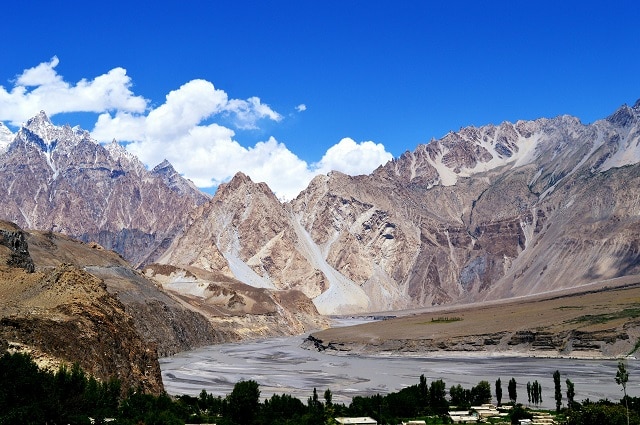
Coverage is limited or drops to 3G or 2G in mountainous areas like Hunza and Skardu, the desert regions of Balochistan, and deep inside national parks. In the northern areas, SCOM usually provides the strongest signal. If you plan to trek outside major cities, download offline maps before you leave. I learned this the hard way on the Karakoram Highway.
How to Install Your Pakistan eSIM
The installation process varies by provider. Most travel eSIMs still rely on QR code scanning, but the industry is moving toward simpler methods. Here is how it works with BazTel, step by step.
Step 1: Purchase your eSIM plan on baztel.co. You can buy online from anywhere in the world.
Step 2: Log into your BazTel dashboard. Your purchased eSIM will appear there immediately.
Step 3: Tap the install button for your device. One button is for iPhone, one for Android.
Step 4: The eSIM installs directly onto your phone. No QR code to scan, no app to download.
Step 5: When you land in Pakistan, enable cellular data on the eSIM. It connects to the local network automatically.
The whole process takes under two minutes. I did it while waiting at the boarding gate in Sydney. By the time I touched down in Islamabad, I had a working internet connection before I even cleared immigration.
For providers that still use QR codes (like Airalo and most others), you will need a stable internet connection to scan and install. Do this before you travel, ideally on your home wi-fi, and follow a clear guide on how to get and use an eSIM QR code. You cannot scan a QR code without connectivity, which creates a catch-22 if you forget to install before departure.
Should You Choose Unlimited Data or a Fixed Plan?
Several providers offer unlimited data plans for Pakistan, typically running from 1 to 30 days. Holafly is the most popular choice here, with plans starting around $6.90 for a single day of unlimited data.
Sounds great on paper. But here is the catch: most unlimited data plans come with a Fair Usage Policy. After you hit a daily threshold (often 1-3GB of high speed data), speeds can drop sharply. I have seen throttling kick in after just 2GB on one provider, turning reliable internet into something barely usable for navigation.
For most travellers spending one to four weeks in Pakistan, a fixed 10GB or 20GB plan offers better value and more predictable performance. You get consistent high speed data without worrying about throttling. At BazTel’s pricing — $11 for 10GB or $21 for 20GB — the cost per gigabyte is significantly lower than unlimited data plans that may throttle you anyway.
If you are a heavy streamer or plan to use your phone as a mobile hotspot for a laptop, then unlimited might be worth the premium. Just read the fair usage terms carefully before you purchase, and compare them against flexible BazTel eSIM plans for Pakistan that clearly spell out data limits and hotspot rules.
eSIM vs Local SIM Card in Pakistan
Local SIM cards from Jazz, Telenor, Zong, or Ufone are incredibly cheap. A Jazz weekly plan with 5GB costs roughly PKR 347 (about $1 USD). The problem is getting one.
Pakistan’s telecommunication authorities require biometric verification for all SIM cards. You need your original passport, a valid visa, and you must submit to fingerprint scanning at an official franchise or service centre. Tourists can register up to two SIMs. The process takes anywhere from 15 minutes to over an hour, and you also need to register your device with the PTA (Pakistan Telecommunication Authority) for a 120-day temporary registration.
An eSIM skips all of that. You pay a bit more per gigabyte, but you gain instant setup, no paperwork, and the convenience of connecting before you even board your flight. For short trips under 30 days, a travel eSIM is the smarter choice. For long stays of several months, a local SIM’s rock-bottom pricing may justify the hassle.
7 Tips for Getting the Most from Your Pakistan eSIM
1. Install before you fly. Do not wait until you land. Set up your eSIM on your home wi fi or at the airport. BazTel’s dashboard installation makes this effortless.
2. Check your device compatibility. Most iPhones from XS onward and Samsung Galaxy S20 onward support eSIM. Google Pixel phones from Pixel 3 onward do too. If unsure, check your phone’s settings for an “Add eSIM” option.
3. Keep your physical SIM active. Your eSIM handles data. Your regular SIM handles calls and texts on your home number. Be aware that keeping your physical SIM active may incur data roaming charges from your home provider, so disable mobile data on that line.
4. Download offline maps. Coverage outside major cities can be spotty. Google Maps lets you download entire regions for offline use.
5. Use apps for calls. Most Pakistan eSIM plans are data-only. They do not include a local phone number. Use WhatsApp, FaceTime, or similar apps for voice and video calls. Works great on 4G.
6. Monitor your data usage. Both iPhone and Android have built-in tools to track cellular data consumption. Check regularly so you do not run out mid-trip.
7. Consider top ups. If you burn through more data than expected, most providers offer top ups. BazTel, Airalo, and Saily all let you add more data without installing a new eSIM.
Frequently Asked Questions About Pakistan eSIM Plans
Which eSIM is best for Pakistan?
BazTel offers the best combination of price, coverage, and installation convenience for Pakistan. Its 10GB plan at $11 USD on the Jazz network is the lowest cost option among major providers, and the one-click dashboard installation eliminates the QR code hassle. For travellers who prioritise app features, Airalo is a strong alternative. For security, Saily adds built-in VPN protection.
Does eSIM work in Pakistan?
Yes. eSIMs connect to local Pakistani networks including Jazz, Telenor, and Zong. Coverage is strong across major cities like Islamabad, Lahore, and Karachi. In rural and mountainous areas, coverage may drop to 3G or 2G. Travel eSIMs do not require biometric verification, unlike local physical SIM cards.
How much data do I need for a trip to Pakistan?
For a typical 7 to 14 day trip with moderate usage (maps, messaging, social media, some video calls), 5GB to 10GB is usually enough. Heavy users who stream video, use navigation constantly, or share data via mobile hotspot should consider 20GB or more. BazTel’s 1GB plan for $1 lets you try the service before committing to a larger plan.
Can I make phone calls with a Pakistan eSIM?
Most travel eSIMs for Pakistan are data-only. They do not include a local phone number for voice calls or SMS. You can make calls using apps like WhatsApp, FaceTime, and Skype over your data connection. Some providers like Nomad and Roamless offer plans with international calling features at extra cost.
Is 5G available in Pakistan for eSIM users?
5G launched in Pakistan in late 2022, with Jazz and Zong providing coverage in Islamabad, Lahore, Karachi, and several other major cities. However, 5G coverage remains limited to select urban zones. Most eSIM users will primarily connect to 4G LTE, which delivers average speeds of 17-21 Mbps — more than enough for streaming, video calls, and navigation.
What happens if my eSIM does not work in Pakistan?
First, check that cellular data and data roaming are enabled for your eSIM line. Restart your phone. If the issue persists, contact your provider’s customer support. BazTel offers 24/7 support and a refund guarantee if connectivity issues cannot be resolved. Airalo and Saily also provide around-the-clock live chat.
Can I use my eSIM as a mobile hotspot in Pakistan?
This depends on the provider and plan. BazTel, Airalo, and several other providers allow hotspot tethering on their Pakistan plans. Some providers restrict this feature or limit shared data to 1GB per day. Always check the plan details before you purchase if hotspot access matters to you.
Can I use one eSIM across multiple countries including Pakistan?
Yes. Several providers offer regional and global eSIM plans that cover Pakistan along with other destinations. Airalo’s Asialink plan covers 18 countries, while Saily’s Asia plan covers 19 countries including Pakistan. These are great if you are visiting multiple destinations on the same trip, though per-GB costs tend to be higher than local Pakistan-only plans.
My Final Recommendation
After three trips to Pakistan and testing multiple providers side by side, BazTel consistently delivered the best experience for my money. The pricing undercuts every major competitor at the 5GB, 10GB, and 20GB tiers. The Jazz network provides reliable connectivity in every city I visited. And the one-click installation from the dashboard — no QR code, no app, no fuss — is something I wish every eSIM provider offered.
If you want a tried-and-tested eSIM for Pakistan that is simple to install, affordable, and backed by real customer support, give BazTel a go. If your itinerary also includes regional hubs, BazTel offers dedicated eSIM for Azerbaijan travel plans, Qatar eSIM data packages for stopovers, and Saudi Arabia eSIM options for pilgrims and visitors. Start with the $1 trial plan to test connectivity before your trip. It is highly recommended by frequent travellers to Pakistan, and I count myself among them.
Visit baztel.co to browse Pakistan eSIM plans and connect before you fly.

Blog Author
Peter
I'm Peter, the founder of BazTel. I built this company at the intersection of two things I know well: finance and travel. Before starting BazTel, I worked in investment analytics at State Street, one of the world's largest custodian banks, and later at TCorp, the New South Wales Government's investment…